
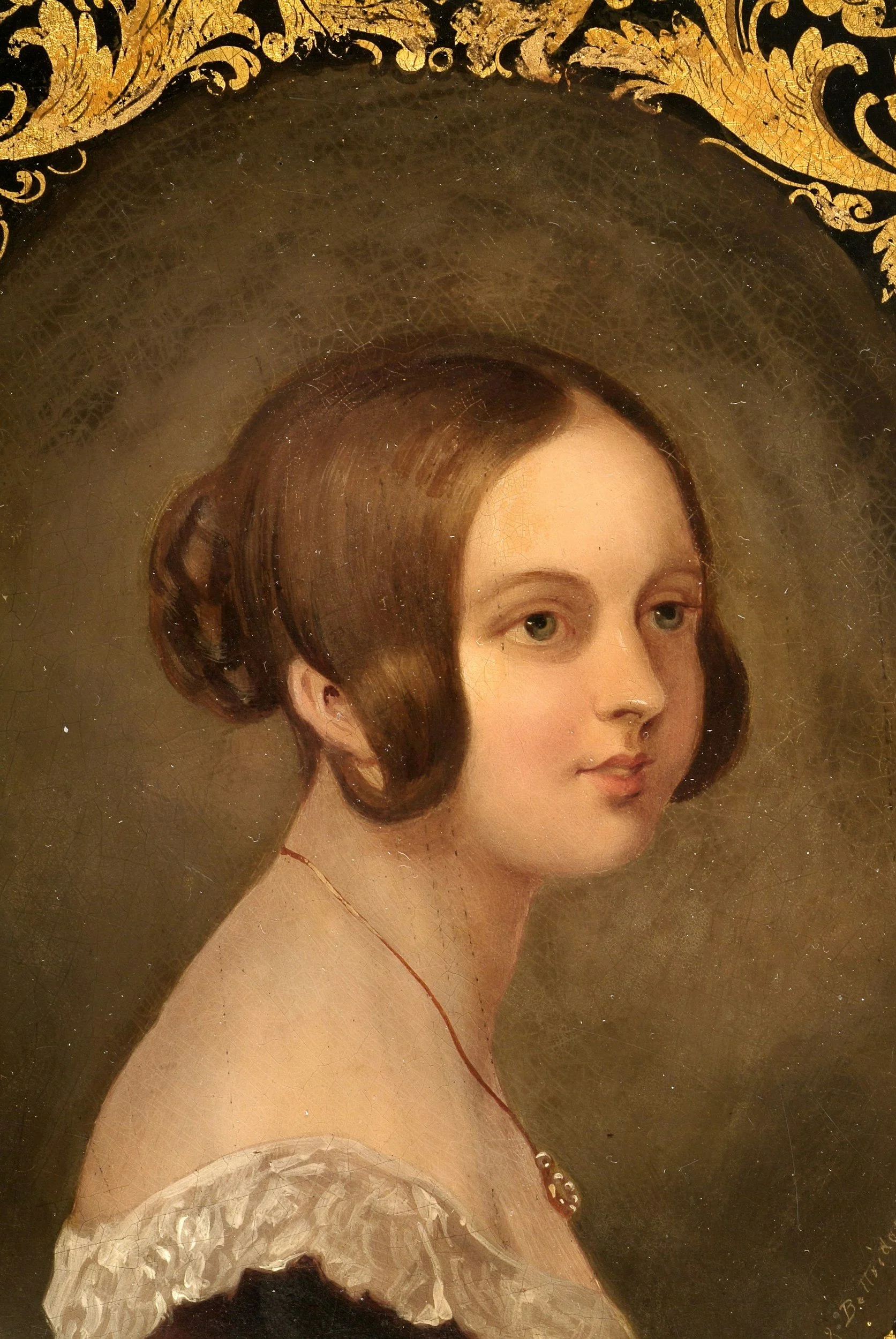
Ada Lovelace: The First Computer Programmer
Ada Lovelace: The First Computer Programmer
Written by: Anna Pafenberg
Computers have always amazed humans in the way that they are so different from us. They run on facts and math, while we run on emotion and biology. However, humans have been able to master how technology works and runs, but not without the help of Ada Lovelace, the world's first computer programmer.
Ada’s childhood was lavish, as she was born as the Countess of Lovelace in London, England in 1815. Her parents split apart in her childhood and she was sent to live with her grandmother, who was quite strict. She was strictly educated in all subjects until the age of 13 when she got measles and could not get out of bed. At a party one evening in London with her mother, Ada met Charles Babbage who was an inventor and mathematician. He invited Ada and her mother to look at the machine he invented the next day which could add and subtract numbers. This was called the small difference engine. As a result of this display, Ada became even more fascinated by math at just 17 years old. Ada married a man named William King and the two had three children, all of which kept Ada very busy. Ada wanted to explore more math after she had her third child and did so with Augustus De Morgan. Lovelace was still in close contact with Charles Babbage as well. Lovelace was working hard to get Babbage's paper about his analytical machine published in England. After translating it from French to English and adding her own notes, the paper was never published, but Lovelace’s analyses and notes paved the way for many future programmers.
Unfortunately, Lovelace died in 1852 at 36 years old. Lovelace’s legacy would live on as the first computer programmer, as she was able to make comparisons that match up with modern day calculations. For example, she knew that machines could process symbols and do more complex math than 2+2=3 but rather 2x+1b=6. While this seems obvious in our eyes due to our extremely technologically advanced world, this paved the way to how smart phones and computers work. Lovelace also commented on the fact that computers cannot invent new things, they can only do what humans have taught them, much like how artificial intelligence is today!
Overall, while Lovelace did not get recognized until 1952, she still made a tremendous impact in the computer programming space. As a woman, it is remarkable what she achieved in her time period and how ahead of her time she was in her thoughts.
References
Zwolak, Justyna. “Ada Lovelace: The World’s First Computer Programmer Who Predicted Artificial Intelligence.” Taking Measure (blog), National Institute of Standards and Technology (NIST). March 22, 2023. https://www.nist.gov/blogs/taking-measure/ada-lovelace-worlds-first-computer-programmer-who-predicted-artificial
The Fusioneer. “Inspiring Innovations Spotlight: Ada Lovelace.” June 30, 2022. https://thefusepathway.com/blog/inspiring-innovations-spotlight-ada-lovelace/
Hilfrank, Elizabeth. “Ada Lovelace.” National Geographic Kids. Published February 26, 2021. https://kids.nationalgeographic.com/history/article/ada-lovelace