
The Birth of a New Ocean: How Africa Is Slowly Splitting Apart
The Birth of a New Ocean: How Africa Is Slowly Splitting Apart
Written by: Keya Gambhir
Africa is slowly splitting apart, and scientists say this process could eventually create a brand new ocean. This is not something that will happen in our lifetime, but deep beneath the ground, the changes are already underway.
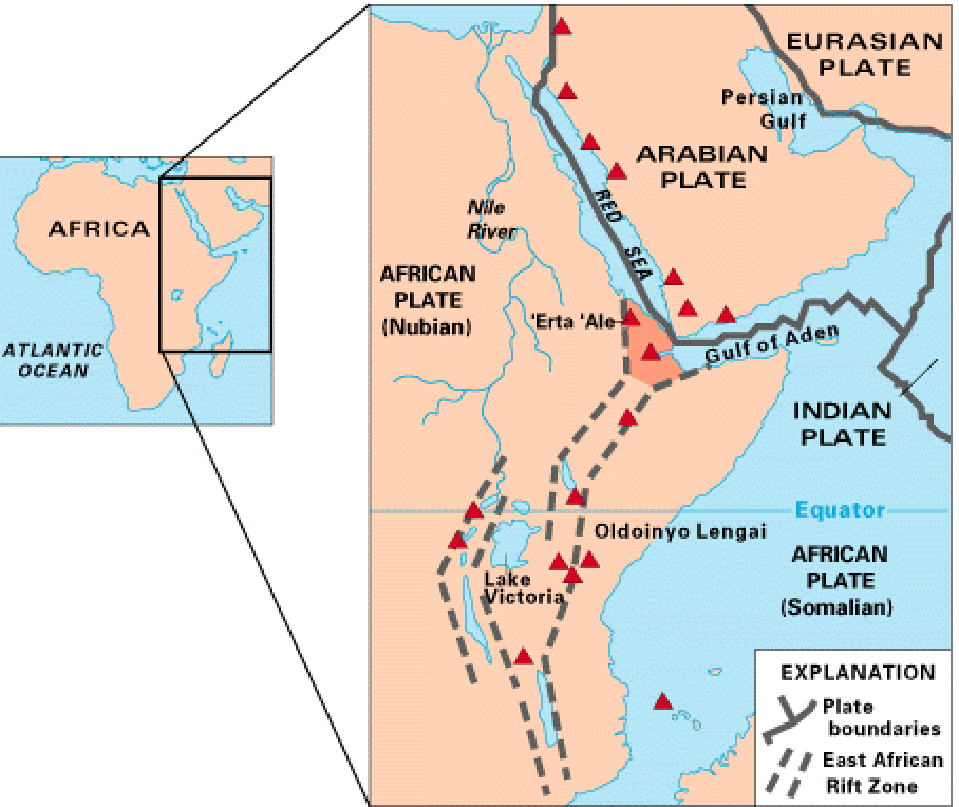
The split is happening along a huge crack in the Earth called the East African Rift System. This rift stretches from Ethiopia in the north all the way to Mozambique in the south. Over millions of years, the land here has been pulling apart, thinning, cracking, and slowly sinking.
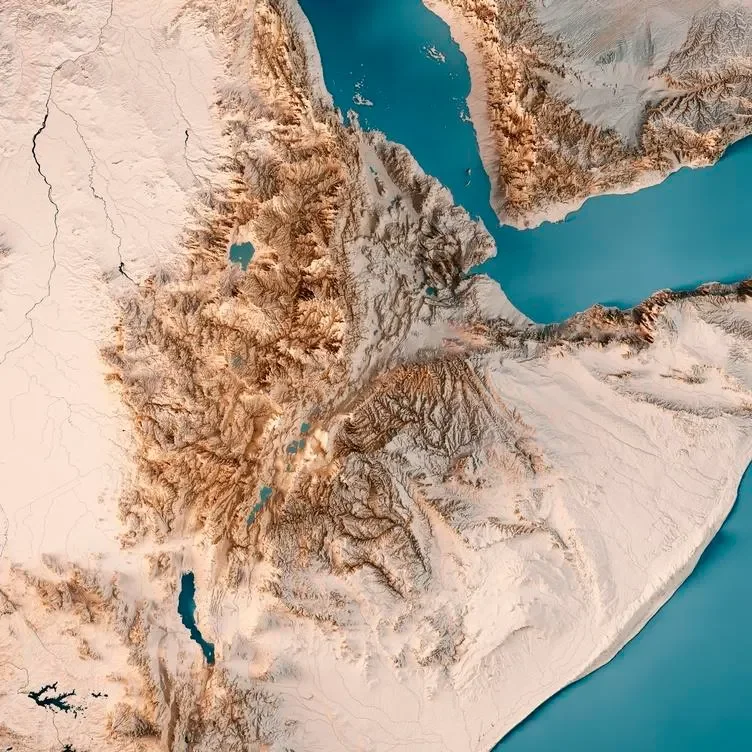
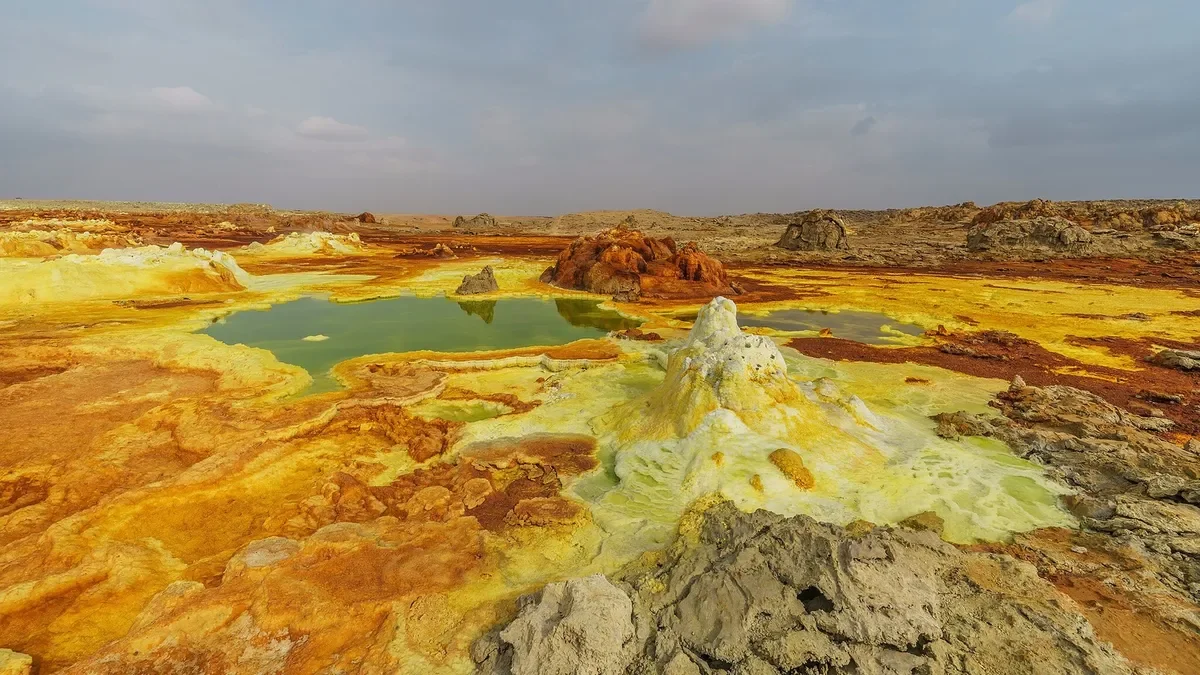
One of the most important places scientists study is the Afar Depression in northeastern Africa. This region includes parts of Ethiopia, Djibouti, and Eritrea. Afar is especially important because parts of it are already below sea level. Scientists believe that if the land continues to sink, water from nearby oceans like the Red Sea and the Indian Ocean could flood into the rift and begin forming a new sea.
Africa is splitting because of tectonic plates. Tectonic plates are enormous pieces of Earth’s outer layer that move very slowly. In the Afar region, three plates meet. These are the Nubian Plate, the Somali Plate, and the Arabian Plate. This meeting point is called a triple junction. As the plates pull away from each other, the crust stretches and cracks.
In some places, the plates are separating by as much as 0.3 inches each year. That may not sound like much, but over millions of years, it adds up to huge changes. Scientists track this movement using GPS, satellite images, earthquakes, and volcanic activity.
Volcanoes play a major role in this process. Hot melted rock called magma rises from deep inside the Earth and pushes the plates apart from below. In the Afar region, scientists have discovered a massive plume of hot mantle rock that pulses upward in rhythmic waves. These pulses weaken the crust above and help the land split more easily.
In 2005, scientists witnessed dramatic proof that the rift is active. A crack about 35 miles long and up to 25 feet wide opened in the desert in just ten days. This surprised researchers, who once thought continents only split slowly and evenly. This event showed that Earth can change suddenly as well as gradually.
Scientists have also learned new things by studying old information. In the late 1960s, airplanes flew over Ethiopia collecting magnetic data. At the time, the technology needed to fully understand this data did not exist, so it was forgotten for decades. Today, scientists can analyze these magnetic patterns, which act like geological barcodes stored in rocks. These barcodes help show how Africa and Arabia first split apart and how the African rift followed later.
By combining modern technology with both old and new data, scientists now understand that Africa and the Arabian Peninsula were once connected. Their separation helped form the Red Sea and the Gulf of Aden. The same process may now be happening again inside Africa itself.
If the plates continue to pull apart, the Horn of Africa could eventually break away from the rest of the continent and become a large island. This could happen anywhere from 1 million to 20 million years from now, which is very fast in geological time.
This kind of process has happened before. Long ago, the supercontinent Pangaea split apart, creating oceans like the Atlantic. Even the Southern Ocean around Antarctica was only officially recognized in 2021, although it formed about 30 million years ago when Antarctica and South America drifted apart.
Earth’s surface may look solid and still, but it is always moving. Mountains rise, oceans form, and continents drift apart over time. Studying Africa’s slow split helps scientists understand earthquakes, volcanoes, and how planets change.
Africa is not splitting overnight, and people living there are not in danger from a new ocean anytime soon. Still, scientists feel lucky to witness something so rare. Deep beneath our feet, Earth is quietly shaping its future, one slow movement at a time.
References
Bressan, David. 2025. “Forgotten Data From 50 Years Ago Reveals How Africa Is Splitting Apart.” Forbes, November 29, 2025. https://www.forbes.com/sites/davidbressan/2025/11/29/forgotten-data-from-50-years-ago-reveals-how-africa-is-splitting-apart/
HowStuffWorks. 2024. “Is Africa Splitting in Two? Really Here’s the Scoop.” HowStuffWorks. https://science.howstuffworks.com/environmental/earth/geology/africa-splitting.htm
Space.com. 2025. “A Newly Forming Ocean May Split Africa Apart, Scientists Say.” Space.com, July 2, 2025. https://www.space.com/astronomy/earth/a-newly-forming-ocean-may-split-africa-apart-scientists-say
UC Santa Barbara Geography. n.d. “Birth of an Ocean As Africa Splits Apart.” University of California Santa Barbara. https://legacy.geog.ucsb.edu/birth-of-an-ocean-as-africa-splits-apart/
USA TODAY. 2025. “This Continent Is Slowly Splitting Apart, Creating a New Ocean.” USA TODAY, April 30, 2025. https://www.usatoday.com/story/news/nation/2025/04/30/new-ocean-forming-africa/83354417007/