
All About Elephants
All About Elephants
Written by: Paige Leal
When most people think of elephants, they picture Dumbo flapping his giant ears like wings, but real elephants are even more amazing than the cartoon version.
Who Are Elephants?
Elephants are the largest land mammals on Earth, with three living species, the African savanna (or bush) elephant, the African forest elephant, and the Asian elephant.
African elephants are the biggest, being able to stand about 10–13 feet tall at the shoulder and weigh between 5 and 7 tons. Elephants have evolved many unique physical features: a long trunk, tusks, huge ears, and massive bodies. Each of these adaptations help them survive in different environments.
Body and Diet
An elephant’s trunk is one of its most important tools. With around 40,000–150,000 muscles, a trunk can grab food, drink water, breathe, trumpet, and even serve as a snorkel while swimming.These massive creatures may scare you, but they won't attack you, as they are herbivores. This means they eat grasses, bark, leaves, fruits, and other vegetation. A large adult can eat up to 300 pounds of food per day to sustain its massive body. Their tusks are actually enlarged front teeth called incisors. They use tusks for digging up roots, stripping bark from trees, digging water holes in dry ground, and defending themselves when needed.
Elephants don’t sweat much, instead, they use their huge ears like built-in air conditioners. Cool right! When they flap their ears, blood flows through many vessels close to the ear skin, cools down, and lowers their body temperature.
Daily Life
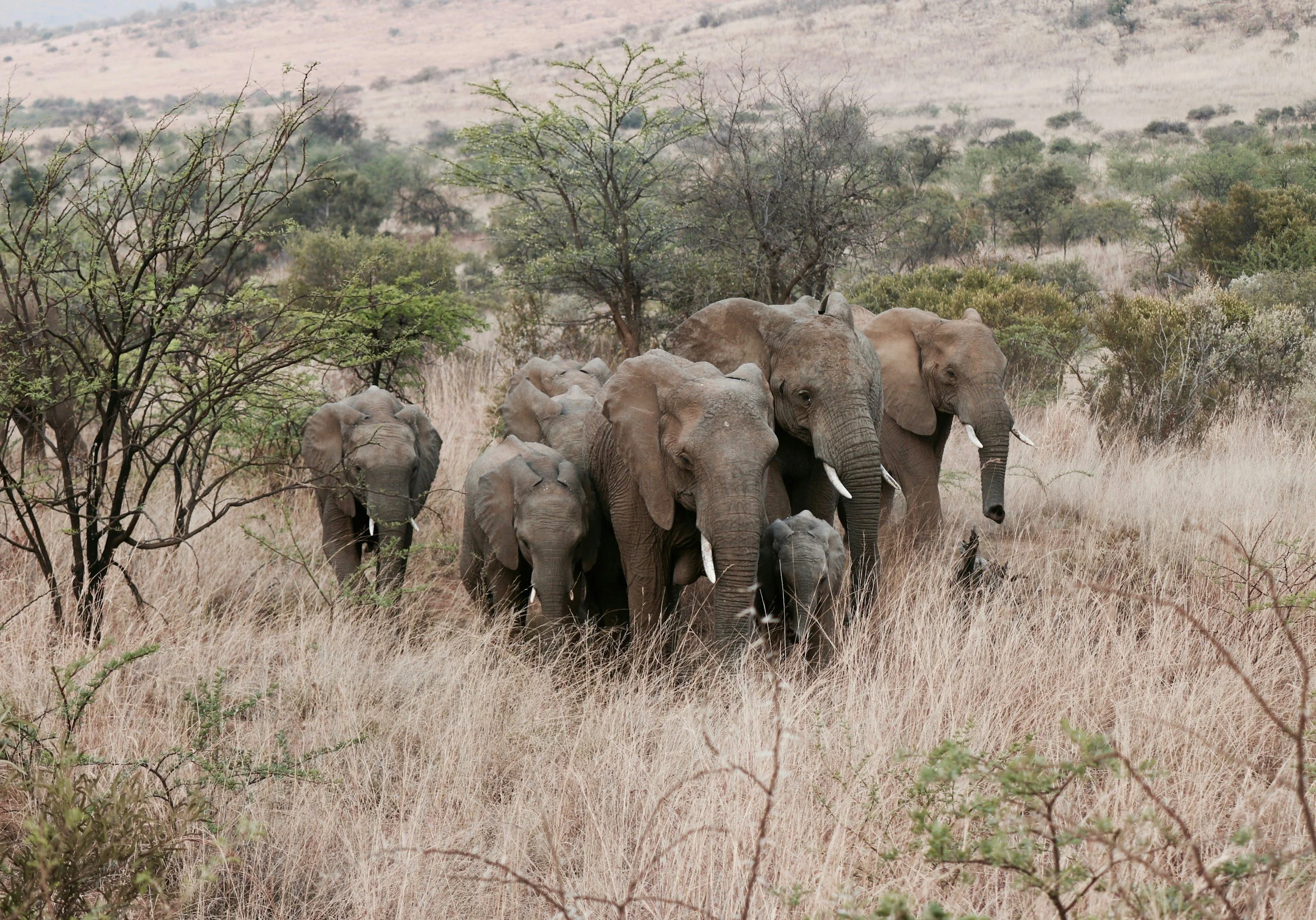
Elephants are very social creatures and live in groups called herds. Typically, a herd is led by the oldest female, the matriarch, and includes other females and their children, which are called calves. Males tend to leave their birth herd and live either alone or in small male groups when they get older. Their gestation period is the longest among land mammals, around 18–22 months. Calves are born quite large, often around 200 pounds. In the wild, elephants can live to be 60 to 70 years old, though many threats currently shorten that lifespan.
Why Elephants Matter
Elephants don’t just roam the wild, they shape it. Because they eat so much and move so much, they help create and change their environment through clearing the trees and shrubs, digging water holes during dry times (which other animals rely on), and spreading seeds through their dung. This “ecosystem engineering” makes elephants a keystone species, meaning their presence supports the survival of many other plants and animals. Sadly, elephants face major threats today, illegal poaching for ivory tusks, habitat loss due to expanding human population and agriculture, and human-elephant conflict when elephants raid farms for food. Scientists and conservation groups are working to protect their habitats and reduce poaching to help elephants survive for future generations.
References
Britannica. 2025. “Elephant.” Encyclopaedia Britannica. https://www.britannica.com/animal/elephant-mammal.
Elephant Aid International. 2025. “Elephant Facts.” Elephant Aid International. https://elephantaidinternational.org/elephant-facts/.
LiveScience. 2025. “Elephants: Facts About the Biggest Land Animal.” LiveScience. https://www.livescience.com/27320-elephants.html.
National Geographic Kids. 2025. “African Elephant Facts.” National Geographic Kids. https://kids.nationalgeographic.com/animals/mammals/facts/african-elephant.
Elephant Parade. 2024. “Why Do Elephants Have Big Ears?” Elephant Parade Blog. https://www.elephantparade.com/blog/why-do-elephants-have-big-ears-