
All About Sea Turtles
All About Sea Turtles
Written by: Paige Leal
“Save the turtles” might just sound like the average VSCO catchphrase, complete with scrunchies, metal straws and a hydroflask, but the message behind it is serious. Plastic pollution is one of the biggest threats sea turtles face in our oceans today.
What are Sea Turtles
Sea turtles are ancient reptiles that have been swimming in the world’s oceans for more than 100 million years. Unlike many land animals, sea turtles spend almost their entire lives in water, only coming to land when females need to lay their eggs on sandy beaches.
Different Species & Their Traits
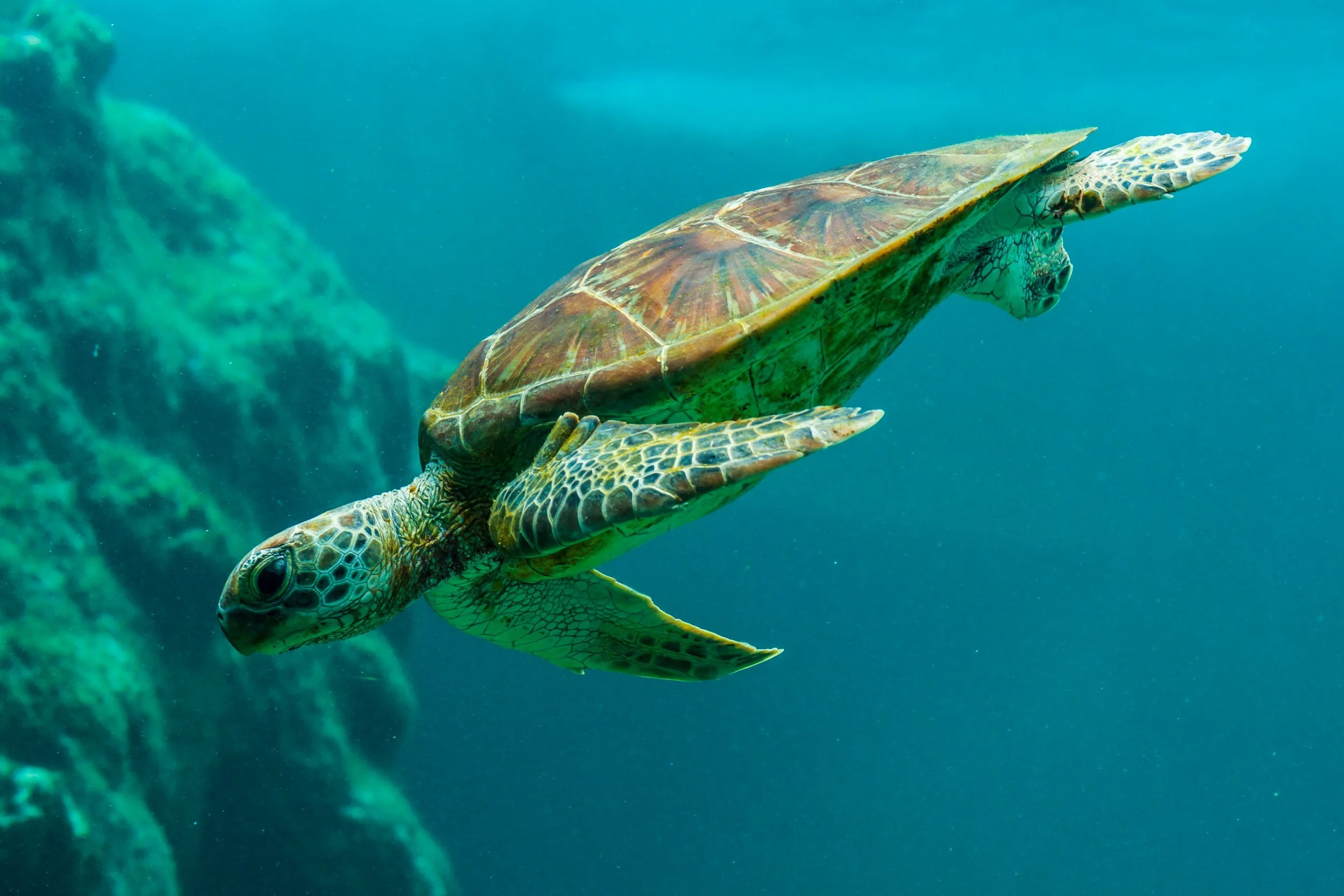
There are seven main species of sea turtles, including giants like the Leatherback Sea Turtle and smaller ones like the Kemp's Ridley Sea Turtle. Sea turtles vary widely in size and diet, some eat jellyfish, others prefer seagrass or crustaceans depending on their species. Their shells are made of hard plates (except leatherbacks, whose shells are more flexible) to protect them from predators when they are swimming or resting.
A sea turtle’s shell is a vital part of its body, not just a hard covering. It is made of two parts, the carapace on top and the plastron underneath. These pieces are fused to the turtle’s spine and ribs. The smooth, streamlined shape of the shell helps protect sea turtles from predators while also allowing them to swim easily through the ocean. It is just a plus that they are very pretty to look at as well.
Life Cycle & Amazing Journeys
Sea turtles start life as eggs buried in sandy nests on beaches. After about six to eight weeks, hatchlings emerge, dash to the sea, and begin a long, dangerous journey where very few survive to adulthood. As adults, sea turtles often migrate thousands of miles between feeding grounds and nesting beaches. It's a remarkable journey as many return to the same beach where they were born to lay their own eggs. How crazy is that!
Their Role in the Ocean
Sea turtles are super important for healthy oceans. Their eating habits like grazing on seagrass and controlling jellyfish or sponge populations, help keep marine ecosystems balanced. As they migrate and travel across seas, they also help connect far-flung habitats and support biodiversity.
Threats to Sea Turtles
Sadly, most sea turtle species are endangered or threatened. They face many dangers, for example their eggs and hatchlings are often eaten by animals, some turtles accidentally get caught in fishing nets, pollution can be deadly when mistaken for food, and coastal development destroys their nesting beaches. Protecting sea turtles means cleaning our oceans, being careful where we build on beaches, and respecting their nesting grounds
References
Britannica. 2025. “Turtle.” Encyclopaedia Britannica. https://www.britannica.com/animal/turtle-reptile.
ConserveTurtles. 2025. “Sea Turtles.” ConserveTurtles.org. https://conserveturtles.org/sea-turtles/.
SeaWorld. 2025. “Sea Turtles — Characteristics.” SeaWorld. https://seaworld.org/animals/all-about/sea-turtles/characteristics/.
SeeTurtles. 2025. “Sea Turtle Facts.” SeeTurtles.org. https://www.seeturtles.org/sea-turtle-facts.
National Geographic Kids. 2025. “Turtle Facts.” National Geographic Kids. https://www.natgeokids.com/uk/discover/animals/sea-life/turtle-facts/.