
All About the Shoebill
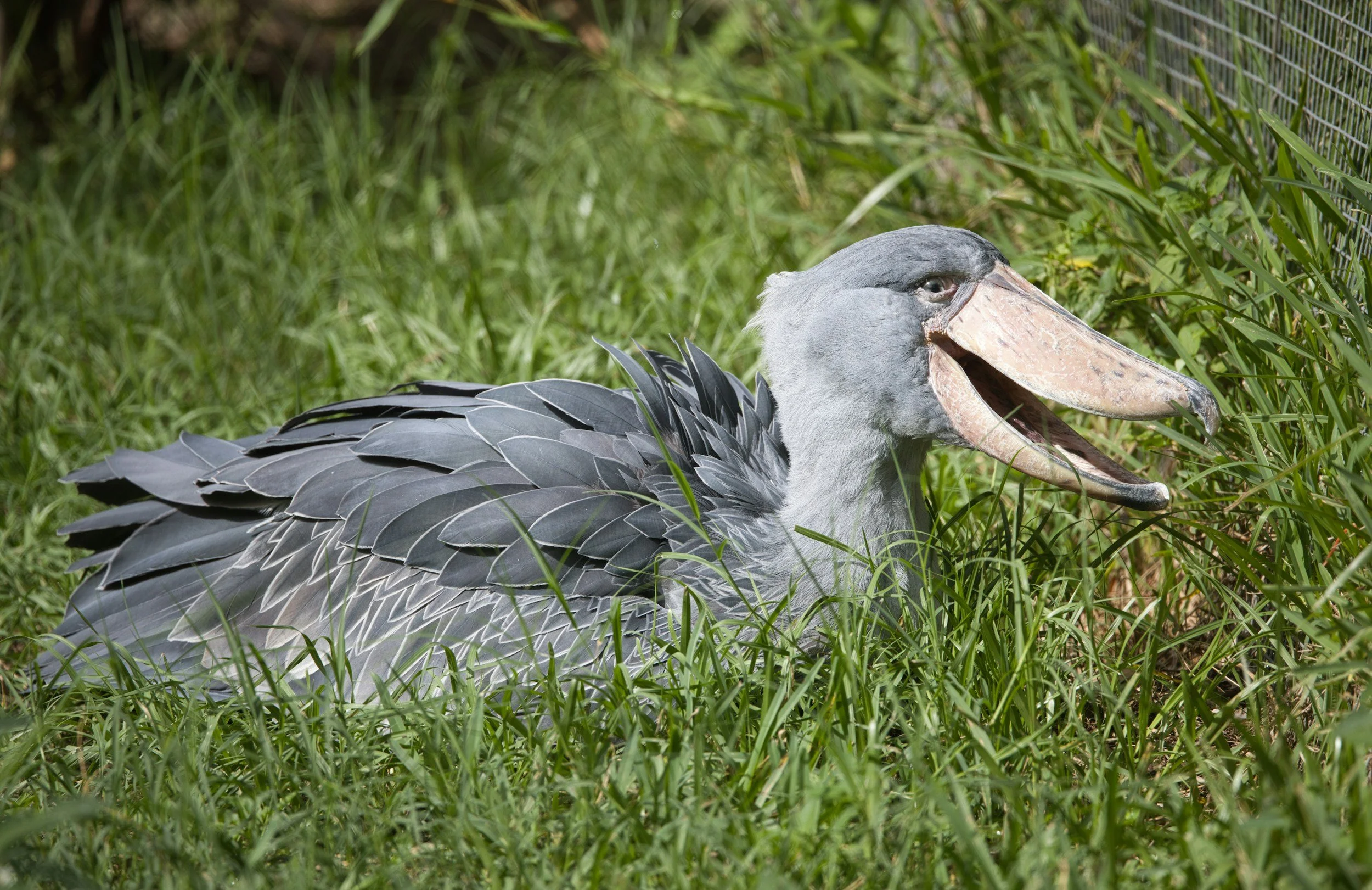
If you ever saw a shoebill standing in a swamp, you might wonder if a dinosaur somehow survived until today. With its serious stare and giant beak, this bird looks like it belongs in a movie! Shoebills live in freshwater swamps and marshes across parts of East and Central Africa. They can grow to around five feet tall, making them much bigger than the average backyard bird.
The Beak
The shoebill gets its name from its enormous bill, which looks a lot like an old-fashioned wooden shoe. It can reach about a foot long and has a hooked tip with sharp edges. This isn't just for looks, either. The bill helps the bird grab slippery prey and hold onto animals that might otherwise escape. Shoebills have blue-gray feathers, a pale belly, long legs, large feet, yellowish eyes, and a small tuft of feathers on the back of the head. Their wide wings help them fly over the wetlands where they live.
Diet
Shoebills are carnivores, but most of their diet is made up of fish. The lungfish is one of their typical catches, as it sometimes comes to the water's surface to breathe. Shoebills eat other fish, frogs, snakes, and even young crocodiles. Instead of chasing their food around, they often stand almost completely still for a long time, watching the water. When a fish comes close enough, the shoebill suddenly lunges forward and grabs it with its huge bill. It takes patience, but this hunting style can really pay off! They can also make a loud rattling sound by clapping their bills together, especially when greeting one another or communicating around the nest. Their calls also carry quite far across the marsh.
Solitary Birds
Shoebills are usually solitary, meaning they prefer being alone. Even when a pair is raising chicks, the adults may spend much of their time feeding at opposite ends of their territory. They build large nests on floating plants, where both parents help care for the eggs and chicks. Although a female may lay more than one egg, usually only one chick is raised.
Sadly, shoebills are considered vulnerable, and their numbers are decreasing. Wetland destruction, hunting, and disturbance near their nests all make survival harder. Protecting the swamps they depend on is important for their future. With their unusual looks, patient hunting skills, and almost dinosaur-like appearance, shoebills are definitely birds worth learning about.
All About the Shoebill
Written by: Paige Leal
References
BirdLife International. “Shoebills.” BirdLife International. https://www.birdlife.org/birds/shoebill/. Accessed November 22, 2026.
“Ciconiiform.” Encyclopaedia Britannica. https://www.britannica.com/animal/ciconiiform. Accessed November 22, 2026.
“Shoebill.” National Geographic. https://www.nationalgeographic.com/animals/birds/facts/shoebill. Accessed November 22, 2026.