
Axolotls: From Mexico to Minecraft
Axolotls: From Mexico to Minecraft
Written by: Sitara Nair
Have you ever seen those goofy-looking animals in the ocean? They don’t look like lizards, they don’t look like fish, and they sure don’t look like lobsters; they are something in between! Well, they are actually a kind of salamander called an axolotl, beloved for its pink color and cute face. Let’s learn about them and what makes them relevant and essential in our world.
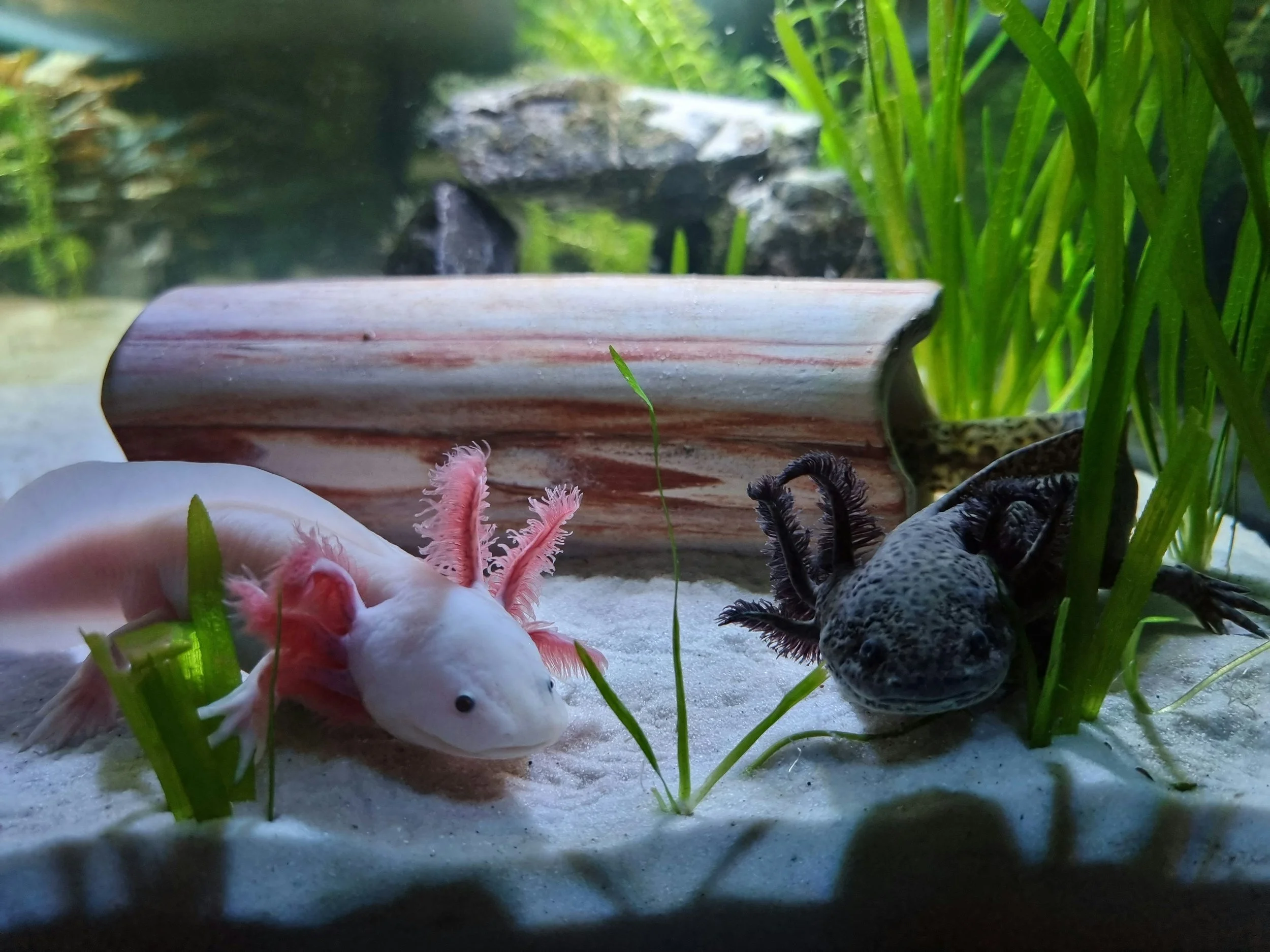
Axolotls (otherwise known as Mexican walking fish), are one of the most unusual but beloved creatures in the animal kingdom. In fact, they are so unusual that they aren’t even fish at all, they’re actually amphibians! They are a type of salamander, which is scientifically known as Ambystoma Mexicanum. Their wide, expressive faces and frilly gills, which protrude outwards, make them look silly, but allow them to have remarkable biological abilities that make them the focus of scientific research!
One of the coolest features of axolotls is their ability to regenerate body parts. While many amphibians can regrow limbs to some extent, axolotls take this talent to an entirely new level! Like you might’ve heard with starfish growing their legs back, axolotls are also able to fully regenerate legs, tails, spinal cord tissue, parts of the brain, and even sections of vital organs without visible scarring. This incredible ability has made them a significant subject of regenerative medicine studies. Researchers additionally hope that by understanding how axolotls do this, they can apply that knowledge to human medical care and discover new ways to treat human injuries and degenerative diseases!
Axolotls stand out because they never complete the typical amphibian life cycle. Most salamanders undergo metamorphosis, which is the process of transitioning from aquatic larvae to land-dwelling adults. However, with axolotls, they remain in their larval stage for their entire lives (this condition is known as neoteny)! They retain their gills and aquatic lifestyle even when mature. Although it’s rare, metamorphosis can be triggered under certain conditions in captivity, usually through changes in hormones or the environment. However, this transformation is stressful and generally not considered ideal.
The cultural importance of axolotls in Mexico is rich and long-standing. In Aztec mythology, the axolotl is linked to the god Xolotl, who is believed to have turned into this creature to avoid sacrifice. This meaningful cultural bond still inspires a sense of pride across the nation and motivates efforts to protect these unique animals!! Today, the axolotl proudly stands as a global icon, symbolizing both scientific fascination and the critical importance of conservation.
Regarding habitats, they have just one, the ancient lake system of the Valley of Mexico. Historically found in Lake Xochimilco and Lake Chalco, axolotls thrived in the system of canals and wetlands that connected the region. Unfortunately, today, axolots are considered critically endangered in the wild. Rapid urbanization, pollution, the draining of natural waterways, and the introduction of invasive species such as tilapia and carp have led to a sharp decline in their numbers.
However, people noticed the decline in its numbers, and action was indirectly taken. When popular video game Minecraft introduced the whimsical axolotl in its June 2021 “Caves and Cliffs” update, players worldwide were suddenly exposed to one of Earth’s most unusual amphibians. The game’s version sparked a real-world change, as breeders, retailers, and hobbyists began hearing more often about the funky sea animal. In one report, a breader estimated that roughly 90% of young visitors came specifically asking for axolots because of the game! That spike in attention was a blessing because the animal's increased visibility helped spark public awareness. However, the actual wild populations of axilotls are critically endangered, with threats like habitat loss, pollution, and invasive species looming large. Moreover, Minecraft brought the axolotl into living rooms and lunchboxes, spreading awareness of the animal, but it’s still our job to preserve its canals in Mexico and protect axolotls!
References
San Diego Zoo Wildlife Alliance. “Axolotl.” San Diego Zoo Animals & Plants. Accessed October 29, 2025. https://animals.sandiegozoo.org/animals/axolotl. San Diego Zoo Animals
National Geographic Kids. “Axolotl.” Last modified [if listed; otherwise “n.d.”]. Accessed October 29, 2025. https://kids.nationalgeographic.com/animals/amphibians/facts/axolotl. National Geographic
Geere, Duncan. “Mob Menagerie: Axolotl.” Minecraft.net. Published May 1, 2025. Accessed October 29, 2025. https://www.minecraft.net/en-us/article/axolotl#:~:text=There%20are%20several%20things%20you,they're%20common%20in%20captivit