
Born to Handle the Heat?
Born to Handle the Heat?
Written by: Paige Leal
When eating spicy food, are you the type of person who immediately reaches for more, or the type whose tongue starts burning and has you reaching for a glass of milk? Although many people assume that when someone badly reacts to spicy food they’re just being dramatic, it actually comes down to the biology, experience and culture.
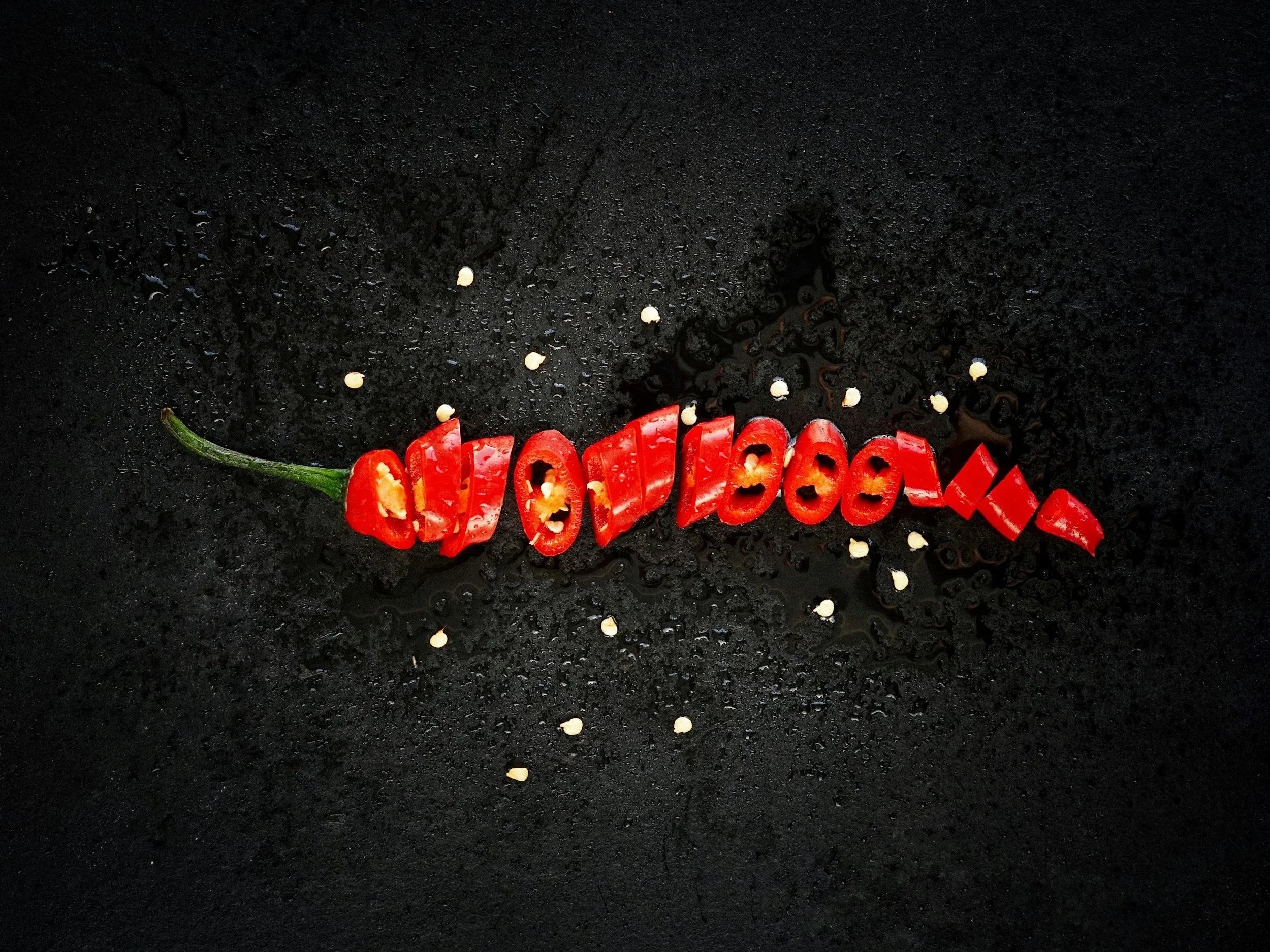
Spicy food is described as “hot” but not in the same way soup is hot. The burning feeling comes from a compound called capsaicin, which is found in chili peppers. Capsaicin attaches to pain receptors on your tongue called TRPV1 receptors. These receptors are normally responsible for detecting heat and physical pain, so when capsaicin activates them, your brain thinks your mouth is on fire, even though there’s no real heat damage happening
Some people naturally have a higher tolerance because of genetics. Their pain receptors may be slightly less sensitive, meaning they don’t react as strongly to capsaicin. But biology isn’t the only factor. Exposure plays a huge role. If someone grows up eating spicy foods regularly, their body gradually adapts. The repeated activation of those pain receptors makes them less reactive over time, so the same level of spice feels milder than it did before. Culture also matters. In many regions around the world, spicy food is part of daily life. When children are introduced to mild spice early on, their tolerance develops naturally as they grow. On the other hand, people who rarely eat spicy foods may find even moderate heat overwhelming because their bodies aren’t used to it.
One of the most interesting parts of eating spicy food is what happens in your brain. When capsaicin triggers pain receptors, your brain responds by releasing endorphins. Endorphins are chemicals that act as natural painkillers and mood boosters. They’re the same type of chemicals released during exercise, laughter, or even excitement. That rush of endorphins can create a slight “high,” which is why some people actually enjoy the burn and keep coming back for more. When people talk about how addicting chips and salsa can be, a lot of that comes from how the spices are addicting because they bring happiness and a “high”.
So really, spice tolerance isn’t about being weaker or braver. It’s a mix of genetics, repeated exposure, and how your brain reacts to pain signals. So if you can’t handle extra hot salsa, that’s completely normal, but if you love the burn, you can thank your brain’s endorphins for making it feel worth it!
References
Kean Health. 2024. “Is Spice Tolerance Genetic?” Kean Health. Accessed February 26, 2026. https://www.keanhealth.com/blog/is-spice-tolerance-genetic.
McGill University. 2024. “Why Do Some People Like Spicy Foods and Others Don’t?” McGill Office for Science and Society. Accessed February 26, 2026. https://www.mcgill.ca/oss/article/did-you-know/why-do-some-people-spicy-foods-not-others.
Rieger, J. A., et al. 2019. “Understanding Individual Differences in Capsaicin Perception.” Appetite 141: 104332. Accessed February 26, 2026. https://www.sciencedirect.com/science/article/pii/S1526590019308703.
NBC News. 2024. “Why Some People Like Extremely Spicy Foods.” NBC News. Accessed February 26, 2026. https://www.nbcnews.com/health/health-news/spicy-food-why-some-like-extreme-hot-ones-rcna161907