
How Brain Implants Are Helping People Speak Again
How Brain Implants Are Helping People Speak Again
Written by: Keya Gambhir
Imagine having so many thoughts in your mind but no way to say them out loud. That is what life can feel like for people with a disease called ALS. ALS, short for amyotrophic lateral sclerosis, is a serious illness that slowly takes away a person’s ability to move, talk, and even breathe. But now, new technology is giving people hope and even helping them speak again.
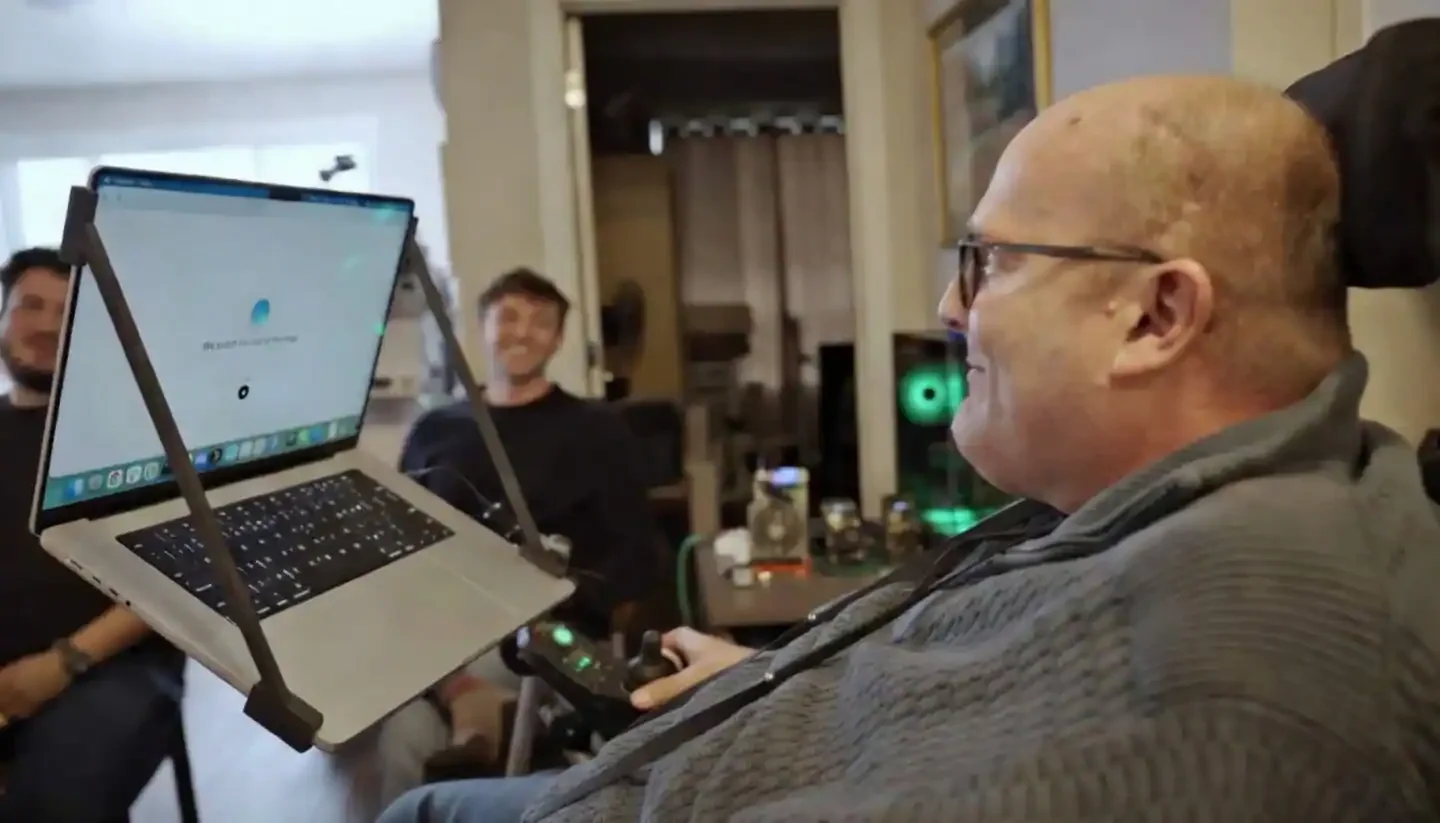
One man named Casey Harrell knows this struggle very well. He was diagnosed with ALS in 2020. Over time, he lost the ability to move easily and eventually could not speak clearly anymore. This made it very hard for him to communicate with his wife and young daughter. Simple things like saying “I love you” or comforting his child became almost impossible.
But everything changed when Harrell joined a special research study. Scientists were testing something called a brain-computer interface, or BCI. This technology connects the brain directly to a computer. Doctors placed tiny sensors into the part of Harrell’s brain that controls speech. These sensors can pick up signals when he tries to talk.
Here is how it works. When Harrell thinks about speaking, his brain sends signals just like it always did before he got sick. The sensors capture those signals and send them to a computer. Then, artificial intelligence, also known as AI, helps turn those signals into words on a screen. In some cases, the computer can even speak the words out loud using a voice that sounds like the person’s real voice.
The first time Harrell used the system, something amazing happened. He tried to read a sentence, and the words appeared correctly on the screen. Soon after, he was able to create his own sentences. One of the first things he said using the technology was to his daughter. It was a small moment, but also a very powerful one.
Scientists say this kind of technology is improving quickly. In some studies, these systems can understand what a person is trying to say with about 90 to 96 percent accuracy. That means most of the words come out correctly, even if it is not perfect yet.
This technology is especially important for people who are fully aware and thinking clearly but cannot speak because of injuries or diseases. It can help people with ALS, spinal cord injuries, or strokes reconnect with their families and the world around them.
However, the technology is still new and has some challenges. Right now, the process can be slow. It might take a minute or more for a full sentence to appear and be spoken. The equipment is also large and not easy to carry around. Scientists are working on making it faster, smaller, and easier to use in everyday life.
There are also important questions about safety and privacy. Some people worry about what could happen if brain technology becomes widely used. Could companies collect data from people’s brains? Could it be misused in the future? Researchers say the current systems only pick up signals that a person is trying to communicate, not their private thoughts. Still, many experts agree that rules and protections will be important as the technology grows.
Even with these concerns, the impact of brain-computer interfaces is already life-changing. For people like Casey Harrell, it means being able to connect with loved ones again. It means being heard.
Harrell has said that using the technology felt “amazing” the first time it worked. After losing his voice, he found a new way to speak. And for many others in the future, this technology could offer the same chance.
In the end, this is more than just a science story. It is a story about communication, connection, and hope. Even when the body stops working, the mind is still full of ideas, feelings, and love. Thanks to new technology, those thoughts no longer have to stay silent.
References
Swan, Rachel. 2026. “ALS Took His Voice. A Brain Implant Helped Him Speak to His Daughter Again.” San Francisco Chronicle, April 26, 2026. https://www.sfchronicle.com/bayarea/article/als-brain-implant-speech-21359382.php
Stewart, Kevyn. 2026. “Emory and Georgia Tech Trial Helps Paralyzed Patients Speak.” FOX 5 Atlanta, April 16, 2026. https://www.fox5atlanta.com/news/emory-georgia-tech-trial-helps-paralyzed-patients-speak
“Patient Kenneth with ALS Speaks Again Using Neuralink Brain Implant.” 2026. NewsBytes, April 25, 2026. https://www.newsbytesapp.com/news/science/patient-kenneth-with-als-speaks-again-using-neuralink-brain-implant/tldr