
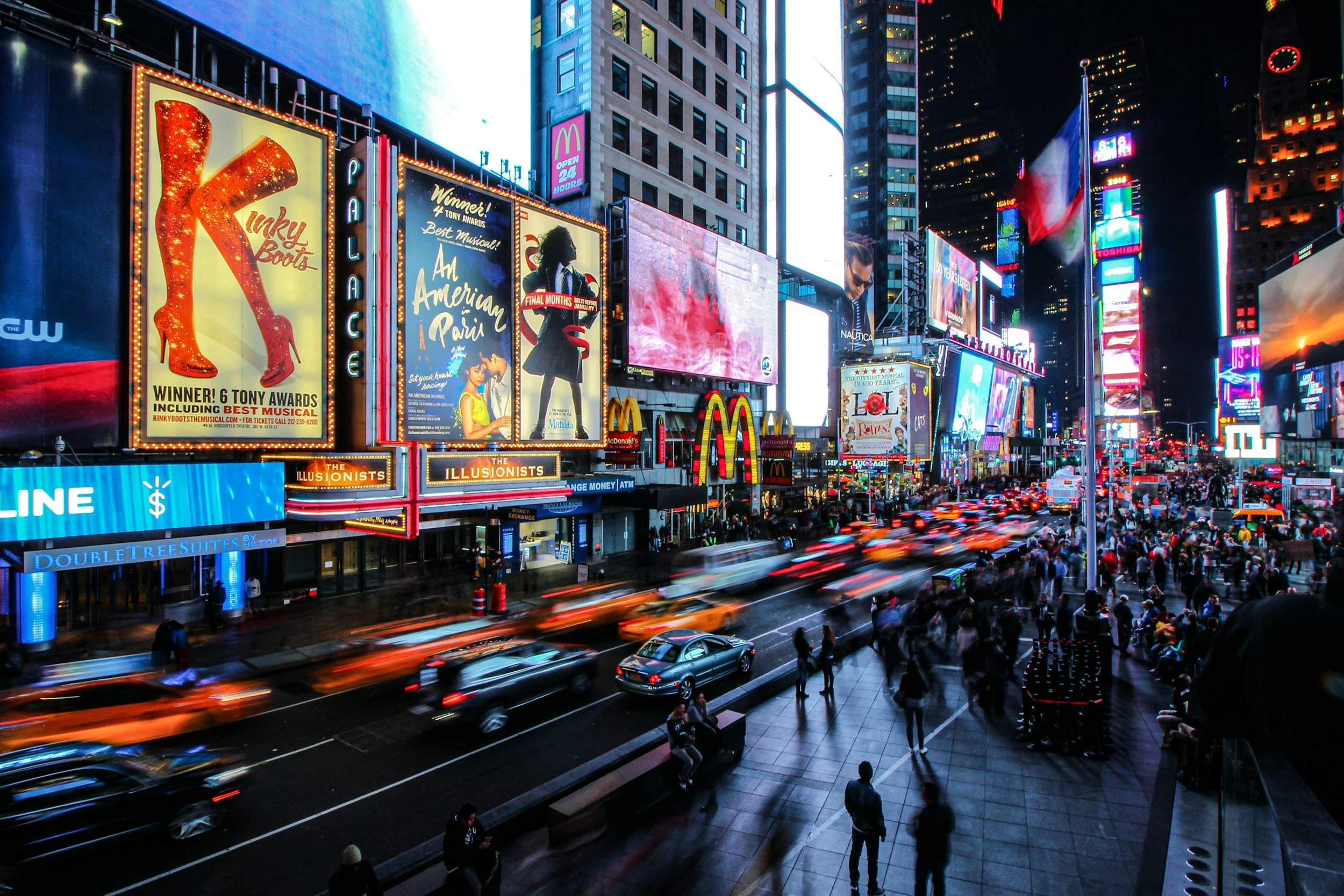
Broadway: The Story Behind America’s Most Famous Theater
Broadway: The Story Behind America’s Most Famous Theater
Written by: Keya Gambhir
Have you ever heard of Broadway? It is one of the most famous places for theater in the world, located in New York City. People travel from all over to watch exciting musicals, plays, and performances there. But Broadway is not just a place; it is also a style of theater known for big productions and amazing storytelling.
What is Broadway?
Broadway refers to a group of theaters in New York City’s Theater District. To be called a “Broadway show,” a performance usually takes place in a theater with 500 or more seats. Today, there are about 41 Broadway theaters, each with its own history and famous shows.
Broadway shows can be musicals, plays, concerts, and other live events. Many popular movies and TV shows actually started on Broadway before becoming famous worldwide.
How did Broadway get its Name?
Broadway is also a real street that stretches about 13 miles through New York City. Long ago, Native Americans used it as a trail called the Wickquasgeck Trail. Later, Dutch settlers widened it, and when the English took control in 1664, they renamed it “Broadway” because it was wider than most streets.
It is one of the only streets in Manhattan that does not follow the grid pattern. Instead, it cuts across the city and helps form famous places like Times Square.
How Broadway began
Theater in New York dates back to around 1735, when one of the first theaters opened on Broadway. In 1750, actors Thomas Kean and Walter Murray opened a theater that performed Shakespeare plays.
Theater paused during the American Revolutionary War, but returned soon after. In 1798, the Park Theatre opened and became one of the most important early venues.
In 1816, William Alexander Brown created the African Grove Theatre, one of the first Black theaters in the United States. It was important because it gave Black actors a place to perform at a time when many theaters were segregated.
By the late 1800s, theaters began moving uptown to what is now the Theater District. What used to be farms slowly turned into a busy entertainment center.
The Birth of Musicals
One of the first shows that looked like a modern musical was The Black Crook in 1866. It combined acting, singing, and dancing and ran for 474 performances.
Later, musicals became more advanced. Shows like Show Boat in 1927 connected songs to the story in a new way. This idea grew in the 1940s with creators Richard Rodgers and Oscar Hammerstein II, who made famous musicals like Oklahoma!.
The Golden Age of Broadway
The mid-1900s is known as Broadway’s Golden Age. This era began with Oklahoma! in 1943 and included many classics like The Sound of Music, My Fair Lady, and West Side Story.
Artists like Leonard Bernstein and Stephen Sondheim helped make musicals more creative. Dance became an important way to tell stories, not just songs and dialogue.
In 1947, the Tony Awards were created to celebrate the best Broadway shows and performers.
Challenges and Comeback
In the 1970s, Broadway struggled due to economic problems and safety concerns in New York City. Fewer people attended shows, and some theaters closed.
But in the 1980s and 1990s, Broadway made a comeback. Campaigns helped save theaters, and big productions brought audiences back. Composer Andrew Lloyd Webber created huge hits like The Phantom of the Opera, which became the longest-running Broadway show.
Disney also helped Broadway grow with family-friendly shows like The Lion King.
Broadway Today
Today, Broadway is more popular than ever. Modern hits like Wicked, The Book of Mormon, and Hamilton attract huge audiences. Hamilton, created by Lin-Manuel Miranda, is especially famous for mixing hip-hop with history.
Broadway has also faced challenges recently. In 2020, theaters shut down due to the COVID-19 pandemic but reopened in 2021. By 2025, Broadway had one of its most successful seasons ever.
Beyond Broadway
There are also smaller theater groups like Off-Broadway and Off-Off-Broadway. These shows are often more experimental and take creative risks. Many famous actors and writers started in these smaller theaters.
Broadway is also connected to a long history of theater that goes all the way back to ancient Greece, where people first used music and drama to tell stories.
Why Broadway Matters
Broadway is more than just entertainment. It is a huge part of American culture and brings billions of dollars to New York City each year. Its shows travel around the world, reaching millions of people.
For hundreds of years, Broadway has continued to grow, change, and inspire. Whether through music, dance, or storytelling, it remains one of the most exciting parts of the theater world.
References
“Broadway: A History of the Great White Way.” 2024. Dance Informa. June 3, 2024. https://www.danceinforma.com/2024/06/03/broadway-a-history-of-the-great-white-way/.
Paterra, Sidney. 2021. “A Brief History of Broadway.” BroadwayWorld. December 19, 2021. https://www.broadwayworld.com/article/A-Brief-History-of-Broadway-20211219.
Rea, Kenneth Grahame. 2026. “Broadway.” Encyclopaedia Britannica. https://www.britannica.com/art/Western-theatre/Broadway.
Willingham, Kathryn. n.d. “History of Broadway.” Best Broadway Musicals. https://bestbroadwaymusicals.com/history-of-broadway/.