
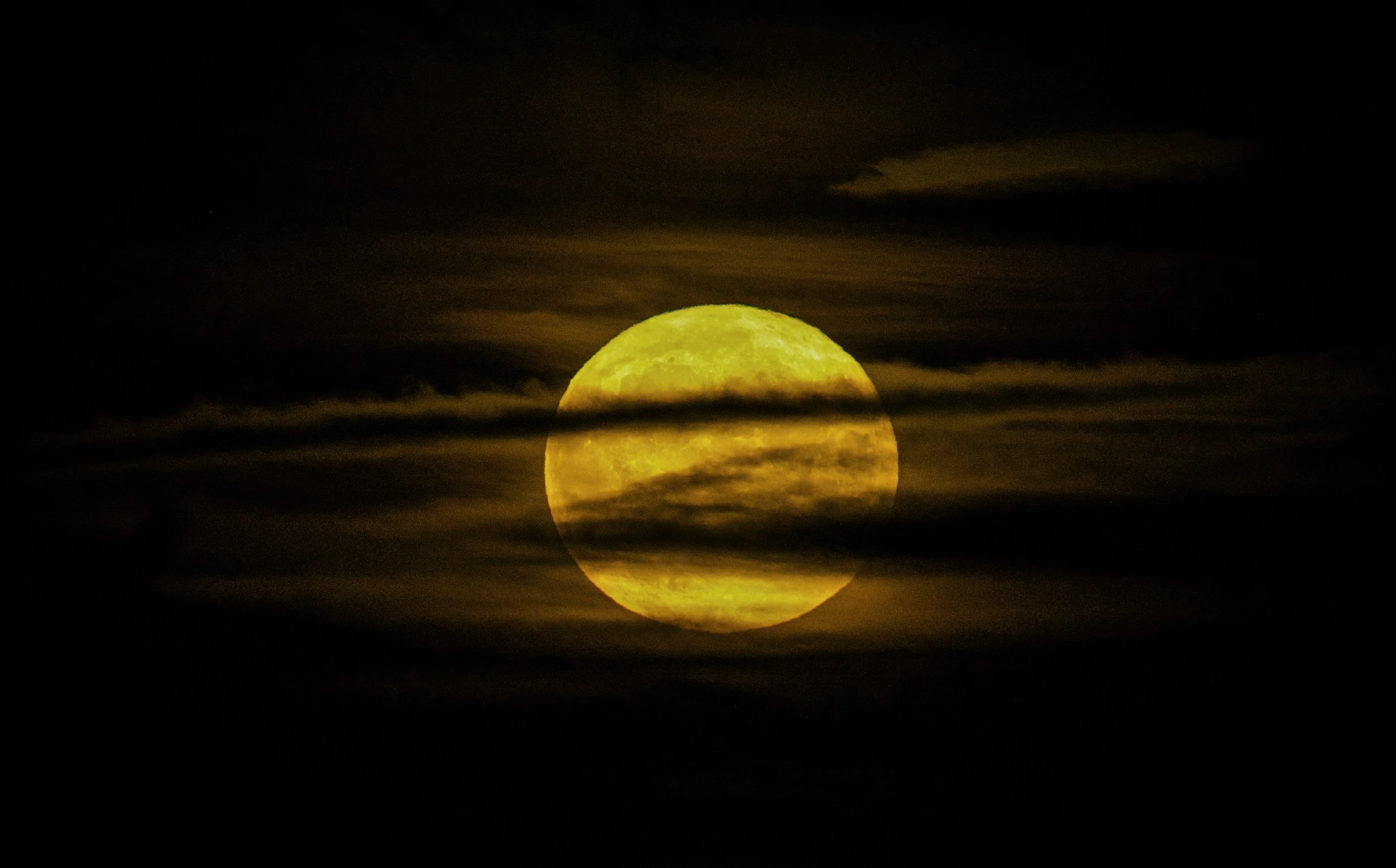
July's 2026 Buck Moon
July's 2026 Buck Moon
Written by: Keya Gambhir
Every month, the Moon goes through a cycle of phases, from the New Moon to the Full Moon and back again. In July 2026, the Full Moon has a special name: the Buck Moon. This year’s Buck Moon will reach its fullest phase on Wednesday, July 29, 2026. It will be an excellent opportunity for students and skywatchers to learn about the Moon, explore the night sky, and discover how people have connected the Moon to the changing seasons for generations!
What Is the Buck Moon?
The Buck Moon is just the traditional name given to the Full Moon in July. The name “Buck Moon” is connected to male deer, also called bucks. During this part of summer, bucks are growing new antlers. Their antlers begin growing again each year after being shed, and the new growth becomes especially noticeable during July. The name is not an astronomical term. Scientists do not consider the July Full Moon physically different from other Full Moons because of its name. Instead, names such as Buck Moon are part of seasonal traditions and cultural history. July’s Full Moon has also been known by other names. Different communities have used names connected to plants, animals, weather, and seasonal activities. Examples are the following: Berry Moon, Salmon Moon, Thunder Moon, and Raspberry Moon. These different names show how people around the world have observed nature and used seasonal changes to mark time.
When Is the 2026 Buck Moon?
In 2026, the Buck Moon reaches peak illumination on July 29 at 10:36 a.m. Eastern Time. Because this occurs during daylight for much of North America, the exact moment of the Full Moon is not necessarily the best time to look at it. The Moon will be below the horizon in many locations at peak illumination. Instead, skywatchers can look for the nearly full Moon around sunset and after dark.
For example, in San Jose, California, the Full Moon occurs at about 7:35 a.m. local time on July 29. This means people there can watch for the bright Full Moon during the evening of July 28 and the night of July 29!
The Science Behind a Full Moon
A Full Moon happens when the Moon is positioned so that the side facing Earth is almost completely illuminated by sunlight. The Moon does not make its own light. Instead, sunlight reflects from its surface and makes it appear bright in the night sky. The Moon takes about 29.5 days to complete its cycle of phases. During this cycle, we see different amounts of the Moon's sunlit side from Earth. The Full Moon occurs about halfway through the cycle, when the Moon appears round and bright. The Moon's orbit around Earth is not a perfect circle. Its distance from Earth changes as it travels through its orbit, which means the Moon can appear slightly larger or smaller at different times. These changes are normal parts of the Moon's orbit and are separate from the traditional name “Buck Moon.”
Observing the Buck Moon
One of the best things about the Buck Moon is that students do not need expensive equipment to observe it. The Moon is bright enough to see with the naked eye. To observe it, choose a location with a clear view of the sky and as little obstruction as possible. Buildings, tall trees, and bright lights can make observation more difficult. Look toward the eastern sky as the Moon rises and watch how its position changes during the evening.
In conclusion, the Buck Moon is not just a pretty sight in the summer sky. It is the combination of astronomy, biology, history, and culture! Its name connects the July Full Moon with the seasonal growth of deer antlers, while the Moon itself provides a chance to study light, orbits, phases, and Earth's relationship with its natural satellite. The Buck Moon often represents togetherness for a lot of communities, and is quite fun to learn about. Make sure to take a picture if you see a full moon, it’s a kind of the spectacle you won’t want to forget!
References
Imber, Louise. “July Full Moon 2026: Here’s the Meaning Behind the Summer ‘Buck Moon’—and the Best Time to See It.” Fast Company, July 28, 2026. https://www.fastcompany.com/91581035/july-full-moon-tonight-2026-buck-moon-meaning-best-view-time.
WTHR. “Buck Moon 2026: Why July’s Full Moon Has That Name and When to Look Up This Week.” WTHR, July 28, 2026. https://www.wthr.com/article/weather/weather-blog/buck-moon-2026-why-july-full-moon-has-that-name-and-when-to-look-up-this-week-night-sky/531-015c9542-c2af-4001-b028-b4a0a8d50d12.
Wood, Anthony. “July’s Full Buck Moon Leads a Mini Planet Parade Through the Summer Sky Tonight.” Space.com, July 29, 2026. https://www.space.com/stargazing/full-buck-moon-leads-a-mini-planet-parade-through-the-summer-sky-july-29-2026.