
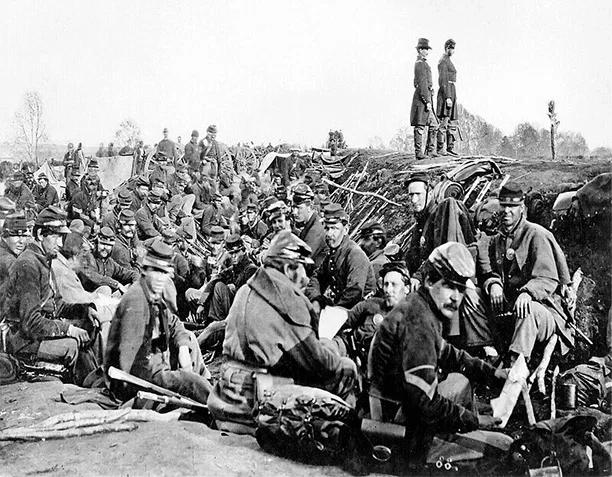
The American Civil War: A Nation Divided
The American Civil War: A Nation Divided
Written by: Keya Gambhir
The American Civil War was one of the most important and tragic events in United States history. Fought between 1861 and 1865, it was a war between the Northern states, called the Union, and the Southern states, which had seceded from the Union to form the Confederate States of America. The war was caused by a combination of slavery, states’ rights, economic differences, and political conflicts that had been growing for decades.
Causes of the War
Slavery was the main cause of the Civil War. Southern states relied on enslaved African Americans to work on large plantations that grew cash crops like cotton and tobacco. By contrast, Northern states had mostly free labor and were becoming industrialized, with factories, railroads, and banks. The North wanted to prevent the expansion of slavery into new territories, while the South feared that restricting slavery would threaten their economy and way of life.
States’ rights were another key issue. Southern leaders believed that each state should have the power to make its own laws, including laws about slavery, without interference from the federal government. Many Southerners felt the federal government had too much power and could eventually abolish slavery altogether.
Economic differences also contributed to the conflict. The North invested heavily in industry and infrastructure, while the South invested mainly in land and slaves. Tariffs, taxes, and government policies often favored Northern interests, which angered Southern politicians and plantation owners.
Political events made tensions worse. Compromises like the Missouri Compromise of 1820 and the Kansas-Nebraska Act tried to settle disputes over slavery in new territories, but these measures ultimately failed. The election of Abraham Lincoln in 1860, who opposed the expansion of slavery, led seven Southern states to secede immediately. Four more states followed, forming the Confederacy under Jefferson Davis.
The War Begins
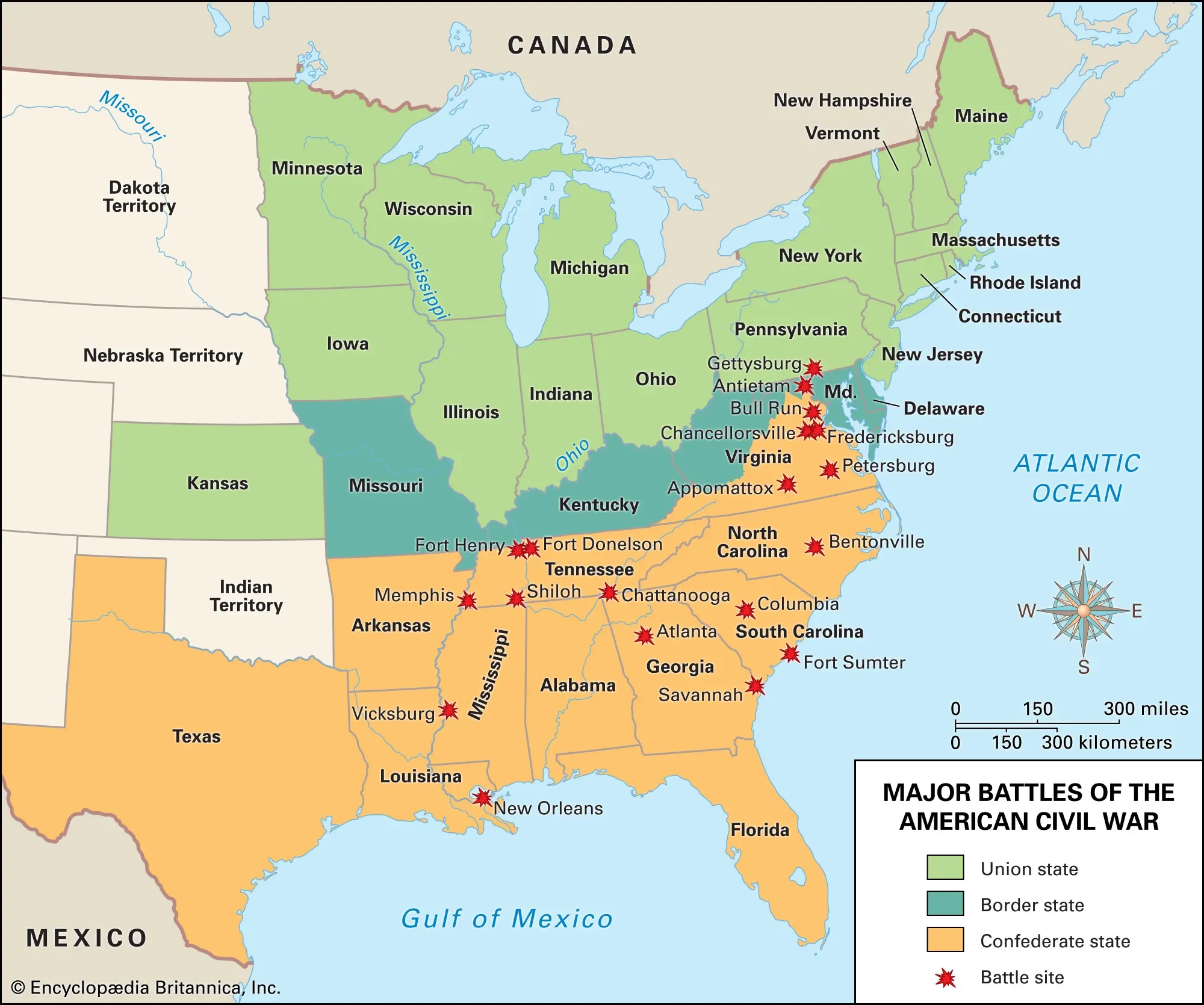
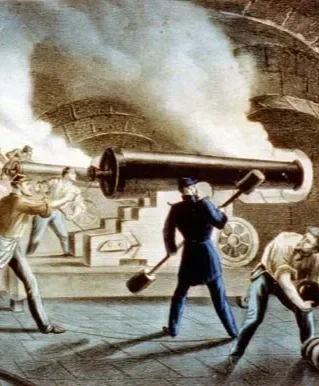
The war officially started on April 12, 1861, when Confederate forces bombarded Fort Sumter in South Carolina. Lincoln called for 75,000 militiamen and ordered a naval blockade of Southern ports. Both sides quickly raised large armies, and major battles soon followed, including the First Battle of Bull Run, Shiloh, Fredericksburg, Chancellorsville, and Gettysburg. Gettysburg was the bloodiest battle of the war, with nearly 51,000 soldiers killed, wounded, or missing.
The Role of Abraham Lincoln
During the war, Lincoln issued the Emancipation Proclamation, which freed enslaved people in rebelling states and allowed Black men to join the Union Army. This made ending slavery a key goal of the war, in addition to preserving the Union.
The War Ends and Its Aftermath
The war ended on April 9, 1865, when General Robert E. Lee surrendered to General Ulysses S. Grant at Appomattox Court House in Virginia. Over 620,000 soldiers died. After the war, Southern states were gradually rebuilt during Reconstruction. The 13th Amendment abolished slavery, the 14th Amendment guaranteed equal protection under the law, and the 15th Amendment gave Black men the right to vote.
Many battlefields still exist today, though some have been lost to development. Organizations like the American Battlefield Trust work to preserve these sites so future generations can learn about this pivotal time. The Civil War shaped the United States politically, socially, and economically, and laid the groundwork for civil rights movements in the years that followed.
U.S. soldiers stand ready at Fort Sumter as Confederate forces open fire on April 12, 1861. The fort is overtaken, signaling the start of the American Civil War.
Map of the Civil War Battles
References
American Battlefield Trust. 2024. “10 Facts: What Everyone Should Know About the Civil War.” American Battlefield Trust. Accessed March 28, 2026. https://www.battlefields.org/learn/articles/10-facts-what-everyone-should-know-about-civil-war?ms=googlegrant&gad_source=1&gad_campaignid=1432490795&gbraid=0AAAAAD6pCMj9bjhjH2zo8ZbzX4yz-AaN1&gclid=CjwKCAjw-J3OBhBuEiwAwqZ_hwQIE--nW6uNqBggP5TIJZrQInGJErtoi95TS3xq3I4Z6e9ECwKHURoCY5QQAvD_BwE.
Ducksters Education Site. 2026. “The American Civil War for Kids.” Ducksters. Accessed March 28, 2026. https://www.ducksters.com/history/civil_war.php.
Encyclopædia Britannica, Inc. 2026. “American Civil War.” Britannica Kids. Accessed March 28, 2026. https://kids.britannica.com/kids/article/American-Civil-War/352967.
Encyclopædia Britannica, Inc. 2026. “American Civil War.” Encyclopædia Britannica. Accessed March 28, 2026. https://www.britannica.com/event/American-Civil-War.
Grant, Susan‑Mary. 2000. “Why Men Joined Up for the American Civil War.” History Today 50, no. 7 (July 2000). Accessed March 28, 2026. https://www.historytoday.com/archive/why-men-joined-american-civil-war.