
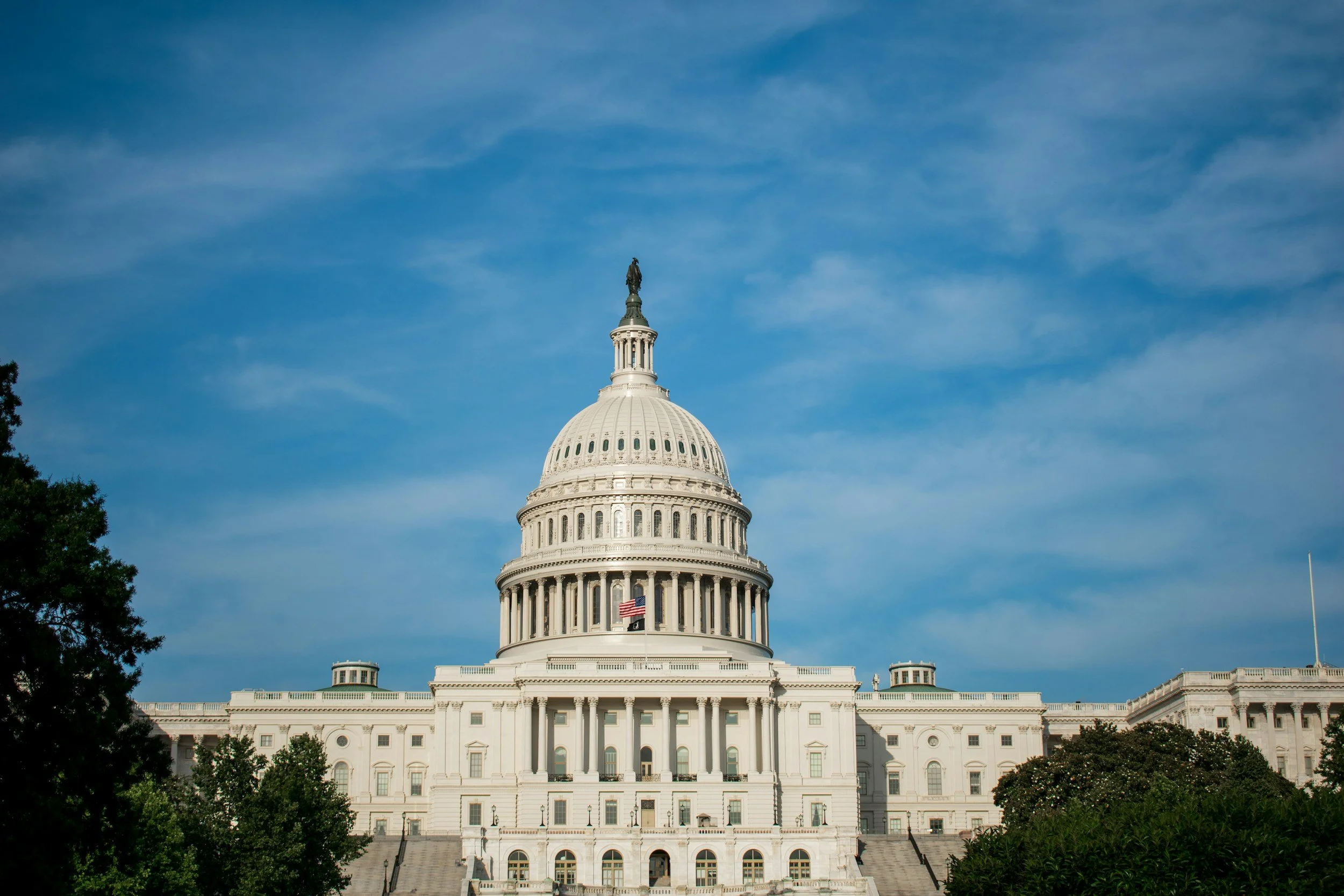
How Laws Are Made: The Role of Congress
How Laws Are Made: The Role of Congress
Written by: Keya Gambhir
The United States government is divided into three branches, each with its own job. Congress, the legislative branch, makes laws. The other branches are the executive branch, led by the president, and the judicial branch, which includes the Supreme Court and other courts.
Congress is made up of two houses: the House of Representatives and the Senate. Together, they create laws for the entire country, but each house has a different structure and role.
The House of Representatives
The House of Representatives was established in 1789 under the Constitution. It was designed to reflect the popular will, so its members are directly elected by the people. There are 435 representatives, a number set by law in 1941. Each state’s number of representatives is based on its population, and representation is adjusted every 10 years after the census. States divide themselves into districts, and voters in each district elect one representative. Representatives serve two-year terms, must be at least 25 years old, have been a U.S. citizen for seven years, and live in the state they represent.
The House also includes a resident commissioner from Puerto Rico and delegates from American Samoa, Guam, the U.S. Virgin Islands, the Northern Mariana Islands, and the District of Columbia. These members can debate but do not vote.
The House has several officers. The Speaker of the House leads the chamber and is chosen by the majority party. The Speaker organizes debates and manages House business and is second in line for the presidency after the vice president. Each party also has leaders, including majority and minority leaders and whips, who try to keep members on track for important votes. Other officers include the clerk, who oversees the journal and voting systems, the sergeant at arms, who enforces rules, and various administrative staff.
The House has some special powers. Only the House can introduce revenue, or tax-related, bills. It also has the sole power to begin impeachment proceedings against federal officials. In rare cases, if no candidate wins a majority of electoral votes, the House chooses the president.
The Senate
The Senate was also established in 1789 as a check on the House. Unlike the House, each state has equal representation: two senators, no matter the state’s size or population. Senators serve six-year terms, with one-third of seats up for election every two years. To become a senator, a person must be at least 30 years old, a U.S. citizen for nine years, and a resident of the state they represent. Senators were originally appointed by state legislatures until the Seventeenth Amendment in 1913, which required direct election by the people.
The vice president serves as president of the Senate but only votes to break ties. Most of the time, the Senate is led by the president pro tempore, a senior senator elected by the majority party. Each party also chooses a majority or minority leader and whips to organize votes.
The Senate has special powers under the Constitution. It approves presidential appointments such as cabinet members, ambassadors, and Supreme Court justices. It ratifies treaties with a two-thirds majority. The Senate also conducts impeachment trials for federal officials, and a two-thirds vote is required for conviction.
Committees and How Laws Are Made
Both the House and Senate rely heavily on committees. Committees are smaller groups of members that review, research, and amend bills before they go to the full chamber. Standing committees are permanent, focusing on major areas like finance, foreign relations, and the judiciary. Select or special committees are temporary and handle specific tasks. Committees also oversee government agencies, summoning officials to explain policies.
A law begins as an idea, which can come from a member of Congress, a candidate, or a group of citizens. Once a bill is introduced, it goes to a committee for review. If approved, it moves to the House or Senate floor for debate. Lawmakers can suggest amendments and must vote for or against them. If the bill passes one house, it goes through a similar process in the other house. If the two houses pass different versions, a conference committee works out the differences. Both houses vote again on the final version before it goes to the president.
The president can sign the bill into law, veto it, or do nothing. If the president vetoes it, Congress can override the veto with a two-thirds vote in both houses. If Congress is not in session and the president does not sign the bill, it is pocket-vetoed and does not become law.
Through this process, Congress shapes the rules that govern the United States, balancing the needs of the people with oversight of the government and the powers of the president. Its work, along with the House and Senate’s unique roles, ensures that laws reflect both the popular will and careful deliberation.
References
Encyclopædia Britannica, Inc. 2025. “House of Representatives.” Britannica Students. https://kids.britannica.com/students/article/House-of-Representatives/599537.
Encyclopædia Britannica, Inc. 2025. “Senate.” Britannica Students. https://kids.britannica.com/students/article/Senate/599544.
Encyclopædia Britannica, Inc. 2026. “Congress of the United States.” Britannica Kids. https://kids.britannica.com/kids/article/Congress-of-the-United-States/391001.
History, Art & Archives, U.S. House of Representatives. 2026. “How Laws Are Made.” U.S. House of Representatives: Kids in the House. https://history.house.gov/Education/Kids/Bill-to-Law-Elementary/.
USAGov. 2025. “How Laws Are Made.” USA.gov. Last updated November 17, 2025. https://www.usa.gov/how-laws-are-made.