
The Cow: A Grass-Chewing Superstar
The Cow: A Grass Chewing Superstar
Written by: Anna Pafenberg
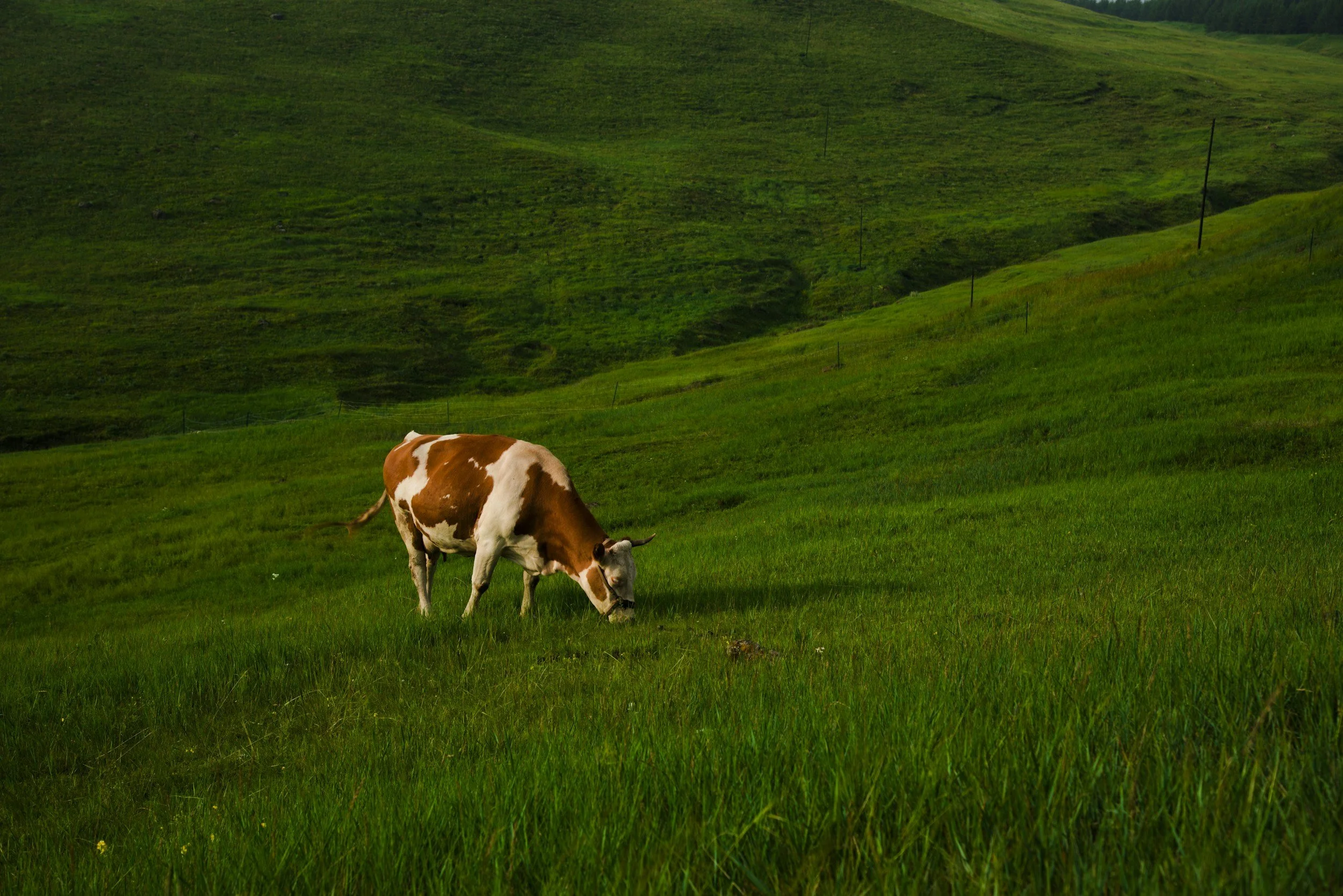
Throughout the rolling pastures of Asia, North Africa, and Europe there are gentle and kind creatures. These animals spend their days eating grass and socializing with their herd. This animal, of course, is the cow. Many people think of cows as simply a herd animal bred to create milk and beef, but they are so much more. These intelligent creatures are incredibly nice and know their way around a grass field.
Cows intelligence is more than just brain structure. For example, cows have relationships with one another. They have names for each other and can even hold grudges against humans! Mother cows have a complex bond with their calves, doing anything for them. Cows have such complex brains that they are able to push levers and buttons to gain rewards from classical conditioning. When not being raised for meat or dairy, cows can live for twenty to twenty-five years. Dairy and meat industries hinder the lifespan of cattle. In most spaces, they have living conditions not suitable for them and are simply raised to be producers.
250 million cows are used daily for dairy production and about 300 million are killed every year for their meat. While it’s okay to consume products from cattle, the way they are raised is not good for them or our planet and it’s important to be mindful of that. In order for cows to produce milk, they need to be pregnant or have just given birth. This means that female cows are continuously put through birthing calves for human milk consumption. Those raising the cows remove them from their mother too soon after they are birthed, about 24 hours. Cows actually need about nine months with their mother so this is detrimental to their development. Cows that are raised for meat have a more peaceful life than for dairy. They tend to stay in grassy expanses and get to stay with their mothers for longer. After about 6 months however, cows are then taken to facilities for weight gain before slaughter.
Moving away from the food products that cattle produce, they are actually very interesting creatures. Cows have a large range of vision, about 300 degrees. For comparison, humans only have about a 180 degree range of vision. Cows also have a great sense of smell and can smell things up to 8 miles away in order to scan for predators. Cows also have great hearing, which is also to detect predators. A cow’s stomach also has four parts. It is said that if a cow swallows metal, it will be in their stomach for the rest of their lives because of how complex and protective their stomach is. Cows can detect and are always looking for the best spots to graze cud. They spend the majority of their day eating grass. Overall, cows are extremely intelligent creatures that are misrepresented and mistreated in many industries. Do your part by purchasing sustainable meat and dairy to keep these animals happy and safe.
References
Befriend Cows, “Interesting & Fun Facts About Cows for Kids,” last modified May 12, 2025, https://www.befriendcows.org/blog/cows-facts-for-kids
World Animal Protection. “19 Facts About Cows.” Last modified February 5, 2025.
https://www.worldanimalprotection.org/latest/blogs/19-facts-about-cows/
McKernan, Dan. “Learn About Cows.” Barn Sanctuary. November 3, 2023.
https://www.barnsanctuary.org/the-barn-blog/learn-about-cows