
Denny: The First Known Neanderthal–Denisovan Hybrid
Denny: The First Known Neanderthal–Denisovan Hybrid
Written by: Sitara Nair
Did you know that in 2018, scientists discovered the first-ever person to be two different human species? Nicknamed Denny, this thirteen-year-old girl had a Neanderthal mother and a Denisovan father and died over 50,000 years ago, according to PBS. Let’s learn more!
About Neanderthals
To understand Denny, you need to understand both her mother and father. Her mother was a Neanderthal, which is an ancient human relative that lived in Europe and parts of western Asia between 400,000 and 40,000 years ago. Their scientific name is Homo neanderthalensis, and they are closely related to modern humans (scientifically, Homo sapiens). An interesting fact is that these two groups have interbred, making some people today have a small percentage of Neanderthal DNA in their genes.
Additionally, Neanderthals were well adapted to cold climates. They had strong, muscular bodies, broad chests, and large noses that may have helped warm the cold air they breathed. They were also skilled hunters who used stone tools, wooden spears, and fire to survive. Their diets consisted mainly of meat (deer, bison, and mammoths), but they also gathered plants and other foods.
Neanderthals disappeared around 40,000 years ago, likely because of a combination of climate change, competition with modern humans, and the mixing of the two populations over time. Today, scientists do not refer to them as primitive or unintelligent, but rather see them as an important part of the human family.
About Denisovans
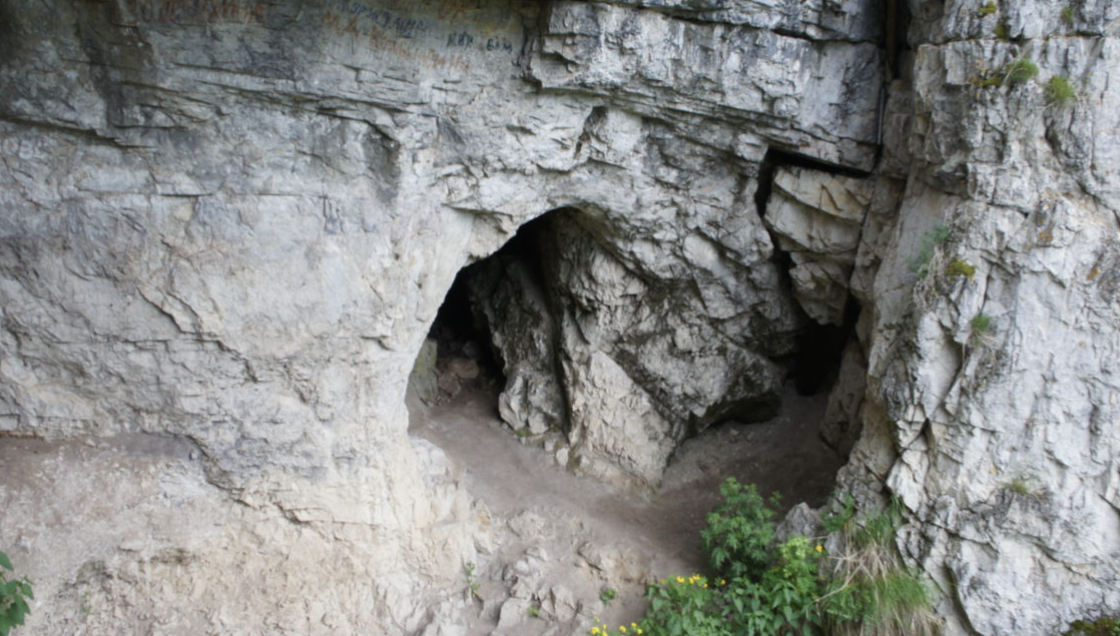
Denny’s father was Denisovan, an ancient group of humans that lived in Asia thousands of years ago. They are an extinct relative of modern humans and Neanderthals. Scientists first discovered evidence of Denisovans in 2010 after studying a small finger bone and tooth found in Denisova Cave in Siberia, Russia.
Denisovans lived at the same time as Neanderthals and early modern humans, even interbreeding with both groups. Scientists believed Denisovans used stone tools, hunted animals, controlled fire, and lived in a variety of environments, from cold mountains to tropical forests. Although much about what they look like is still not concrete, many people believe they resembled Neanderthals.
About Denny
Now, Denny’s remains were discovered in the Denisova Cave in Siberia and consisted of a small fragment of an arm bone. Her fossil was the first direct evidence that a person could have had parents from two different human species. Denny lived about 90,000 years ago, during a time when Neanderthals, Denisovans, and modern humans all existed in different parts of Eurasia. Her discovery confirmed that Neanderthals and Denisovans not only met but also were able to breed.
The most interesting part about this discovery is that it was able to completely change scientists’ understanding of human evolution. Instead of viewing ancient human groups as completely separate species, researchers now know they interacted and exchanged genes over thousands of years. This helps explain why many modern humans still carry small amounts of Neanderthal and Denisovan DNA today. Denny's fossil is one of the most important discoveries in paleoanthropology because it provides direct evidence that different human relatives lived side by side and formed families together, making the human family tree more connected and complex than previously believed!!
References
Langley, Michelle. “This Ancient Teenager Is the First Known Person with Parents of Two Different Species.” PBS NewsHour, August 23, 2018. https://www.pbs.org/newshour/science/this-ancient-teenager-is-the-first-known-person-with-parents-of-two-different-species.
McKie, Robin. “Meet Denny, the Ancient Mixed-Heritage Mystery Girl.” The Guardian, November 24, 2018. https://www.theguardian.com/science/2018/nov/24/denisovan-neanderthal-hybrid-denny-dna-finder-project.
Natural History Museum. “Who Were the Neanderthals?” Accessed July 31, 2026. https://www.nhm.ac.uk/discover/who-were-the-neanderthals.html.
Natural History Museum. “Denisovans.” Accessed July 31, 2026. https://www.nhm.ac.uk/discover/denisovans.html.