
Eight-Armed Creatures of the Ocean
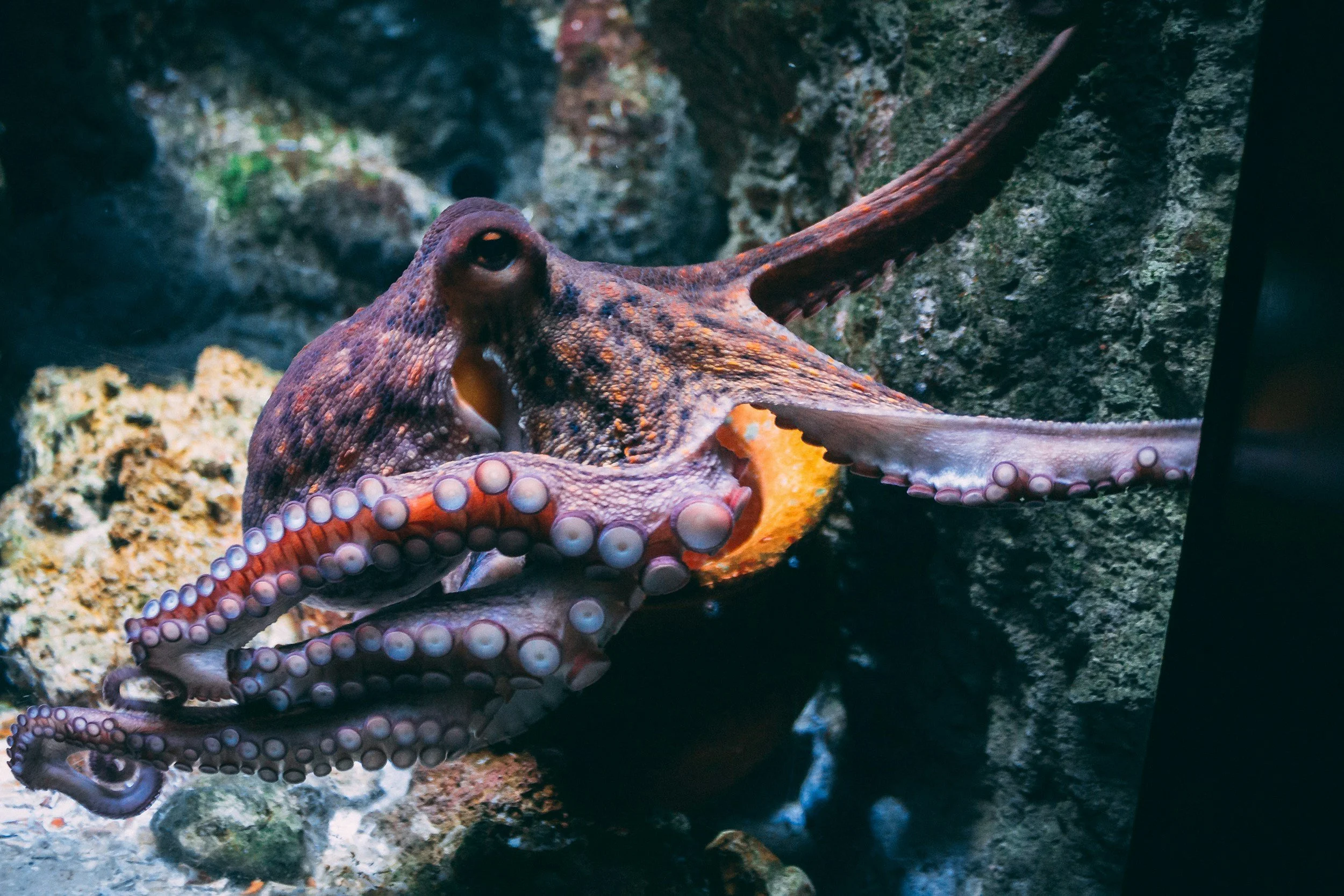
Octopuses are the ocean’s escape artists, camouflage experts, and problem-solvers in one squishy package. They have eight arms covered in suckers and soft bodies that squeeze into small spaces. Many can change their skin color and texture to blend into the seafloor, or shoot water through a tube to zip away. Around 300 species exist, but the most popular, the Giant Pacific, Blue-ringed octopus and Mimic Octopus all have very unique talents they use in their day to day lives.
The Giant Pacific Octopus
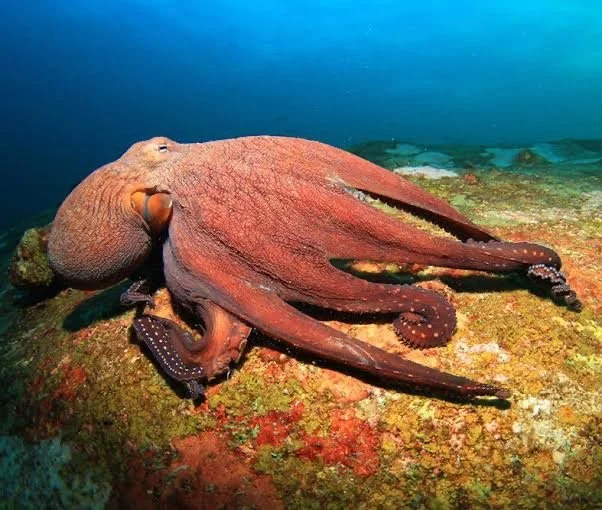
The Giant Pacific octopus are the strongest and largest of the species. It lives in the chilly North Pacific, from Japan and Alaska toward California and Mexico. These adult octopuses can stretch their arms more than 13 feet across and tuck them into rocky dens. Their skin is often reddish or pinkish, with suction cups lining each arm.
This species enjoys crabs, clams, mussels, and other shellfish. It uses its strong arms and sharp beak to open meals protected by hard shells. Giant Pacific octopuses are clever enough to solve puzzles and open containers, this is where they get their name from. Despite their size, they usually live only around three to five years.
The Blue-Ringed Octopus
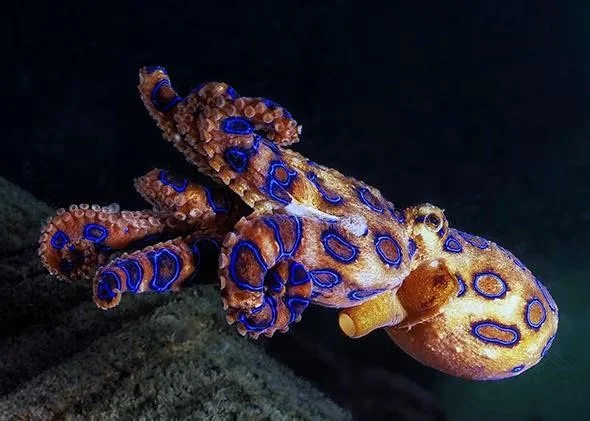
Blue-ringed octopuses are tiny, but should never be touched. They live in warm parts of the Pacific, hiding in shallow tide pools, coral reefs, shells, and rocky cracks. Their coloring can look fairly muted. When threatened, bright blue rings flash across their bodies like tiny warning signs.
Their meals include small crabs, shrimp, and other sea creatures. Their venom is extremely powerful, helping them catch prey and defend themselves. The blue rings signal to back off, not to get closer. This tiny octopus reminds us that the ocean’s smallest animals can be surprisingly dangerous.
The Mimic Octopus
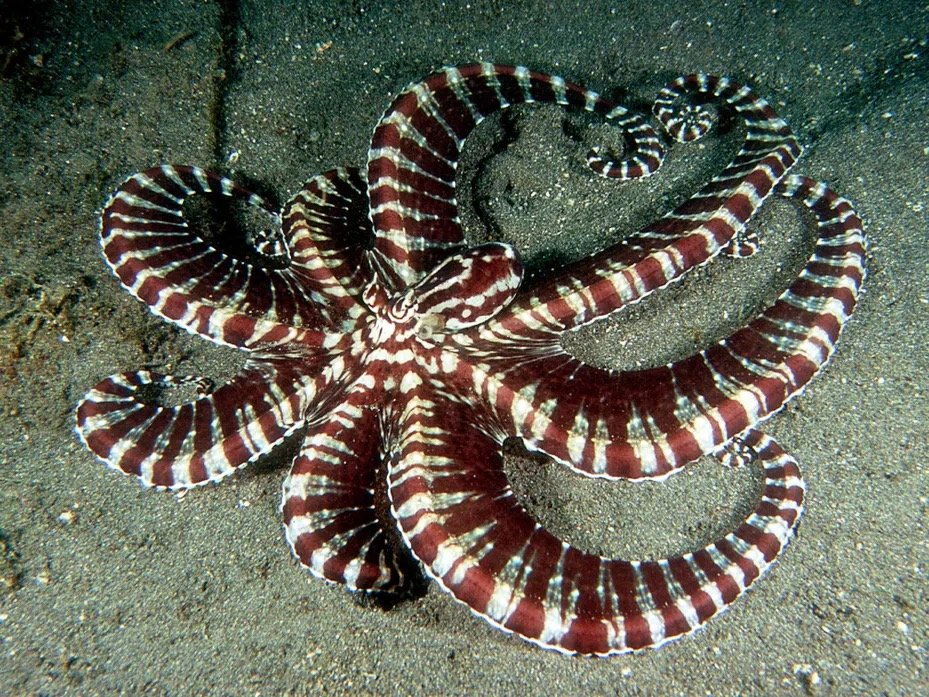
The mimic octopus lives in warm, shallow waters of the Indian Ocean to the Pacific, especially around Indonesia. Its body is usually pale with brown or white stripes, and its long, flexible arms help it perform tricks. Instead of only blending into its surroundings, it can change its posture and movement to resemble other animals.
When threatened, it may spread its arms like a lionfish or move two striped arms like a sea snake. It can also imitate flatfish gliding over sand. These disguises help discourage predators as it searches for food. Its diet includes small fish and crustaceans such as crabs and shrimp.
Whether it is the giant Pacific octopus cracking shellfish, the blue-ringed octopus flashing a warning, or the mimic octopus putting on a disguise, each species has its own clever way to survive. Eight arms, three truly remarkable personalities!
Eight-Armed Creatures of the Ocean
Written by: Paige Leal
References
“Giant Pacific Octopus.” Monterey Bay Aquarium, www.montereybayaquarium.org/animals-the-ocean/animals-a-to-z/giant-pacific-octopus. Accessed 11 Oct. 2026.
Spencer, Erin. “Blue-Ringed Octopus: Small but Deadly.” Ocean Conservancy, 13 Mar. 2017, oceanconservancy.org/blog/2017/03/13/blue-ringed-octopus. Accessed 11 Oct. 2026.
“Mimic Octopus.” National Geographic, www.nationalgeographic.com/animals/invertebrates/facts/mimic-octopus. Accessed 11 Oct. 2026.