
All About Emojis
All About Emojis
Written by: Anna Pafenberg
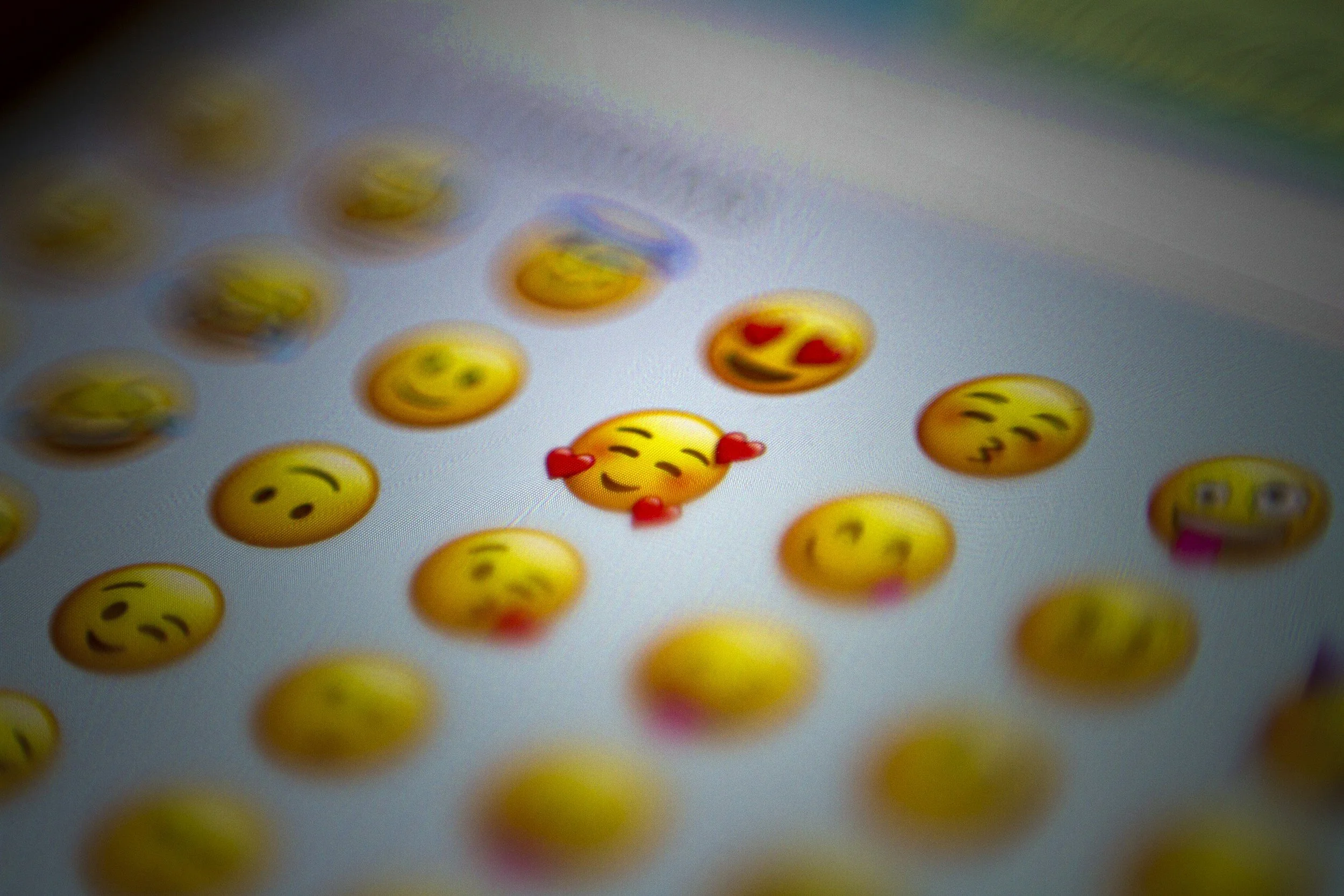
Many of us text, email, and simply communicate digitally on a daily basis. However, the general population is using more than just words. Emojis, or ‘emoticons’ are continuing to rise in popularity through the last couple decades. They communicate nuanced inflections in conversation as well as things that are not well translated grammatically. An emoji is an actual picture, while an emoticon is simply a keyboard character such as “:)”.
In 1999, the Japanese artist Sigetaka Kurita was working at DOCOMO, an internet platform. Kurita wanted there to be a simple way to get ideas across in apps and on the internet like the weather and simple signs. He had ideas about using a picture of clouds when it would be cloudy, sun for sunny, and others. While Kurita’s 176 original emojis were able to convey useful information, they also gave insight to subtext in messages. For example, adding a heart at the end of a message is much more sympathetic and emotional than nothing at all or simply a period.
In Japan, Kurita’s emojis became increasingly popular. Opposing companies started to take his ideas. American companies, like Google, saw this as an opportunity. Google wanted emojis to be a part of the Unicode Consortium, a group that keeps codes the same across multiple computers. Multiple people at Unicode advocated for emoji across all platforms, and soon it was just too popular to ignore. Emoji was added, and gained even more popularity. In 2011, Apple added emojis to their keyboards. Android did the same in 2013.
If an emoji wants to be officially added, the Unicode Consortium needs to go through a lengthy approval process. They need to consider all factors, colors, and looks of the emojis. In order for them to consider the concept at all, it needs to be voted for and selected by them.
July 17th is National Emoji Day. You can submit any idea for an emoji to the Unicode Consortium, at any time of year. Emojis have had hundreds of additions and variations added to them. For example, they have become more inclusive with skin tone, hair color, and sexuality. Instead of emojis all being white, they included people of color and couples of different races. They also included hundreds of flags and territories.
While some emojis are arbitrary, such as a tiger or apple, they can be used with text in order to convey certain ideas that couldn’t have been said with the words. Overall, emojis are a great way to give meaning to cold text, and create vibrant communication all over the world.
References
“Emoji Facts for Kids.” Kiddle Encyclopedia. Accessed March 10, 2026. https://kids.kiddle.co/Emoji
Pardes, Arielle. “The WIRED Guide to Emoji.” WIRED. February 1, 2018. https://www.wired.com/story/guide-emoji/
Smith, Jeremy. “A History of Emojis.” Royal Society of Edinburgh. July 17, 2021. https://rse.org.uk/resource/a-history-of-emojis/