
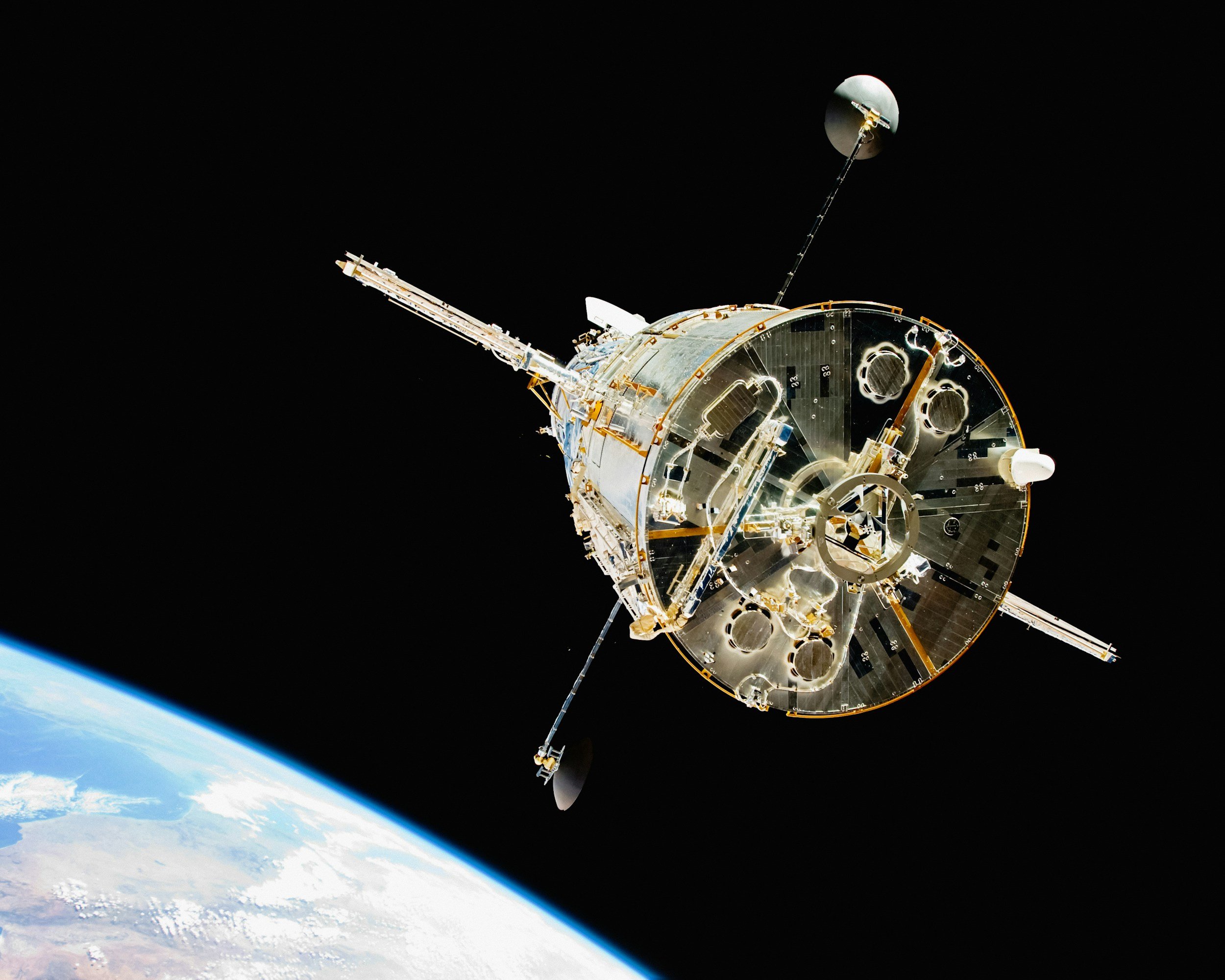
Eyes and Ears of Space: Satellites
Eyes and Ears of Space: Satellites
Written by: Paige Leal
Up in the sky are thousands of satellites scanning around Earth. Satellites are objects that orbit a planet or another object in space. Some are natural, like the Moon, while others are made by humans and launched into space for specific jobs. Even though they are incredibly far away, satellites help with many things we use every single day.
One of their biggest jobs is communication. Satellites can send signals across huge distances, helping with television, phone calls, internet connections, and other forms of communication. They also help with GPS, which allows phones, cars, airplanes, and ships to figure out where they are. So even in your daily drives using Google or Apple Maps, there are satellites quietly helping from above to help you navigate home!
Satellites are also super important for weather. Weather satellites take pictures and collect information about clouds, storms, temperatures, and conditions on Earth. This information helps meteorologists watch hurricanes and other dangerous weather and make better forecasts. Satellites can even help scientists study things happening on Earth, such as changes in forests, oceans, ice, and pollution.
Where are these satellites out in space? They are placed into different orbits around Earth depending on what their function is. Some fly relatively close to Earth, while others travel much farther away. A satellite’s orbit can determine how quickly it travels and how much of Earth it can see. Some satellites even orbit over the equator at the same speed Earth rotates, making them seem to always be in the same area.
Satellites have helped scientists discover new information about planets and stars, watched Earth change over time, and sent back pictures from places humans cannot easily reach. Some satellites are even designed to study space itself while orbiting far beyond Earth. Satellites can be built for communication, navigation, weather, science, photography, or studying our planet. Without them, many everyday technologies would work very differently. Thanks to the technology of satellites, so much information is used in everyday life and also towards researching the world overall.
References
Bogel-Burroughs, Nicholas. 2026. "Lindsay Clancy Trial Holdout Juror." The New York Times, NASA. 2026. “What Is a Satellite?” NASA Space Place. Accessed September 20, 2026. https://spaceplace.nasa.gov/satellite/en/.
NASA. 2026. “What Is a Satellite? Grades K-4.” NASA. Accessed September 20, 2026. https://www.nasa.gov/learning-resources/for-kids-and-students/what-is-a-satellite-grades-k-4/.
Let’s Talk Science. 2026. “Introduction to Satellites.” Let’s Talk Science. Accessed September 20, 2026. https://letstalkscience.ca/educational-resources/backgrounders/introduction-satellites.
Union of Concerned Scientists. 2026. “What Are Satellites Used For?” Union of Concerned Scientists. Accessed September 20, 2026. https://www.ucs.org/resources/what-are-satellites-used.