
French Students Protest for Better Schools
French Students Protest for Better Schools
Written by: Keya Gambhir
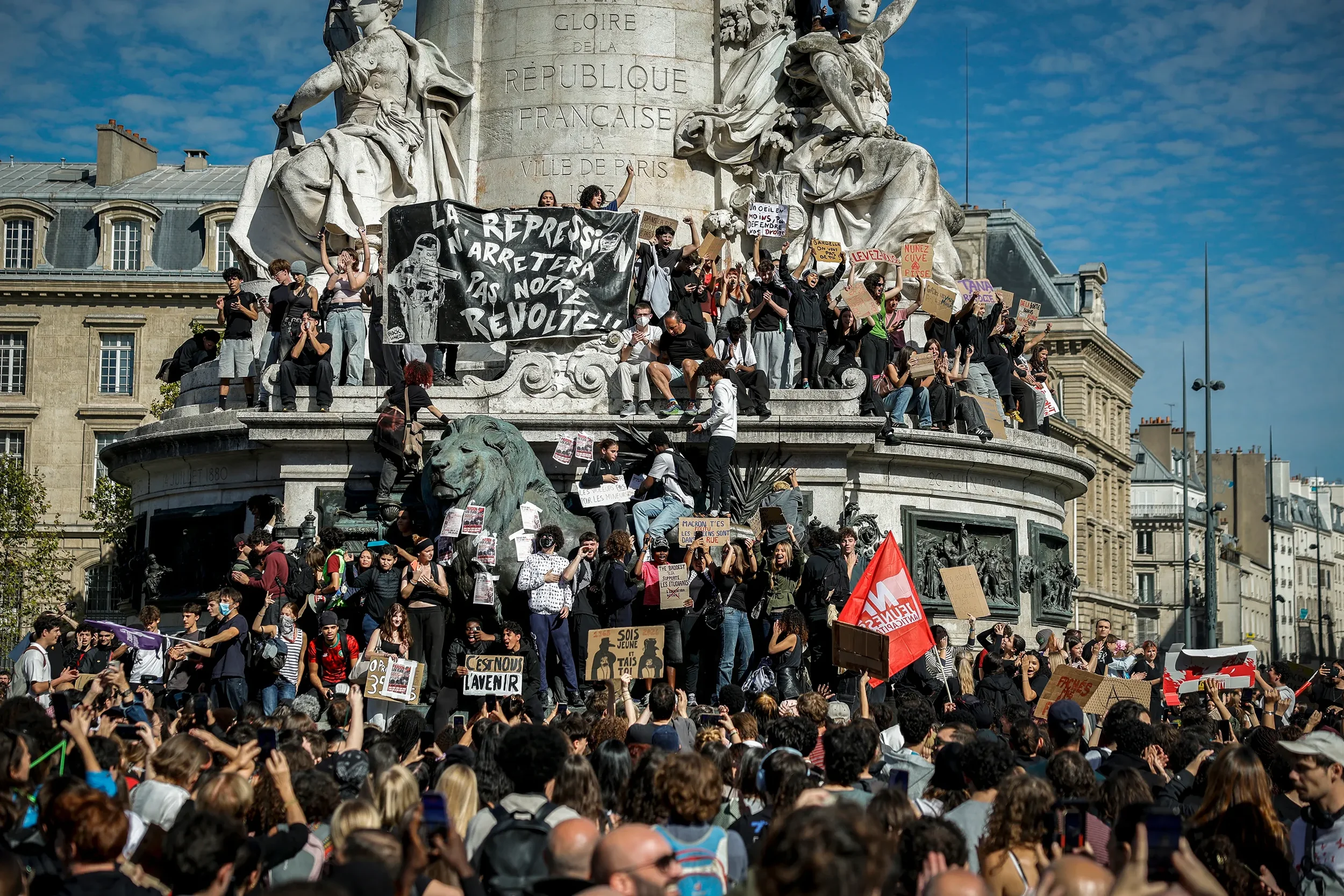
Students across France have been taking to the streets to demand better conditions in their schools. On Tuesday, October 6, 2026, students, teachers, and parents joined demonstrations in cities across the country. They want the French government to provide more funding for public schools, repair damaged buildings, and make sure students have the teachers and resources they need to succeed.
Why Are Students Protesting?
Many French students say their schools lack basic resources. Some classrooms are overcrowded, while school buildings have problems such as water leaks, broken facilities, and rat infestations. In some schools, students have gone months without certain teachers because absent educators were not replaced.
Students also want changes to their demanding school schedules. The French school day can run from 8 a.m. to 6 p.m., leaving students with long days of classes. Protesters are asking the government to consider shorter school days, longer lunch breaks, and improvements to school buildings.
The protests began in poorer suburbs around Paris before spreading to other cities, including Marseille, Lyon, Strasbourg, and Nantes. According to France's High School Students Union, more than half of the country's high schools were blocked or closed for the day on October 6.
For many students, the demonstrations are about more than uncomfortable classrooms. They believe every student deserves a safe learning environment and a fair chance to receive a good education.
A Growing Financial Problem
Although the government has promised to consider students' concerns, fixing the schools will take money. France is facing a large national debt, meaning the government owes more money than it can easily repay. It is also trying to reduce its budget deficit, which happens when a government spends more money than it collects.
This creates a difficult decision. The government must figure out how to pay for school repairs, teacher salaries, and other public services while managing its debt.
Some politicians have proposed cutting government spending to reduce the debt. However, critics worry that these cuts could make it even harder to provide enough funding for schools, hospitals, and other services.
The disagreement shows how decisions about money can affect people's everyday lives. Even when leaders agree that schools need improvements, they may disagree about where the money should come from.
When Protests Turn Violent
Most demonstrators have protested peacefully, but some gatherings have turned violent. In cities such as Lyon, Strasbourg, and Rennes, some protesters started fires and threw objects at police officers. Police responded by using tear gas to control crowds.
The violence has caused serious injuries. Government officials reported that at least 215 teenagers, 85 school staff members, and more than 700 police officers had been injured in clashes by October 6. On Monday, a 15-year-old student lost a hand and part of his lower arm after picking up a police grenade that exploded.
These incidents have raised concerns about the safety of young protesters. Some rights groups have criticized police for using force against minors, while government officials have condemned violence by protesters and stressed that demonstrations should remain peaceful.
Bally Bagayoko, the mayor of Saint-Denis, a city near Paris, was also affected by the unrest. On October 6, police tear gas reached him while he was marching alongside high school students. He criticized what he described as a disproportionate use of force against demonstrators.
His experience highlights the challenges authorities face when managing large protests and protecting the people involved.
What Happens Next?
French Prime Minister Sébastien Lecornu has said the government will look into students' concerns. These include replacing absent teachers, repairing aging school buildings, and reviewing the length of the school day.
However, it remains unclear how quickly these changes will happen or how much money the government will be able to provide.
The protests have also raised a larger question: How can young people make their voices heard when they believe leaders are not addressing their concerns?
By organizing demonstrations, students have brought attention to problems affecting their education. At the same time, the injuries and violence show why keeping protests safe is important.
Schools help shape students' futures, so having safe buildings, supportive teachers, and the resources to learn matters. The protests in France show how young people can speak up about problems in their communities and encourage leaders to take action.
References
The Guardian. 2026. “French Mayor Teargassed after Shielding Student Protesters from Police.” October 9, 2026. https://www.theguardian.com/world/video/2026/oct/09/french-mayor-teargassed-after-shielding-student-protesters-from-police-video.
Shirbon, Estelle, Kylie MacLellan, Farouq Suleiman, and Christina Anagnostopoulos. 2026. “French Students Protest Over School Conditions.” Reuters, October 6, 2026. https://www.reuters.com/live/live-france-braces-nationwide-student-protests-bond-markets-sour-2026-10-06/.
Weitzmann, Marc. 2026. “The Kids Are Not All Right in France.” Tablet Magazine, October 9, 2026. https://www.tabletmag.com/sections/news/articles/student-riots-france.