
Gandhi's Birthday And His Legacy
Gandhi's Birthday And His Legacy
Written by: Sitara Nair
Mahatma Gandhi, an Indian lawyer, activist, and nationalist leader’s birthday just this past week on October 2nd. He was born in 1869 and passed away in January of 1948 after a life of activism and peaceful protest for what he believed was right. Let’s learn about him and his legacy.
Early Life
Born in Porbandar, India, Mahatma Gandhi was born as Mohandas Karamchand Gandhi. His family was middle-class, with his father, Karamchand Gandhi, serving as a local government official, and his mother, Putlibai, devoted her life to religion and family. He was raised with values such as religious devotion and fasting, but his family especially instilled in him the Vaishnav and Jain value of nonviolence. Like many children of the time, he attended schools in Porbandar and Rajkot and married Kasturbai Makhanji at age thirteen in an arranged marriage, a custom then. Gandhi lived an ordinary life, but he unfortunately lost his dad in 1885 at just 16 years old, and ended up moving to London in September 1888, just before turning 19, to study law. He ended up spending three years in London, avoiding meat and alcohol as his mother insisted, and learning more about various religious texts. After completing his legal studies, he returned to India in 1891.
Mahatma Gandhi married Kasturba Gandhi in 1883 when they were both teenagers. They had four sons: Harilal, Manilal, Ramdas, and Devdas. Kasturba supported Gandhi throughout his work in India and South Africa and became involved in his activism. Gandhi’s demanding political life often kept him away from his family, but Kasturba remained an important part of his life until her death in 1944.
Career
In his early days, after his studies in London, Gandhi started his practice in Bombay, India, but unfortunately did not achieve great success. He ended up accepting a legal position in Durban, South Africa, where he began a lot of his activism work. At his job there, he faced significant racial discrimination and spent 21 years there defending immigrant Indian rights and developing nonviolent resistance, also known as satyagraha. Later in life, he was a prominent leader of the Indian National Congress by the 1920s. He was able to organize huge civil disobedience movements, some of which were the Non-Cooperation Movement in 1920, the Salt March in 1930, which went against British salt taxes, and the Quit India Movement in 1942.
Legacy
Gandhi’s legacy centers on his use of Satyagraha, a nonviolent resistance movement that helped lead India toward independence from British Rule. He was fighting to end untouchability, ease poverty, and promote religious harmony. However, his influence didn’t stop in just India. He inspired international leaders like Martin Luther King Jr., Nelson Mandela, and the Dalai Lama. Additionally, his birthday is observed globally as the International Day of Non-Violence.
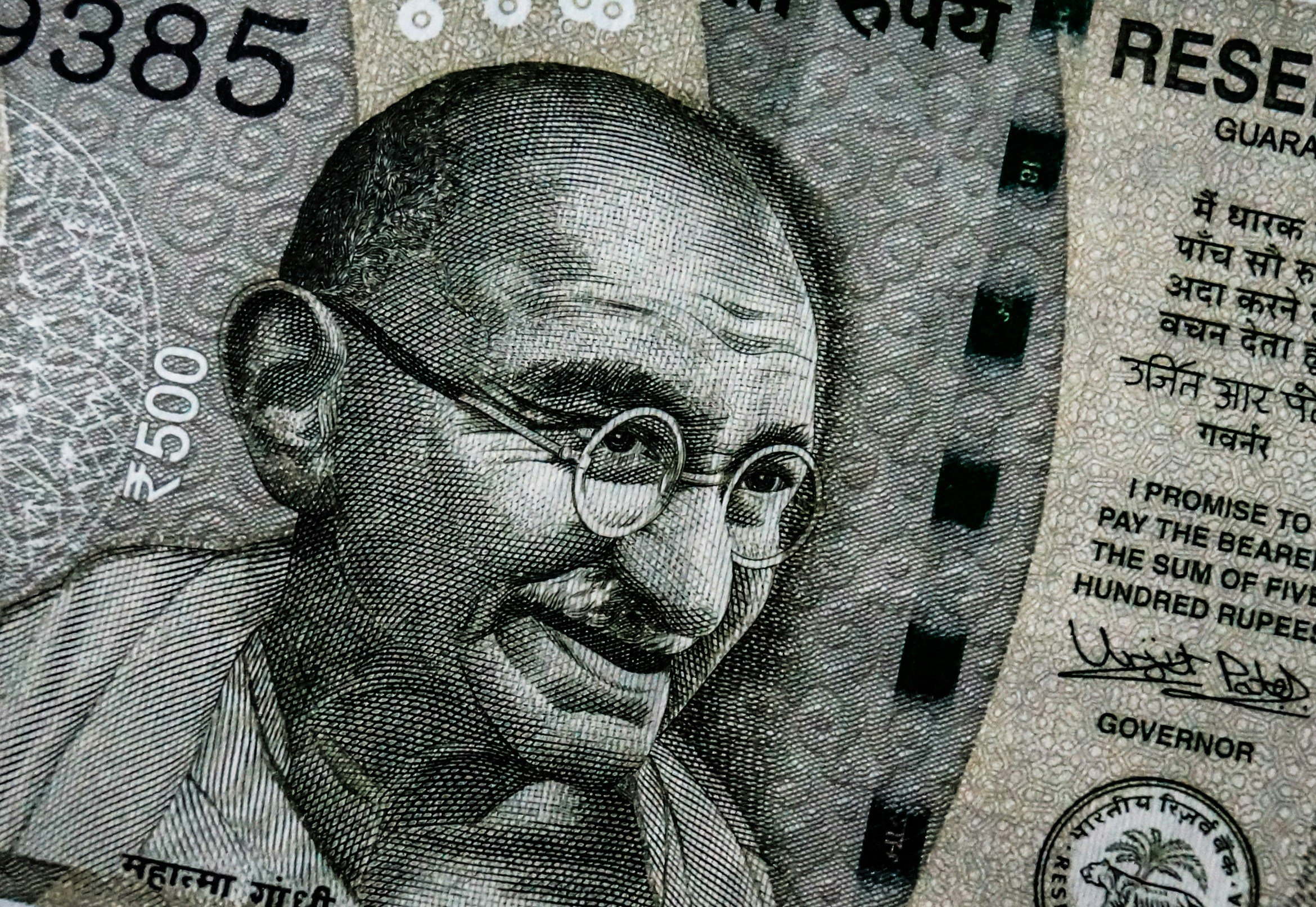
His role in India’s movement for independence from British rule was significant; he and the Indian National Congress launched the Quit India movement, which called for the British to leave India. Gandhi and many other leaders were arrested following the movement. India did eventually gain independence on August 15th, 1947. But British India was divided into the independent countries of India and Pakistan. This ended up leading to widespread violence between religious communities. During this period, Gandhi still promoted peace between Hindus and Muslims. Sadly, only a few months after independence, on January 30, 1945, Nathuram Godse assassinated Gandhi in New Delhi. Overall, he has been honored as the “Father of the Nation,” featured on Indian currency (rupees), and inspired global civil rights movements.
References
“Gandhi, Mohandas Karamchand.” Encyclopaedia Britannica. Accessed October 4, 2026. https://www.britannica.com/biography/Mahatma-Gandhi
Gandhi, Mahatma. “An Autobiography or The Story of My Experiments with Truth.” mkgandhi.org. Accessed October 4, 2026. https://www.mkgandhi.org/storyofg/chap01.php
HISTORY.com Editors. “Mahatma Gandhi.” HISTORY. Last updated March 11, 2026. https://www.history.com/articles/mahatma-gandhi
Blakemore, Erin. “How Mahatma Gandhi Changed Political Protest.” National Geographic. Last updated September 19, 2025. https://www.nationalgeographic.com/culture/article/mahatma-gandhi-changed-political-protest