
The Playful Lives of Gorillas
The Playful Lives of Gorillas
Written by: Anna Pafenberg
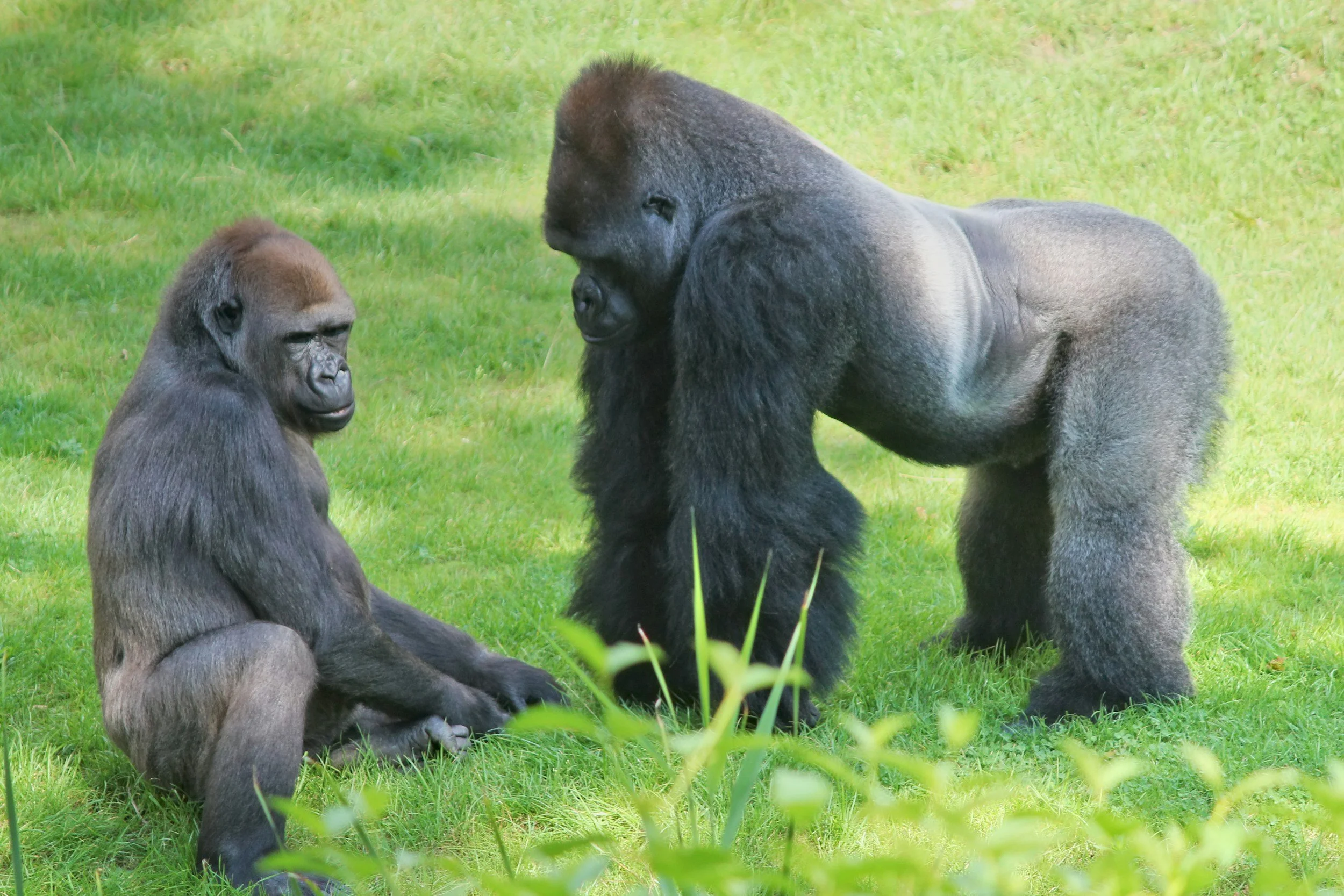
Deep in the jungle, underneath a canopy of trees, lie one of the smartest animals and one that shares the most DNA with humans. Gorillas are strikingly similar to us, they share 98.3% of their DNA with us. This means that aside from a few mental and physical differences, we are basically the same species. After all, we evolved from them over millions of years. There are two gorilla species, the eastern and western gorilla. They both live in Africa, hundreds of miles apart. Gorillas are highly social creatures, just like us! They live in familial units of about four or five gorillas. Sometimes, they live in groups of up to fifty.
Gorillas groups are run by silverbacks, or the largest male gorilla that will hold the position for a long time, or even his entire life. Silverbacks can be up to 400 pounds and about between 5 '5 to 6 feet tall. Female gorillas are not mature enough to mate until they are about seven or eight years old, but still don’t mate for a couple years after that. Male gorillas are the same way but a couple of years older. Female gorillas only have three or four babies in their lifetime and only give birth every six years or so. Because of this slow breeding rate, if a gorilla population goes down, it is hard for the population to raise back up after an event. Because of deforestation attempts by humans in the Congo, gorillas have an even harder time in habitats and with reproduction. Unlike these lowland African gorillas, the eastern mountain gorilla species has had a lot more success with breeding and raising the population. The Ebola virus is also a huge threat to gorillas as well as humans.
The species are omnivores and eat a variety of different foods. They eat fruits, stems, and roots as well as a couple of invertebrates. Gorillas can take down about sixty pounds of vegetation per day. This helps keep the forests they live in healthy and maintained. Without gorillas, there would be too many plants and bugs in the environment. Overall, gorillas are calm creatures who have fun in their forest habitats. They stick together, and are overall very happy and soothing creatures. Silverbacks, although very big and can sometimes show aggression, use their force to protect baby gorillas as well as their familial units.
References
World Wildlife Fund. “Gorilla.” World Wildlife Fund. Accessed April 14, 2026. https://www.worldwildlife.org/species/gorilla/
Dian Fossey Gorilla Fund. “Silverback Gorillas: Fascinating Facts About Nature’s Gentle Giants.” Dian Fossey Gorilla Fund. Accessed April 14, 2026. https://gorillafund.org/silverback/silverback-gorillas-fascinating-facts-about-natures-gentle-giants/
The Gorilla Organization. “Gorilla Facts.” The Gorilla Organization. Accessed April 14, 2026. https://gorillas.org/about-gorillas/gorilla-facts/