
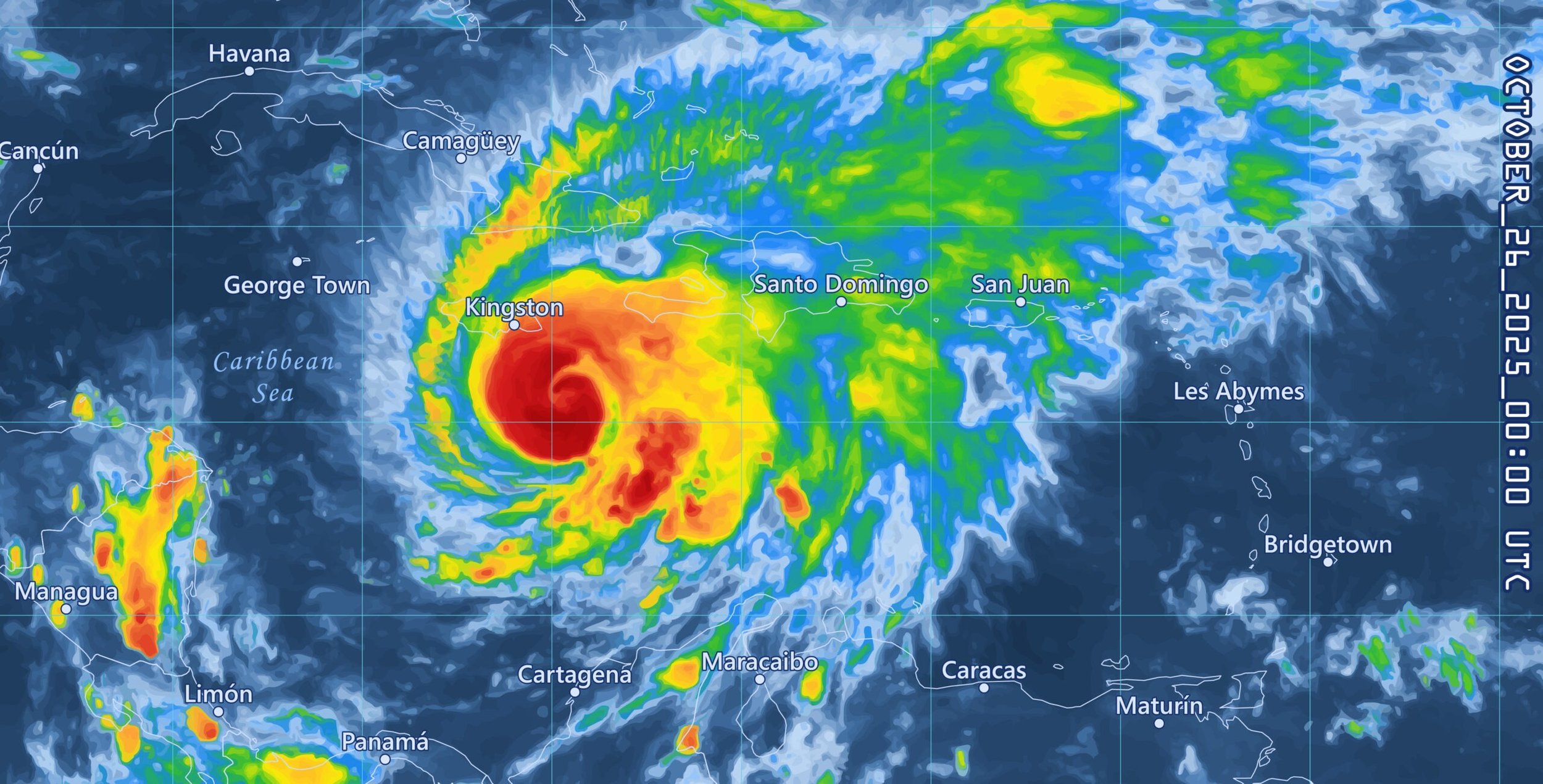
Hurricane Melissa Hits the Caribbean
Hurricane Melissa Hits the Caribbean
Written by: Keya Gambhir
Hurricane Melissa has caused major damage across the Caribbean, leaving at least 50 people dead and thousands more without homes, clean water, or electricity. The storm was one of the strongest Atlantic hurricanes in over 150 years, and it slammed into Jamaica, Haiti, and Cuba before moving past Bermuda.
Melissa hit Jamaica on Tuesday as a Category 5 hurricane, bringing winds of up to 185 miles per hour and heavy rain. The town of Black River, in southwest Jamaica, was hit especially hard. Almost 90 percent of roofs were destroyed, power lines snapped, and buildings collapsed. People were left searching through debris for food, water, and family members. “Everything is gone,” said Michelle Barnes, a resident trying to collect donated supplies for herself and her 13-year-old daughter.
In the nearby town of New River, residents faced rising floodwaters days after the storm. The blocked drainage system caused water to keep rising, mixing with mud and debris. Isaiah Beck, a local carpenter, said he could not reach his home because dead animals were floating in the water. Residents tried to rescue belongings, dry out flooded items, and find safe places to stay.
Jamaican authorities confirmed at least 19 deaths, but the number is expected to rise as teams reach remote areas. Tens of thousands of people are still in shelters, and more than 60 percent of the country is without electricity. Helicopters and trucks have been delivering food, water, and medical supplies to isolated communities. Despite the destruction, many people are helping each other, carrying supplies, and offering support to neighbors.
Cuba was also seriously affected when Melissa arrived as a Category 3 storm. Flooding, mudslides, and strong winds damaged homes and roads, especially in eastern Cuba. More than 735,000 people were evacuated before the storm, but hundreds of small towns were cut off by rising rivers. Residents needed rescue by boat and military vehicles to reach safe areas. Eduardo Verdecia, 83, said his home was nearly underwater, and the water kept rising even after the storm passed. Cuba has received aid from the United Nations, China, Venezuela, and offers of help from the United States.
Haiti faced heavy flooding even though the hurricane did not hit the country directly. At least 30 people died, including 10 children, mostly in the southern town of Petit-Goâve. Rivers burst their banks, sweeping away homes and leaving families stranded. Survivor Steven Guadard said the storm killed his entire family, showing how dangerous flooding can be in places with weak buildings and poor drainage systems.
The Caribbean countries are now beginning the long process of recovery. Jamaica has a disaster bond from the World Bank that will provide $150 million to help rebuild damaged infrastructure and support people in need. The government is also asking for donations through official channels to avoid scams. International aid, including funds from the United Kingdom and supplies from regional partners, is arriving to help families rebuild their lives.
Experts say Hurricane Melissa was made more likely and more intense by human-caused climate change. Ocean temperatures are rising, making storms stronger and more dangerous. Officials warn that hurricanes like Melissa may happen more often in the future, and countries must prepare for the effects of the climate crisis.
Even in the face of disaster, people are showing courage and hope. In Jamaica, neighbors helped each other wade through floodwaters, carried patients to safer buildings, and shared supplies. In Cuba and Haiti, rescue teams and families worked together to save people from rising waters. These small acts of bravery remind everyone that communities can come together to face challenges, even when a storm causes widespread damage.
Hurricane Melissa will be remembered as one of the strongest storms to hit the Caribbean in years. While the damage is severe, the efforts of rescue workers, volunteers, and neighbors show that recovery is possible. Families are beginning to rebuild, communities are helping each other, and international support continues to arrive. The Caribbean now faces the challenge of preparing for future storms while recovering from this historic disaster.
References
Myers Jr., John. 2025. “Despair Spreads Across Historic Seaport in Jamaica that Hurricane Melissa Demolished.” Associated Press, October 30. https://apnews.com/article/hurricane-melissa-jamaica-haiti-cuba-killed-black-river-a65ece21d7c68d93086634bea1d28c61
Robles, Frances, and Erin Schaff. 2025. “In a Jamaican Town, Melissa Leaves Floods ‘Infested’ by Dead Livestock.” New York Times, October 31. https://www.nytimes.com/2025/10/31/world/americas/hurricane-melissa-jamaica-flooding.html
Rowlands, Lyndal, and News Agencies. 2025. “Melissa Leaves 50 Dead, Toll Expected to Rise in Jamaica, Haiti.” Al Jazeera, November 1. https://www.aljazeera.com/news/2025/11/1/melissa-leaves-50-dead-toll-expected-to-rise-in-jamaica-haiti
Tanno, Sophie. 2025. “Caribbean Islands Reel from Hurricane Melissa’s Devastating Impact as Storm Heads North.” CNN, October 30. https://www.cnn.com/2025/10/30/americas/rescue-efforts-storm-melissa-intl
U.S. Department of State. 2025. “Responding to Hurricane Melissa.” October 29. https://www.state.gov/responding-to-hurricane-melissa