
What is Inflation?
Ask a grandparent how much a candy bar cost when they were your age, and you might not believe the answer. A nickel. A dime. Maybe a quarter. Today that same candy bar might cost a dollar fifty. So what happened? Did the candy get fancier? Not really. What changed is something that affects almost everything you buy. It is called inflation.
What is inflation?
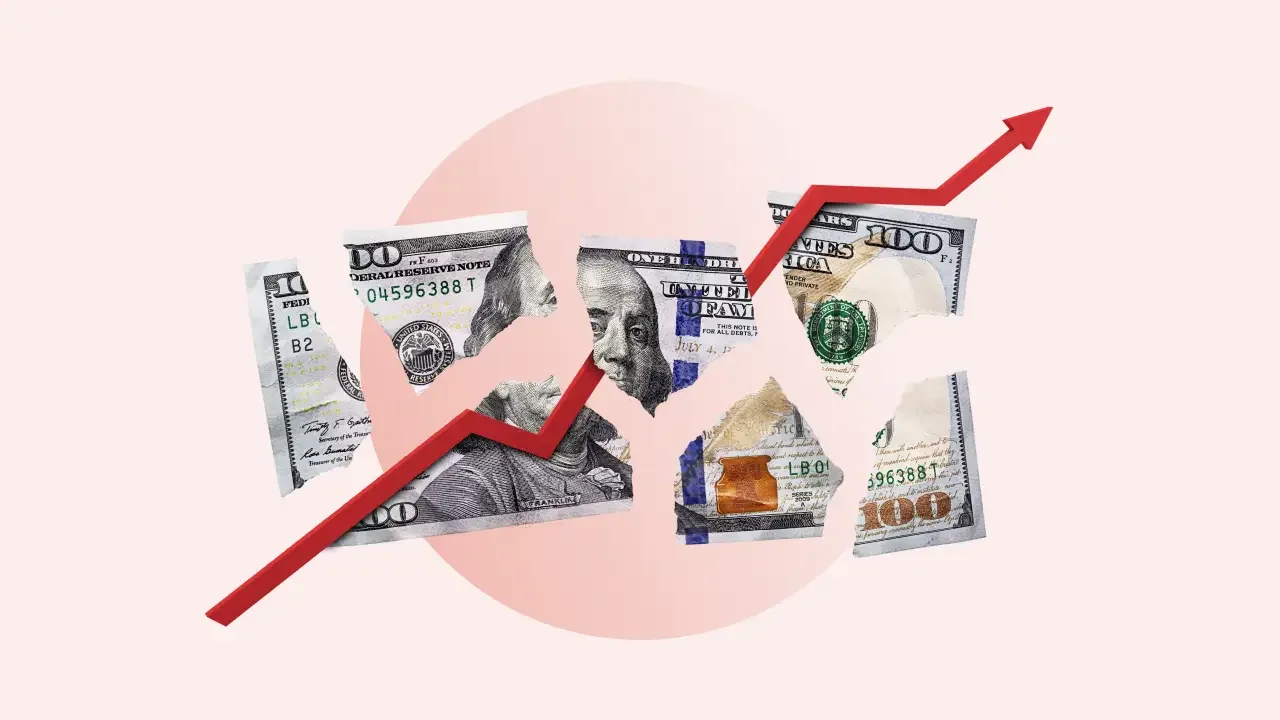
Inflation is when prices slowly rise over time, across lots of different things all at once. It is not just one store bumping up the price of one toy. It is groceries, gas, movie tickets, sneakers, and haircuts all creeping up little by little, year after year.
Here is the tricky part. When prices go up, your money does not change, but what it can buy shrinks. A ten dollar bill is still a ten dollar bill. But if prices rise, that same $10 buys a little less this year than it did last year. People sometimes describe it like this: the money in your pocket slowly loses a bit of its power.
How do we even know prices are rising?
You cannot track every price in the whole country. So economists do something clever. They pick a giant "shopping cart" filled with the everyday things people actually buy, like food, clothes, rent, and gas, and they check the total price of that cart over and over. When the cart costs more than it used to, that is inflation. The number that measures it is called the Consumer Price Index, and in the United States a government team called the Bureau of Labor Statistics keeps track of it.
Why does it happen?
There are a few reasons, but here is the simplest one. Imagine a toy store has ten of the hottest new toy, and twenty kids all show up with birthday money wanting it. The store can charge more, because people are willing to pay. Now picture that happening across the whole country at once. When lots of people have money to spend but there are not enough goods to go around, prices climb. Prices can also rise when it becomes more expensive to make or ship things, like when the cost of fuel jumps.
Is inflation a bad thing?
Here is where it gets interesting. A small, slow amount of inflation is actually considered normal, and even healthy. In fact, the Federal Reserve, which is the country's central bank and helps watch over the economy, tries to keep inflation at around 2% a year. At that gentle pace, most people barely notice.
The trouble comes when inflation speeds up. In 2022, prices in the U.S. jumped about 9% in a single year, the biggest leap in four decades. Suddenly groceries, gas, and just about everything cost noticeably more, and families really felt the pinch. When that happens, the Federal Reserve can step in and try to cool things down, often by making it more expensive to borrow money so people spend a little less.
Why should a kid care?
Because inflation quietly shapes your money too. It is the reason the allowance that felt like a lot a few years ago does not stretch as far today. It is also a big clue about why grown-ups care so much about saving, earning raises at work, and keeping an eye on prices. And it connects to the other big money stories in the news, like taxes and the national debt, because all of them come back to the same question: what is a dollar actually worth?
So the next time a grandparent starts a sentence with "back in my day, this only cost," you will know exactly what they are describing. That is inflation, quietly at work over a lifetime. And if you want to see it for yourself, the Bureau of Labor Statistics even has a free online calculator that shows what an old price would be worth in today's money. Punch in that nickel candy bar and prepare to be amazed.
What is Inflation?
Written by: Anders Lee
References
"Consumer Price Index." U.S. Bureau of Labor Statistics, www.bls.gov/cpi/. Accessed 11 Sept. 2026.
"Consumer Prices Up 9.1 Percent over the Year Ended June 2022, Largest Increase in 40 Years." U.S. Bureau of Labor Statistics, July 2022, www.bls.gov/opub/ted/2022/consumer-prices-up-9-1-percent-over-the-year-ended-june-2022-largest-increase-in-40-years.htm. Accessed 11 Sept. 2026.
"CPI Inflation Calculator." U.S. Bureau of Labor Statistics, data.bls.gov/cgi-bin/cpicalc.pl. Accessed 11 Sept. 2026.
"The Fed's Inflation Target: Why 2 Percent?" Federal Reserve Bank of St. Louis, 16 Jan. 2019, www.stlouisfed.org/open-vault/2019/january/fed-inflation-target-2-percent. Accessed 11 Sept. 2026.