
Protests in Iran Grow as Violence Increases and the World Watches
Protests in Iran Grow as Violence Increases and the World Watches
Written by: Keya Gambhir
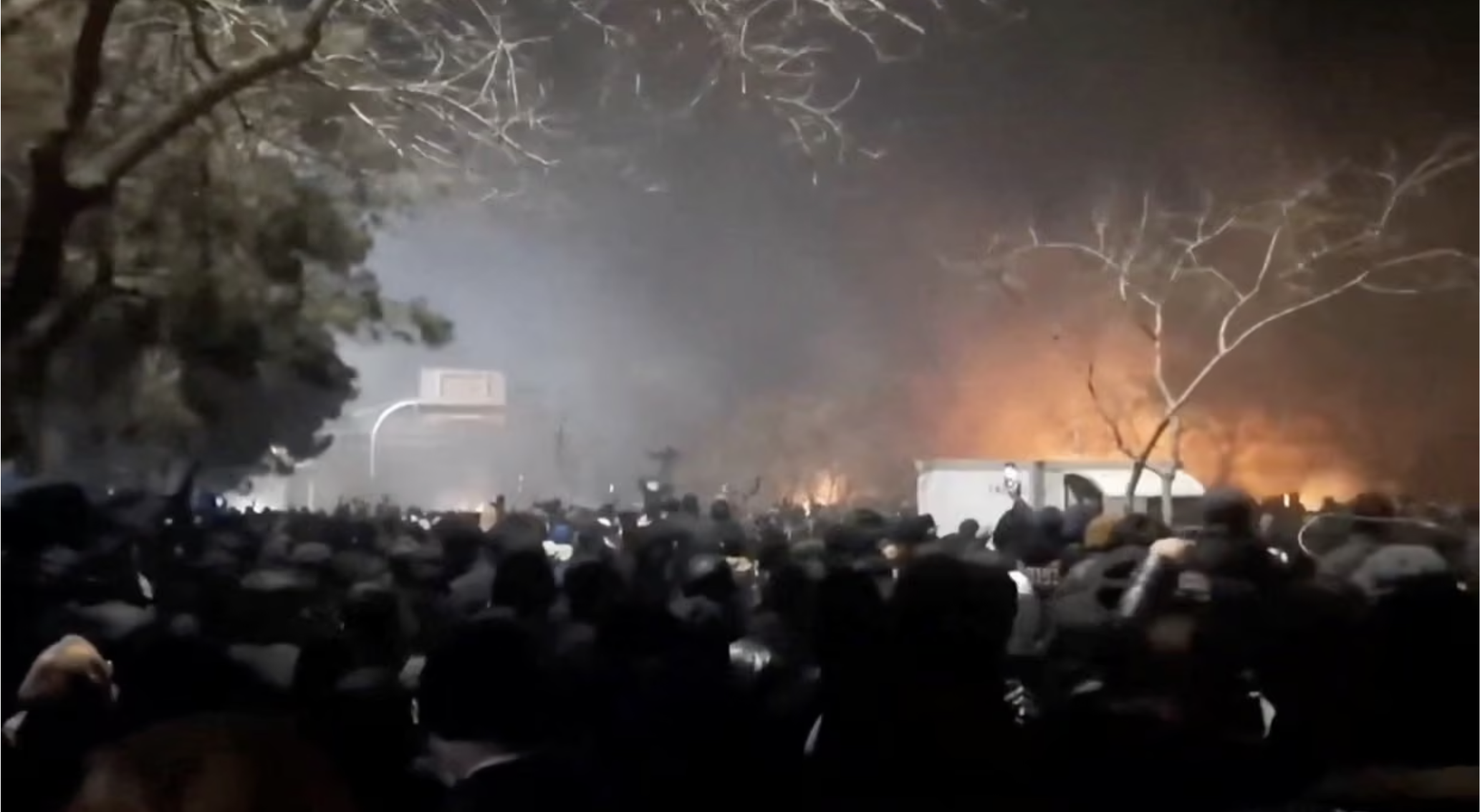
Iran is facing one of its largest protest movements in decades. What began in late December as demonstrations over money problems has turned into nationwide protests calling for major political change. Over the past two weeks, people have taken to the streets in cities and towns across all 31 provinces of the country.
The protests started after Iran’s currency lost much of its value, making food, rent, and basic supplies much more expensive. Shopkeepers in Tehran’s Grand Bazaar were among the first to protest on December 28. Soon, students, workers, and families joined in. As more people became involved, the protests grew louder and more political, with chants criticizing Iran’s leaders and calling for an end to the current system of government.
Many protesters say they are frustrated with years of economic struggles and limits on personal freedoms. Videos show people of all ages marching together, including parents carrying children and elderly people chanting alongside younger protesters. Some protesters say this moment feels different from past demonstrations because so many groups of people are involved at once.
The Iranian government has responded with a severe crackdown. Human rights groups based outside Iran report that hundreds of protesters have been killed since the demonstrations began, with many deaths happening after authorities shut down the internet. More than 10,000 people are believed to have been arrested. Because Iran has blocked most communication, it is very difficult to confirm exact numbers.
Witnesses have reported that hospitals are overwhelmed and that doctors are struggling with shortages of supplies. Some protesters were reportedly shot with pellets or bullets, including injuries to the eyes and head. Human rights groups say security forces may be using snipers, drones, and military weapons to control crowds.
The government says it is dealing with “rioters” and claims that violent groups, not peaceful protesters, are responsible for many deaths. Iranian officials have accused foreign countries of stirring unrest and have described some protesters as terrorists. State television shows funerals for security officers and pro-government marches during the day, creating a different picture from what appears in leaked nighttime videos.
One of the most powerful tools used by the government has been a nationwide internet shutdown. For several days, nearly all internet and phone services have been blocked. Experts say this blackout is one of the most complete Iran has ever imposed. Without internet access, protesters cannot easily organize or share videos, and families struggle to contact loved ones.
Despite this, some information has still reached the outside world. A few people have used special satellite connections to send videos showing large crowds, funerals, and people searching for missing family members at morgues. These videos have deeply affected viewers around the world.
The protests have also raised concerns about international conflict. In the United States, President Donald Trump has said he is considering different responses to the situation, including military and non military options. He posted online that the United States “stands ready to help.” Iranian leaders warned that any foreign attack would lead to serious retaliation against the US, Israel, and others.
Experts say military action could make the situation much worse. Some warn that even if Iran’s top leaders were removed, another group could quickly take control, leading to more instability. Others note that the US does not currently have as many military forces positioned nearby as it usually would during a crisis.
Meanwhile, leaders around the world are reacting in different ways. Israeli officials say they support the Iranian people’s struggle for freedom, while also closely watching the situation for security reasons. Human rights organizations are urging the global community to act to prevent more loss of life.
Many Iranians compare the current protests to earlier movements, such as the 2009 Green Movement, which also began with hope but ended after a violent crackdown. Still, protesters say this time feels different because the anger is deeper and the economic crisis is more severe.
Inside Iran, daily life has been heavily disrupted. Businesses have closed, trading has slowed, and fear is widespread. Yet protests continue, often at night, as people chant from rooftops or quietly gather in the streets. Some say they are risking everything because they want a safer, freer future.
As Iran remains largely cut off from the world, it is hard to know what will happen next. What is clear is that many Iranians are demanding change, and the situation has become one of the most serious challenges the country has faced in years.
References
CNN. 2026. “Iran Protests Live Updates: Death Toll Rises and U.S. Considers Options.” CNN, January 11, 2026. https://www.cnn.com/world/live-news/iran-protests-01-11-26.
Parent, Deepa, and William Christou. 2026. “Iran Protests Gather Momentum as Demonstrators Call for Change.” The Guardian, January 11, 2026. https://www.theguardian.com/world/2026/jan/11/iran-protests-gather-momentum-demonstrators-protest-movement.
Torbati, Yeganeh, Susannah George, and John Hudson. 2026. “Hundreds of Iranian Protesters Feared Killed; U.S. Considers Military Strikes.” Washington Post, January 11, 2026. https://www.washingtonpost.com/world/2026/01/11/iran-protests-death-toll/.