
California’s Kelp Forest
California’s Kelp Forest
Written by: Anna Pafenberg
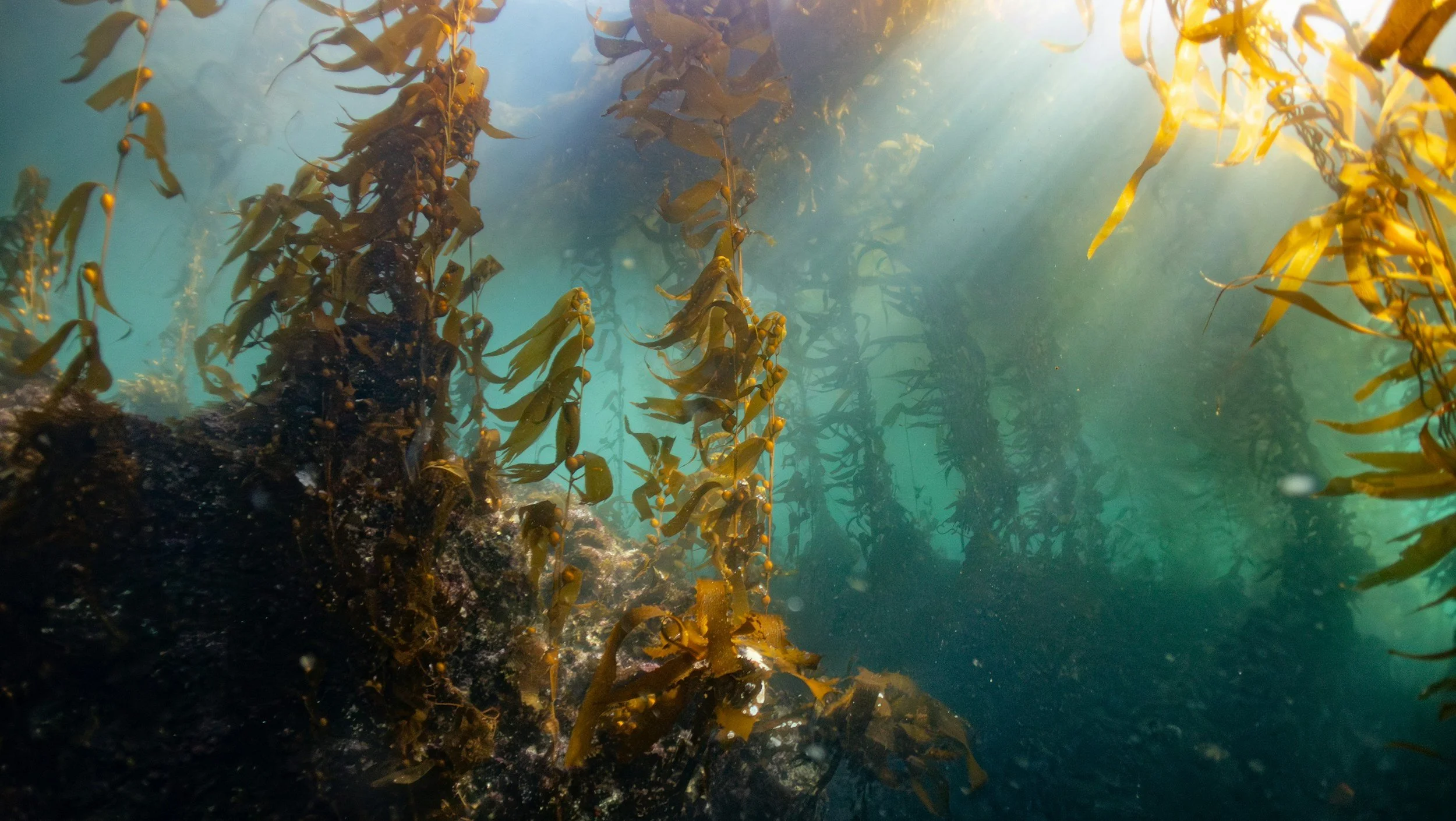
In many parts of the world, people are very aware of the ecosystems around them. They are able to name trees, animal species, and local temperatures. However, did you know that the ocean has an entire world beneath its surface, with an ecosystem of its own? Kelp forests are underwater ecosystems that occur on the Pacific Coast of the United States. Kelp is a type of algae that can grow up to 175 feet tall! Kelp does not have roots or stems and stays upright by anchoring itself to the sea floor and floating at the surface to stay up straight. Kelp prefers cold and rocky water, this is why the Pacific Coast is such a great place for it to grow.
While we recognize trees are providers of shade and shelter to land organisms, kelp does the same thing! Organisms need shade as protection from direct sunlight, and the canopies of the kelp provide a home. Also, some organisms rely on kelp for food. Overall, the kelp is a safety net for many things in shallow water!
Kelp grows extremely fast in the right conditions. At the Monterey Bay Aquarium the forests can grow three to five inches a day. Giant Kelp can grow ten to twelve inches per day! Kelp needs a lot of light to grow. They have to compete with many different plant species for prime space to live. It can be hard to anchor down and once they do they must grow upward and have enough space to reach sunlight. Fish, sea urchins, and other animals eat wild kelp, which can hinder growth.
Sea Otters are considered a keystone species to kelp forests. This means that they are an integral part of their growth and survival. Otters eat sea urchins. Without them controlling their population, they can overly graze kelp and harm it. Kelp forests must be kept alive because they are important for many species' shelter and wellbeing. Their shade and shelter are amazing places for young fish and plants to live.
In terms of the environment, kelp forests store an immense amount of carbon. This helps stop so much ocean acidification from happening, allowing help from climate change. Overall, kelp is an integral part of the ocean. Without it, many ecosystems would not have a home or food source. When considering the ecosystems around you, don’t forget to include the kelp forest.
References
Monterey Bay Aquarium. “Kelp Forests: Underwater Ecosystems Full of Life.” Monterey Bay Aquarium. Accessed November 17, 2026. https://www.montereybayaquarium.org/animals-the-ocean/ecosystems/kelp-forest
Zuckerman, Catherine. “The Vanishing Kelp Forest.” The Nature Conservancy. Accessed November 17, 2026. https://www.nature.org/en-us/magazine/magazine-articles/kelp-forest/
NOAA Fisheries. “Kelp Forest Habitat on the West Coast.” National Oceanic and Atmospheric Administration. Accessed November 17, 2026. https://www.fisheries.noaa.gov/west-coast/habitat-conservation/kelp-forest-habitat-west-coast