
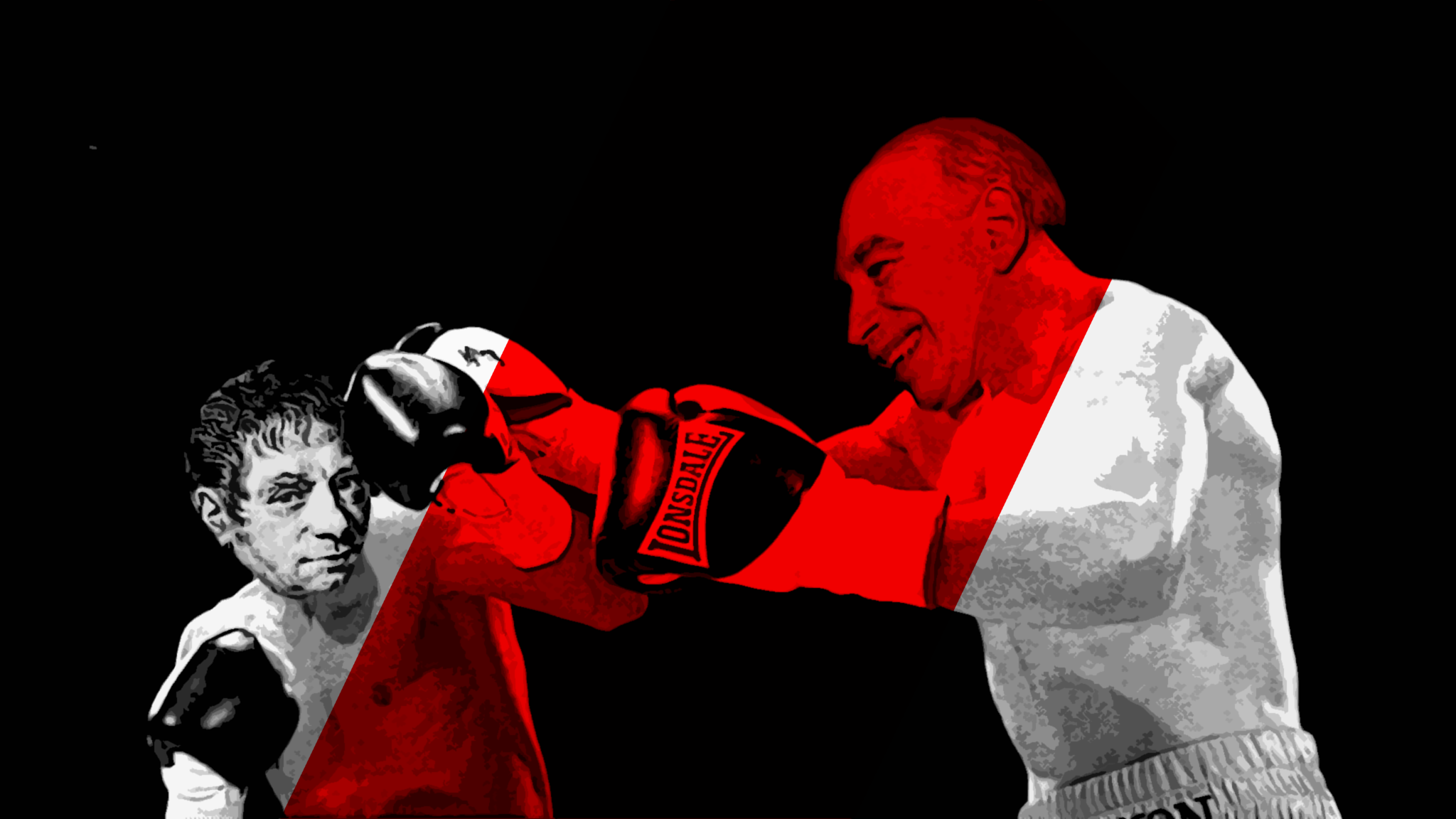
Keynes vs. Say
Imagine two brilliant thinkers, living a hundred years apart, who completely disagreed about one giant question: when a country's economy breaks down and people lose their jobs, what should we actually do about it? One said, basically, leave it alone and it will fix itself. The other said, no way, sometimes you have to step in and help. Their argument started almost a century ago, and believe it or not, grown-ups are still having it today.
Meet the two sides.
Side one: Jean-Baptiste Say
Jean-Baptiste Say was a French economist born in the 1700s. His big idea is often summed up in four words: "supply creates its own demand." That sounds fancy, so here is what it really means.
Picture a small town where everyone makes something. You bake bread, your neighbor builds chairs, someone else sews clothes. When you sell your bread, you earn money, and then you spend that money on a chair and some clothes. In other words, by making and selling your own stuff, you earn the money to buy everyone else's stuff. Say believed this happens across a whole economy. All that producing creates all the spending, so things naturally balance out. If a business is making something nobody wants, it will simply switch to making something people do want. In Say's view, the economy mostly fixes itself, and the government should mostly stay out of the way.
Side two: John Maynard Keynes
Fast forward to the 1930s. The world was stuck in the Great Depression, the worst economic disaster in modern history. Banks collapsed, businesses closed, and millions of people were out of work for years. It did not look like the economy was fixing itself at all. That is when a British economist named John Maynard Keynes spoke up, and in 1936 he wrote a famous book that changed economics forever.
Keynes argued that Say had it backwards. He said demand, which is people actually spending money, is what really drives an economy. And here is the problem he spotted: when times get scary, people get nervous and stop spending. They hold onto their money "just in case." But when everyone stops buying, stores do not sell anything, so they lay off workers, and those workers now have even less to spend. It becomes a downward spiral that the economy can get stuck in for a long, long time.
So what is the fix? Keynes said that when regular people and businesses stop spending, the government can step in and spend instead, maybe by building roads, bridges, and schools. That spending puts money back in people's pockets and gets the whole machine moving again. In short, Keynes believed the government should help jump-start a struggling economy, not just wait and hope.
So who was right?
Here is the honest answer: economists still argue about it, and both sides make real points.
People who lean toward Say worry that when governments spend huge amounts of money, they often have to borrow it, which can pile up as debt, the same national debt you may have read about. They argue that markets are usually smart enough to recover on their own, and that too much government meddling can cause brand new problems.
People who lean toward Keynes point to real emergencies, like the 2008 financial crisis and the 2020 pandemic, when governments around the world spent big to keep their economies from collapsing. They argue that sometimes waiting for things to "fix themselves" means letting millions of people suffer for no good reason.
The truth is, most modern governments borrow a little from both thinkers, depending on the situation. This is not a settled question with a tidy answer, and that is exactly what makes it so interesting.
So the next time you hear adults on the news arguing about whether the government should spend money to rescue the economy or step back and let it recover, you will know you are listening to a debate that is almost a hundred years old. On one side stands Say, saying let it balance itself. On the other stands Keynes, saying sometimes you have to lend a hand. And the amazing part? After all this time, nobody has fully won.
Keynes vs. Say
Written by: Anders Lee
References
"The General Theory of Employment, Interest and Money by John Maynard Keynes." EBSCO Research Starters, www.ebsco.com/research-starters/economics/general-theory-employment-interest-and-money-john-maynard-keynes. Accessed 2 Oct. 2026.
Jahan, Sarwat, et al. "What Is Keynesian Economics?" Finance & Development, International Monetary Fund, Sept. 2014, www.imf.org/external/pubs/ft/fandd/2014/09/basics.htm. Accessed 2 Oct. 2026.
"Jean-Baptiste Say." Britannica Kids, Encyclopaedia Britannica, kids.britannica.com/students/article/Jean-Baptiste-Say/335806. Accessed 2 Oct. 2026.
"Say's Law of Markets." Encyclopaedia Britannica, www.britannica.com/topic/Says-Law-of-Markets. Accessed 2 Oct. 2026.