
The Lovely Ladybug
The Lovely Ladybug
Written by: Anna Pafenberg
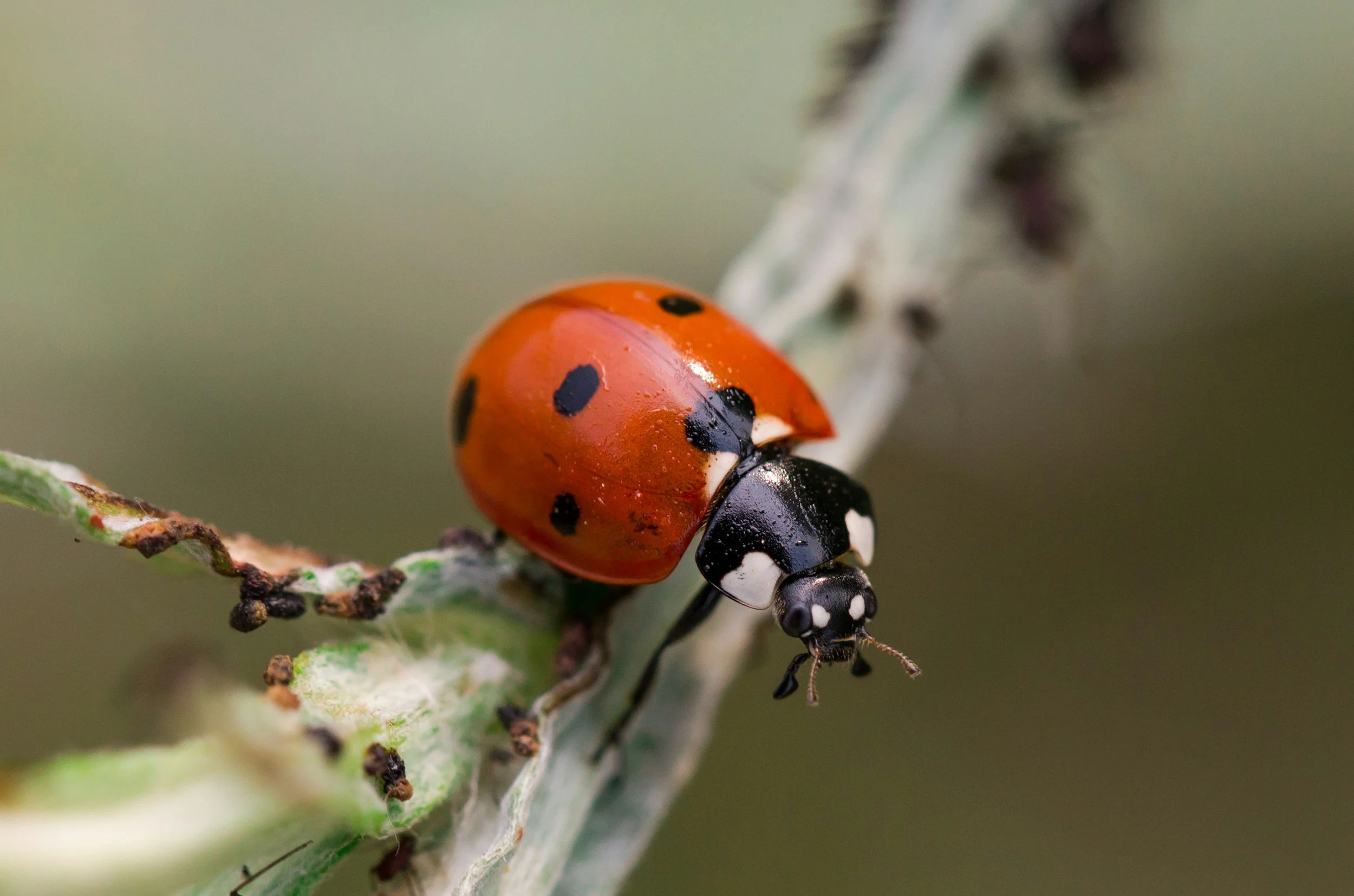
In childhood, many Americans played outside in the dirt with a multitude of animals. Worms, rolly pollies, and most importantly, ladybugs were a part of this experience. But, ladybugs are much more than just little red bugs, they offer a lott to the ecosystem and other animals in their environment. There are over 5000 ladybug species in the world. In America, the most common species is red with seven black dots, but there are many other variations around the globe. These creatures have an oval body, with three dots on each side and one in the very middle. They are also insects, sporting six legs. Like monarch butterflies, their appearance is used to ward off predators. Their bright coloring of red or orange tells predators that they will not taste good if eaten. To defend against these predators if eaten, they will give off a bad tasting oil from their limbs.
In the animal kingdom, ladybugs are most predated by birds. However, they are also eaten by wasps, spiders, and other bugs. Ladybugs eat many things, but humans know them most because of their aphid diet. They were brought to America from Europe in the 1900’s to control farmer’s aphid problems. Ladybugs got their name from European farmers who prayed to Virgin Mary to get rid of the pests on their crops. They called the bug “The beetle of our Lady” and then soon, Lady Beetle, and Lady Bug. Besides Aphids, ladybugs eat leaves when insects are not available. They do not offer much nutritional value, but are a good source of hydration. Ladybugs have also been observed to have eaten seeds which are rich in carbs and lipids. Ladybugs found in tropical regions sometimes eat fungus as a source of protein and vitamins. Lastly, these insects eat pollen, plants, fruit, and vegetables as well for vitamins and minerals.
The life cycle of a ladybug starts in spring when they emerge after a cold fall and winter. Once they have mated, they lay their small yellow eggs on leaves, close by to an aphid colony for a good food source once the eggs hatch. Once the eggs hatch, they are able to mate as soon as the conditions of the environment allow. Overall, these creatures are important to American farmers, the population of insects, and many children in their outside adventures. Next time you see a ladybug, remember their unique story and beautiful life.
References
National Geographic Kids. “Ladybug.” National Geographic Kids. Accessed November 3, 2026. https://kids.nationalgeographic.com/animals/invertebrates/facts/ladybug .
McManamna, Spencer. “What Types of Food Do Ladybugs Eat?” Insect Lore, August 15, 2024. https://www.insectlore.com/blogs/ladybugs/what-do-ladybugs-eat .
Daw, Sonya. “Ladybug.” National Park Service, July 31, 2020. https://www.nps.gov/articles/000/ladybug.htm