
The Science of Lightning and Thunder
The Science of Lightning and Thunder
Written by: Paige Leal
Imagine you’re cozy in bed when a bright flash lights up the room, and just seconds later, a loud boom shakes the silence. Lightning and thunder can seem random and kind of scary, but they actually follow a clear scientific process. During storms, a lot is happening inside clouds that we can’t see. Understanding how lightning and thunder work shows how powerful energy in the atmosphere really is.
It all starts inside a thunderstorm cloud. These storms form when warm, moist air rises and creates large clouds filled with water droplets, ice, and hail. As these particles move up and down, they crash into each other, which causes them to gain electrical charges. Over time, the top of the cloud becomes positively charged, while the bottom becomes negatively charged.
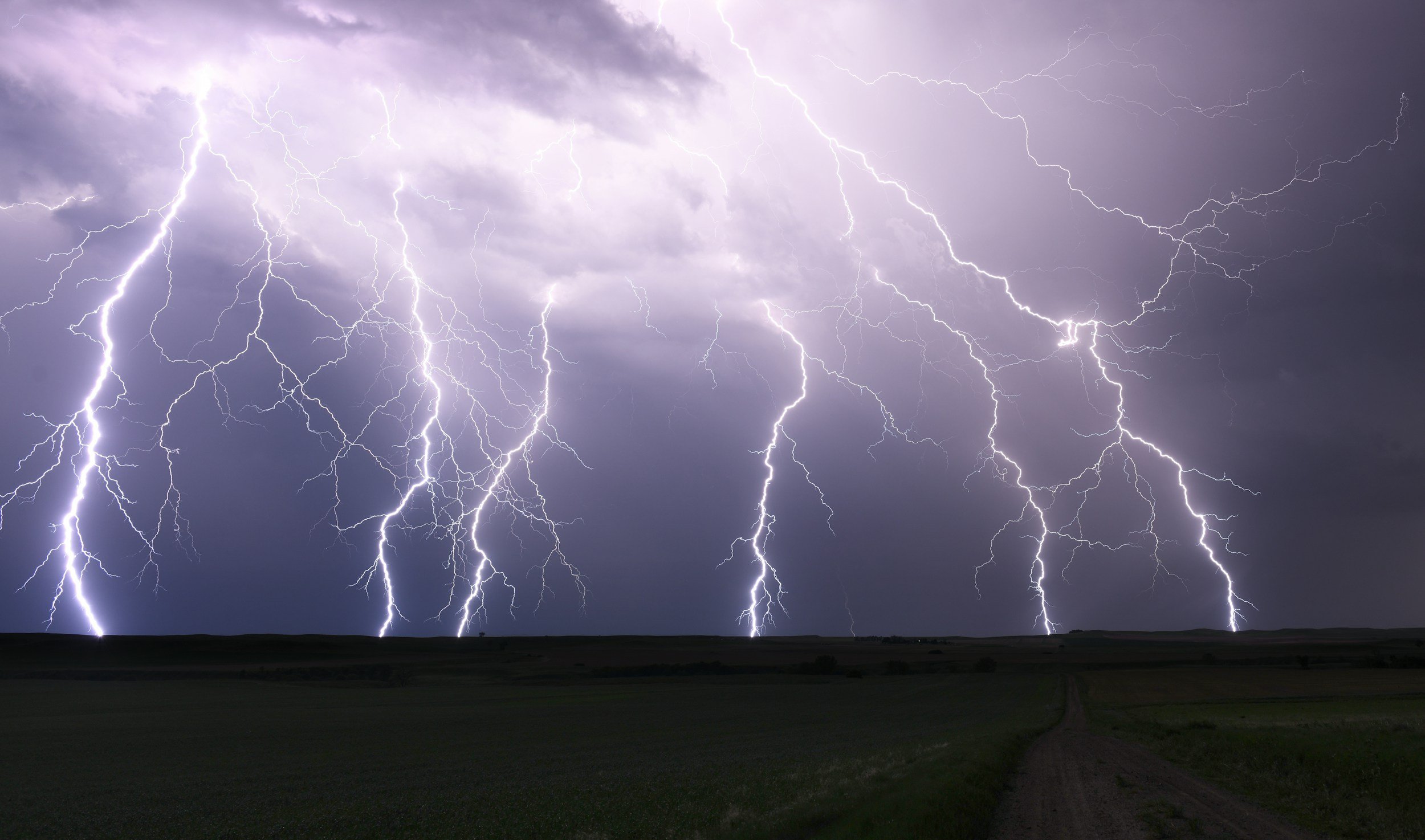
Once the charges build up enough, they need to be released. Lightning is that release, it’s basically a giant spark of electricity. When the difference between positive and negative charges gets too strong, the air can no longer hold them apart, and electricity suddenly moves through the air. This creates the bright flash we see in the sky.
Sometimes lightning stays inside the cloud, but other times it travels toward the ground. This happens because the negative charge in the cloud is attracted to positive charges on the ground, especially in tall objects like trees or buildings. When the connection is made, a powerful electric current flows, creating the lightning bolt.
Thunder is directly connected to lightning. When lightning flashes, it heats the air around it to extremely high temperatures, ones that are much hotter than the surface of the sun. This sudden heat makes the air expand very quickly, almost like a small explosion. The rapid expansion creates a shockwave that we hear as thunder.
But why is lightning and thunder not synched up? Well, you usually see lightning before you hear thunder, and that’s because light travels much faster than sound. Sound moves slower through the air, which is why there’s a delay between the flash and the noise. You can even estimate how far away a storm is by counting the seconds between lightning and thunder.
Overall, lightning and thunder are powerful examples of how energy moves in nature. Even though they might seem unpredictable, they follow clear scientific patterns. Learning how they work helps explain one of the most dramatic parts of a storm.
References
National Weather Service. n.d. “Lightning Science: An Overview.” Accessed March 30, 2026. https://www.weather.gov/safety/lightning-science-overview.
UCAR Center for Science Education. n.d. “Thunder and Lightning.” Accessed March 30, 2026. https://scied.ucar.edu/learning-zone/storms/thunder-and-lightning.
National Weather Service. n.d. “Lightning Science: Thunder.” Accessed March 30, 2026. https://www.weather.gov/safety/lightning-science-thunder.
Lightning Safety Council. n.d. “Lightning Science: Detailed.” Accessed March 30, 2026. http://lightningsafetycouncil.org/LSC-Science-Detailed.html.