
Inside the Lives of Chickens
Inside the Lives of Chickens
Written by: Anna Pafenberg
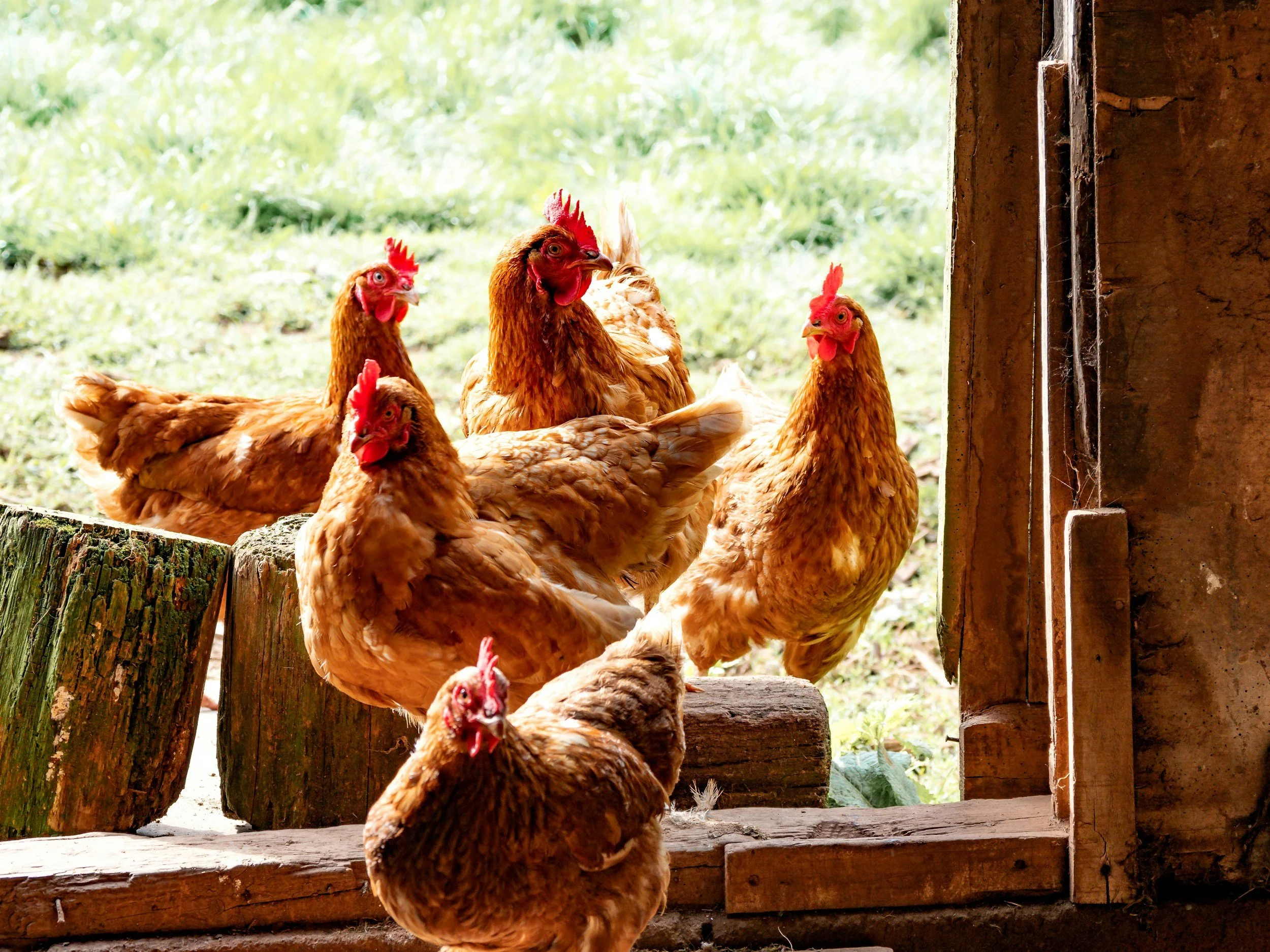
Many of us are familiar with barnyard animals such as cows, pigs, horses, and the most common of all, chickens! Chickens produce the eggs we eat as well as one of the most popular sources of meat. There are over thirty-four billion chickens all over the world, that's about one person for every four chickens. You may have heard that chickens originate from dinosaurs, which is true. The tyrannosaurus rex is a direct descendant of the chicken. After dinos, chickens evolved from the Red Junglefowl about eight-thousand years ago. This bird is native to Southern Asia. These birds could fly to escape predators. Chickens can only fly for a short amount of time.
Chickens all have different personalities, much like humans. These adorable birds can even dream! REM (Rapid eye movement) in humans means that we are dreaming. Chickens have been found to do this too, which means that they dream as well. Chickens also have excellent vision. They can see many colors in order to find food. They also can see ultra-violet light. All of these traits have evolved in order for survival. Throughout the world, we know chickens mostly as a food source. In Australia specifically, hens lay over five-hundred and fifty million eggs a year. In Australia as well, seven-hundred million chickens are produced specifically for meat.
Unfortunately, in order to produce the most meat and eggs quickly and with as little cost as possible, some chickens are mistreated. Seventy-five billion chickens a year are factory farmed in cruel conditions. There is no fresh air, light, or room. Most chickens only have enough space to move as a piece of printer paper. Chickens have been genetically modified to produce the most meat in the shortest amount of time. A small chick can reach full grown and large size in up to six weeks. Most chickens who are bred for farming have a multitude of health conditions due to their rapid growth. Their lungs become overworked, and they can even have sores and burns all over their body. Many restaurants in the UK that serve chicken have pledged to the Better Chicken Commitment. This helps chickens live under better conditions and a cage free life. In the United States, chickens make up 95% of the animals killed. Half a billion chickens die before they are slaughtered, showing that their conditions are detrimental to their health.
Chickens in the United States and Australia live hard lives, which is a shame because they have the capacity to do much more. With their incredible eyesight and mental capabilities, chickens are an interesting and complex animal deserving of a good life.
References
BC SPCA. “10 Fun Facts About Chickens.” BC SPCA, September 5, 2025. Accessed February 10, 2026. https://spca.bc.ca/news/fun-facts-about-chickens/
Farm Sanctuary. “Nine Things You Didn’t Know About Chickens.” Farm Sanctuary, January 23, 2025. Accessed February 10, 2026. https://www.farmsanctuary.org/news-stories/9-things-you-didnt-know-about-chickens/
World Animal Protection. “Chicken Facts.” World Animal Protection. Accessed February 10, 2026. https://www.worldanimalprotection.org.au/education/animal-facts/chickens?utm_source=google&utm_medium=cpc&utm_campaign=&utm_content=__&utm_term=c___780379038715&gad_source=1&gad_campaignid=23165641140&gbraid=0AAAAADoSvgE5z5X0hU5m-G5cIXv-tzm7U&gclid=Cj0KCQiAy6vMBhDCARIsAK8rOgl5vbYdPzzDFzuRPiNIqzR40x1AzqzCdDSkWavrkmNqGmwy6FAseGYaAvFoEALw_wcB