
Mercury Is Shrinking! But Why?
Mercury Is Shrinking! But Why?
Written by: Keya Gambhir
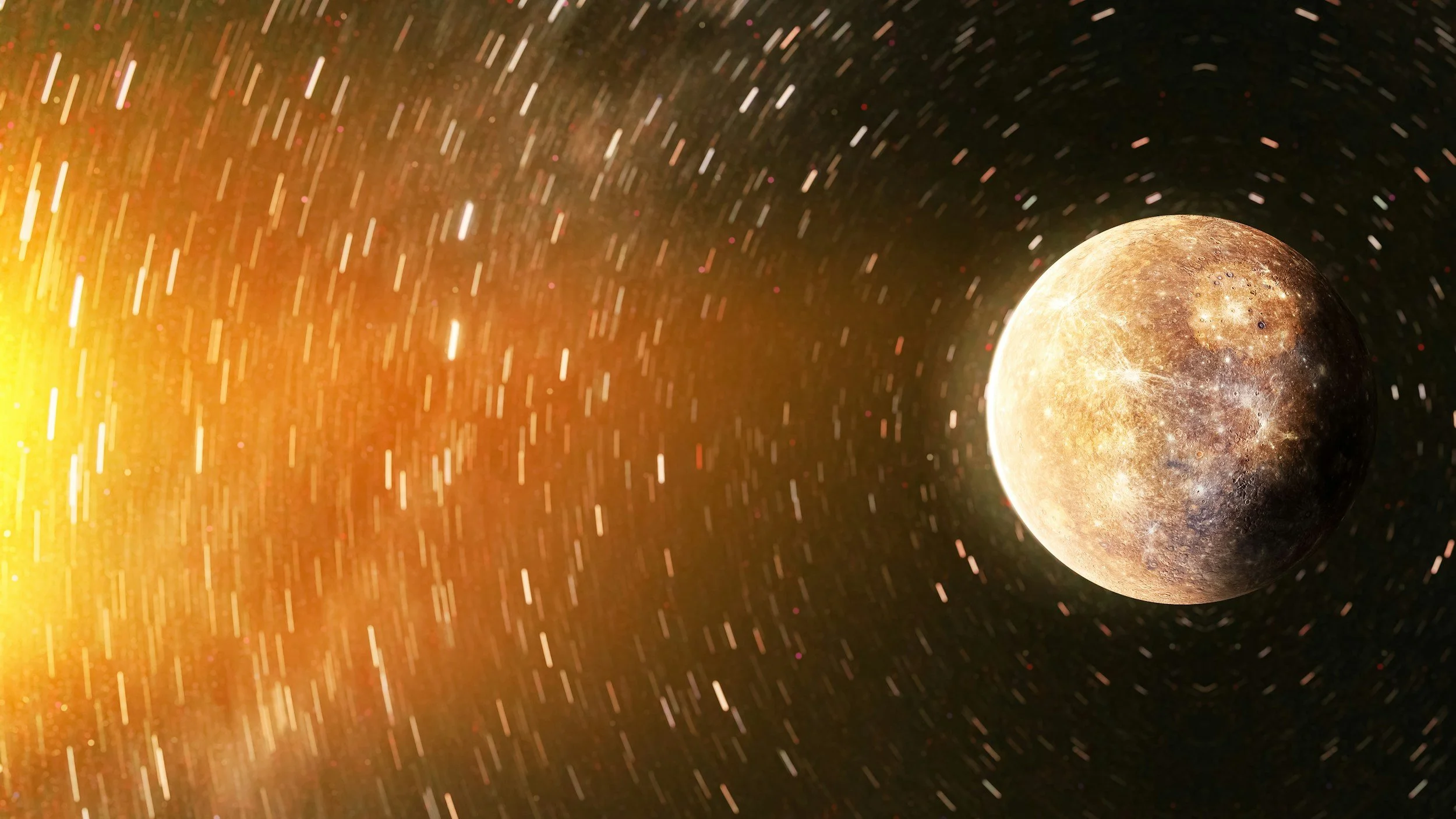
Mercury is the smallest planet in our solar system, but scientists just discovered that it may have gotten even smaller than they thought. The planet has been slowly shrinking for billions of years, and new research suggests that it may have shrunk 10% to 30% more than scientists previously estimated. So, why is Mercury getting smaller?
Mercury is the planet closest to the Sun. It is about 36 million miles away from the Sun and takes only 88 days to complete one trip around it. Mercury formed about 4.5 billion years ago, when the solar system was still young and chaotic. During this time, Mercury was extremely hot because of collisions with other objects in space. As the planet slowly lost heat, something happened inside it.
Mercury’s core began to cool down and contract. Think about what happens when something hot cools. It usually takes up a little less space. The same basic idea happened inside Mercury. As its interior cooled, the planet became slightly smaller, causing its surface to crack, wrinkle, and change.
Scientists can actually see evidence of this shrinking on Mercury’s surface. The planet has long ridges, cliffs, and cracks that formed as its surface was pushed together. Some of these cliffs are about a mile high and stretch for hundreds of miles. These features are like wrinkles on the skin of an apple. They give scientists clues about what happened inside the planet.
However, studying Mercury’s wrinkles is not easy. Mercury has been hit by asteroids and comets for billions of years. These impacts created huge craters and spread rocks and debris across the surface. Some of this material may have covered cracks and other features caused by Mercury’s shrinking.
To figure out how much Mercury has actually shrunk, scientists studied images taken by NASA’s MESSENGER spacecraft. They created a global map showing how rough different parts of Mercury’s surface are. They noticed that the roughest areas had fewer visible wrinkles. This suggested that some of Mercury’s wrinkles may be hidden under layers of debris.
After accounting for these hidden features, researchers estimated that Mercury may have shrunk 10% to 30% more than scientists previously believed. One estimate suggests that the planet’s radius may have decreased by about 7.2 miles. That might not sound like much, but it is a huge change when you consider that Mercury has a current radius of about 1,516 miles.
This discovery could tell scientists much more than just how small Mercury is. Mercury has a giant metallic core and is the second densest planet in the solar system, after Earth. By studying how much the planet has contracted, scientists can learn more about the size and makeup of its core, how hot it was when it formed, and how its interior changed over time.
Scientists may soon get an even better look at Mercury. The BepiColombo spacecraft, a joint mission from the European Space Agency and the Japan Aerospace Exploration Agency, is expected to place two spacecraft into orbit around Mercury later in 2026. These spacecraft will collect detailed information about the planet’s surface, gravity, interior, and composition.
Mercury is not suddenly getting smaller in a way that people could notice. Its shrinking has happened extremely slowly over billions of years. But every crack, ridge, and wrinkle on its surface gives scientists another clue about the planet’s past.
Mercury may be small, but it has a lot of history hidden beneath its surface. As scientists continue studying its wrinkles, they may learn more about how planets cool, change, and grow old.
References
Callaway, K. R. 2026. “Mercury Is Shrinking, and Faster Than We Thought.” The New York Times, September 11, 2026. https://www.nytimes.com/2026/09/11/science/space/mercury-shrinking-wrinkles.html.
Cost, Ben. “Solar System’s Smallest Planet Is Getting Even Smaller, Shrinking 30% Faster Than Astronomers Thought.” 2026. New York Post, September 12, 2026. https://nypost.com/2026/09/12/science/solar-systems-smallest-planet-shrinking-faster-than-we-thought/.
Strickland, Ashley. 2026. “The Closest Planet to Our Sun Is Shrinking. Here’s What That Means.” CNN, September 10, 2026. https://www.cnn.com/2026/09/10/science/mercury-shrinking-study.
Sauers, Elisha. 2026. “Scientists knew Mercury was shrinking. They didn't know the true extent.” Mashable, September 2026. https://mashable.com/science/mercury-shrinking-planet-explanation.