
Sand Crabs: The Moles of the Ocean
Sand Crabs: The Moles of the Ocean
Written by: Anna Pafenberg
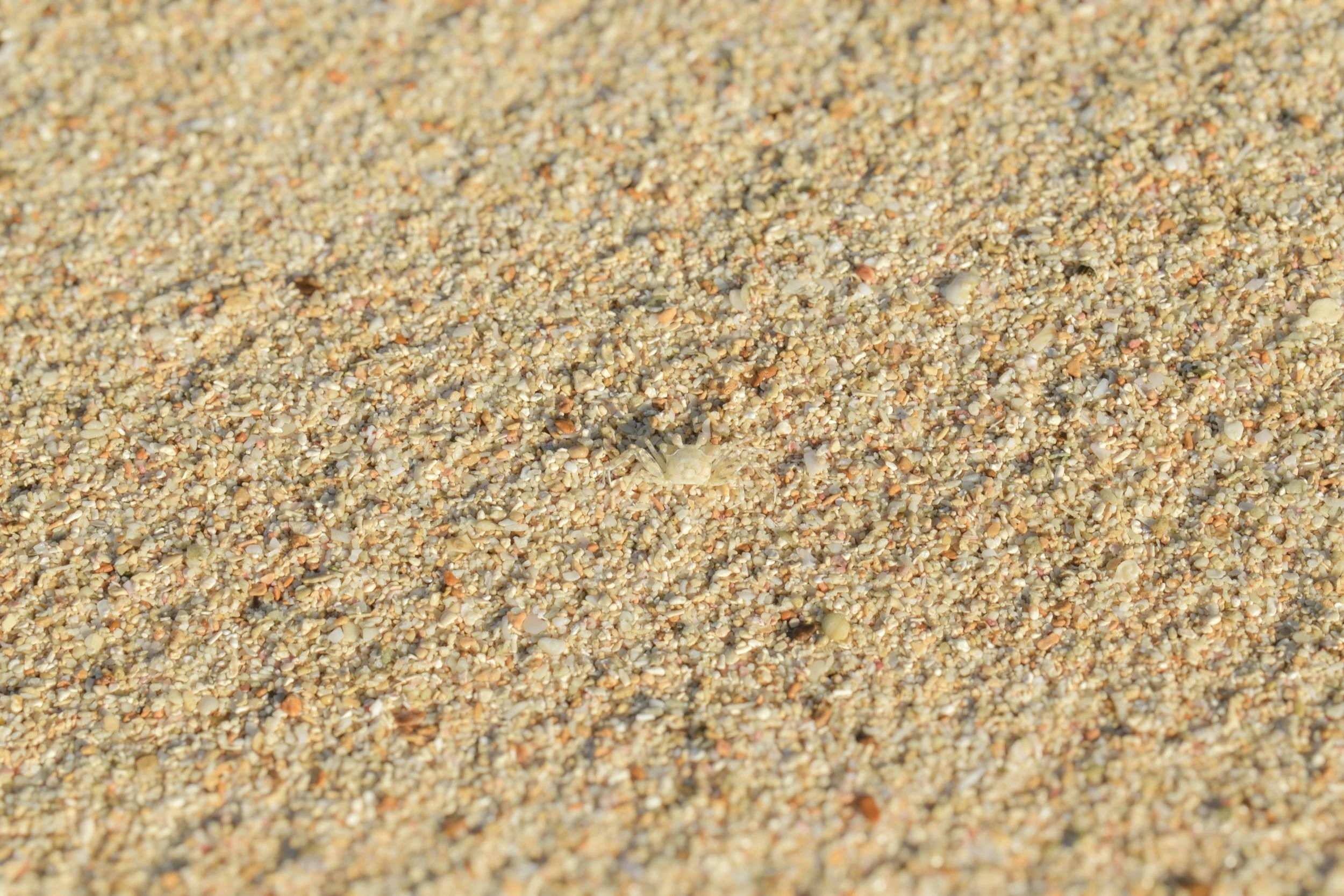
When going on a beach trip, one of the most fun things to do is play in the sand right along the surf. In this damp sand, lie mole crabs, more commonly known as sand crabs. This little crustacean likes to burrow in the sand right near the waves called the swash. They burrow in it quickly and frequently to hunt for the food that lies below. This area is perfect because the waves allow a constant mixing of sand and new offerings for food. It only takes 1-7 seconds for the crabs to bury under! These guys feed on plankton that they find by burrowing in the swash zone. Mole crabs can be found from Alaska, all the way down to Mexico, lying all over the Pacific Coast. They can also be very common in the East, making them a universal coastal American experience!
Sand crabs are the main prey of many coastal animals. Shorebirds and fish like to snack on these crabs, making them great natural bait for humans who are fishing. The crabs have a grayish shell and small legs to swim and burrow. When females are carrying eggs, they can appear yellowish to orange in color. When not carrying eggs, they generally look the same as males.
The crabs have a role in the ecosystem as well. There are toxic chemicals in the sand. For example, Domoic acid, a toxin made by algae, is bad for humans and the environment. Sand crabs play an important role by filtering these toxins and making the beach and swash zone safer by eating the algae that creates the acid.
The crabs can allow humans to determine the health of an ecosystem not just from Domoic acid. Humans can tell if there are too many microplastics in the water based on the mortality rate of sand crabs. Adding or removing sand to beaches can be harmful as well.
Sand crabs have amazing reproductive characteristics. Female sand crabs can lay up to 45,000 eggs which are carried on her abdomen before being hatched. These crabs usually reproduce in their first year of life as they are only alive for 2-3 years. Their reproductive season is from February to October.
Overall, these small, round animals offer much curiosity. Young children are exposed to them frequently and can get an up close look at a species that is amazing for the environment. Next time you're making a sand castle, try and find one of the most unique creatures in the sea!
References
Monterey Bay Aquarium. “Sand Crab.” Accessed July 14, 2026. https://www.montereybayaquarium.org/animals-the-ocean/animals-a-to-z/sand-crab
PISCO. Pacific Mole Crab (Emerita analoga). Fact Sheet, October 2010. https://limpets.org/wp-content/uploads/2015/01/PacificMoleCrabFS_Oct2010.pdf
Miller, Matthew L. “Meet the Mole Crab, a Common and Surprising Beach Creature.” Cool Green Science, May 26, 2025. https://blog.nature.org/feature/meet-the-mole-crab-a-common-and-surprising-beach-creature/