
National Braille Literacy Month
National Braille Literacy Month
Written by: Sitara Nair
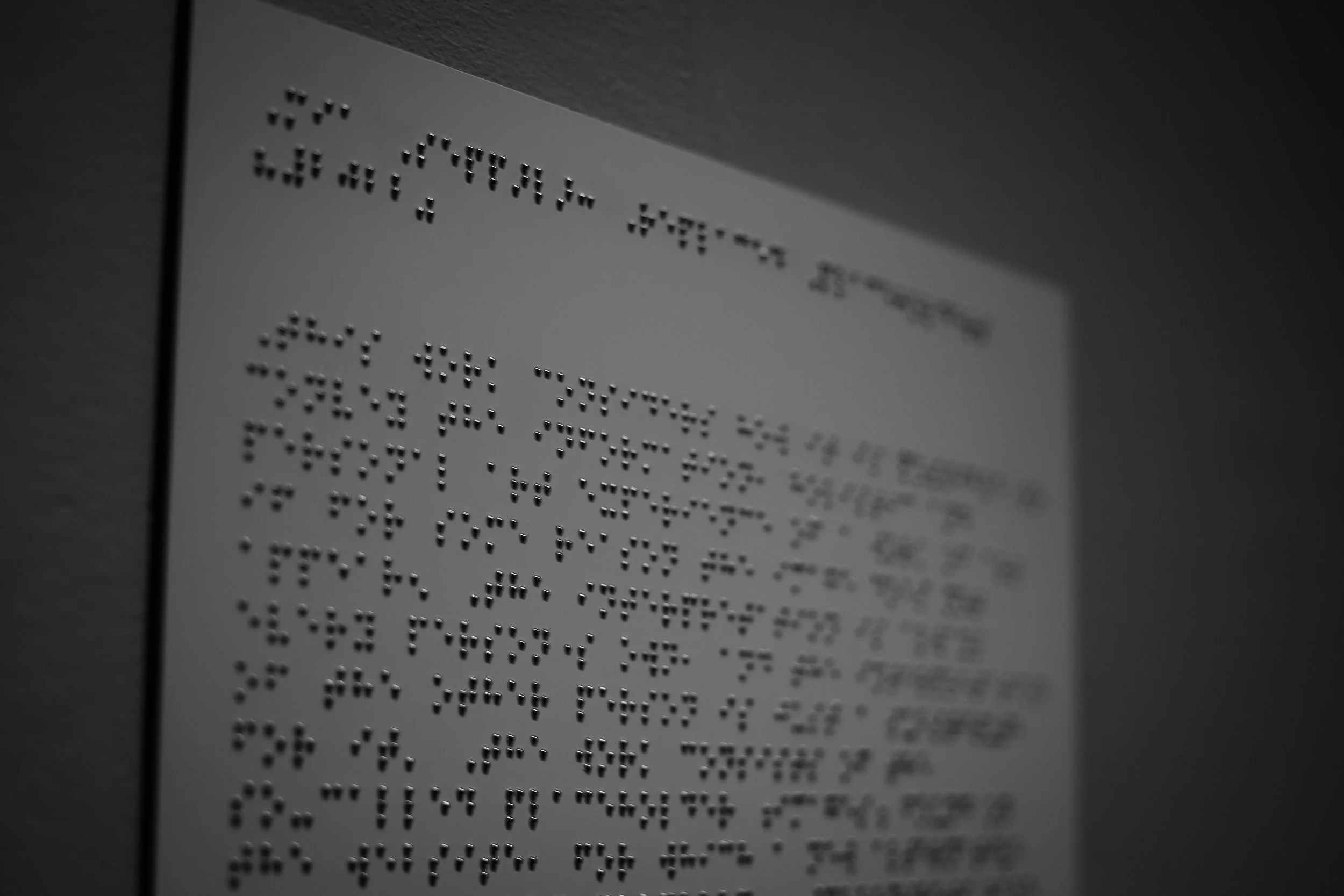
January is National Braille Literacy Month, which recognizes the legally blind and visually impaired. This month highlights the importance of Braille for the blind and visually impaired community. Although advances in audio technology reduce reliance on Braille, its value persists, particularly in workplaces and classrooms. Let’s learn about Braille and important blind people in our world.
About Braille
First of all, let’s learn about what Braille is. It’s often mistaken to be its own language, but it actually varies from language to language. Furthermore, the "braille cell" is made up of 6 dots arranged in two columns of three, although 8-dot cells are also utilized in computer technology. It can be used for reading physical, embossed paper or accessed digitally with refreshable braille displays. This system of tactical writing was developed by Louis Braille in the 1820s, who unfortunately lost his vision at the age of three in an accident. He developed a 6-dot cell system to allow for faster, easier reading and writing for the visually impaired. According to the Musee Louis Braille, “It is currently used by six million blind people around the world… [and] Good Braillists have an average speed of 125 words a minute, which matches the average speaking rate. People with visual impairments can read up to 138 words a minute with both hands when they have learned Braille at a very young age. Sighted readers can read up to 250 words a minute!”
Important Blind Figures
Louis Braille
Louis Braille was the creator of the Braille system that is still used today. He was born in France in 1809 and lost his vision at the age of three due to an accident in his father’s workshop. While attending a school for the blind, Braille became frustrated with the slow and difficult reading systems available at the time. By the age of fifteen, he developed the six-dot Braille system, which allowed blind individuals to read and write more efficiently. His invention revolutionized literacy for the blind and visually impaired community worldwide.
Hellen Keller
Helen Keller was a well-known author, activist, and lecturer who became blind and deaf at just nineteen months old due to an illness. With the help of her teacher, Anne Sullivan, Keller learned to communicate using Braille, sign language, and speech. She went on to become the first deaf-blind person to earn a college degree. Helen Keller spent much of her life advocating for people with disabilities, women’s rights, and social equality, showing the world the importance of education and accessibility.
Tilly Aston
Tilly Aston was an Australian writer, teacher, and advocate for the blind who lost her vision as a child. She was a strong supporter of Braille literacy and worked to improve education and employment opportunities for blind individuals. Aston helped establish organizations for the visually impaired and promoted Braille as an essential tool for independence. Her work had a lasting impact on accessibility and disability rights in Australia.
Sabriye Tenberken
Sabriye Tenberken is a passionate German activist who became blind at the age of twelve due to a genetic condition. Despite her visual impairment, she pursued her studies in Tibetan and created the very first Braille system for the Tibetan language. In 1997, she co-founded the inspiring organization Braille Without Borders, dedicated to offering education and fostering independence for blind individuals, especially in Tibet. Tenberken’s dedicated efforts have opened up new opportunities and brought literacy to visually impaired people in remote parts of the world, making a truly meaningful impact.
Francis Joseph Campbell
Francis Joseph Campbell was an American educator and advocate for the blind who lost his vision at a young age. He was a strong believer in the importance of Braille education and independence for blind individuals. Campbell helped establish schools for the blind and played a key role in founding the National Library Service for the Blind and Print Disabled. His efforts greatly expanded access to books and education, leaving a lasting impact on Braille literacy in the United States.
References
Cushman, Charlotte. “Celebrate Braille Literacy Month!” Paths to Literacy, January 2023. https://www.pathstoliteracy.org/celebrate-braille-literacy-month/.
Mango, Talia. “Celebrating Braille Literacy Month.” Perkins School for the Blind. https://www.perkins.org/celebrating-braille-literacy-month/.
Jones, Tim. “Seeing Beyond Sight: 10 Famous Blind People.” LearnBright, April 1, 2024. https://learnbright.org/seeing-beyond-sight-10-famous-blind-people/.
“5 Visionaries Who Changed History (and Were Visually Impaired).” IBVI Blog. https://ibvi.org/blog/5-visionaries-who-changed-history-and-were-visually-impaired/.