
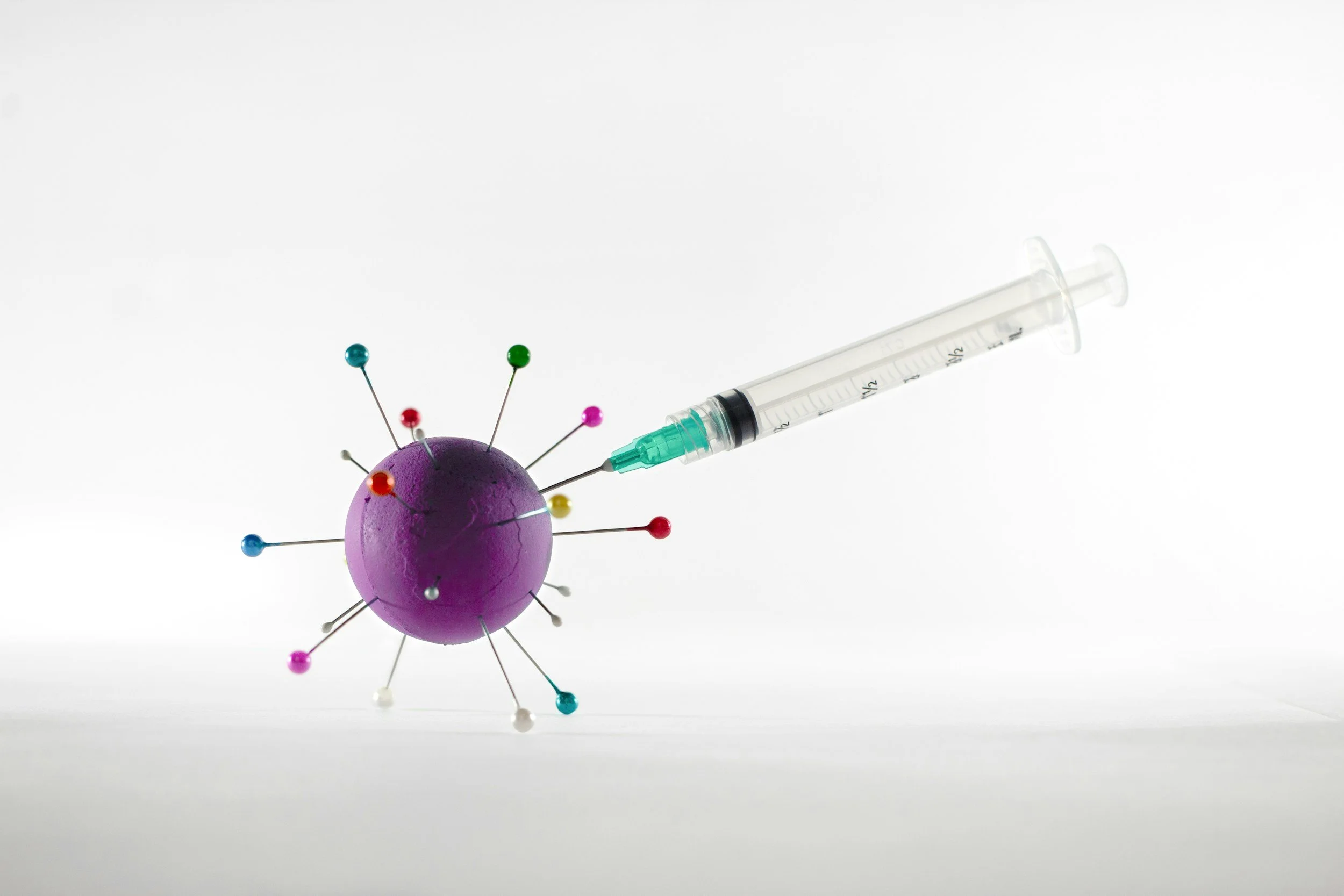
It's National Immunization Awareness Month!
It's National Immunization Awareness Month!
Written by: Sitara Nair
Every August, National Immunization Awareness Month highlights the important role vaccines play in protecting people of all ages from serious diseases. The observance encouraged individuals, families, and communities to stay up to date on recommended vaccinations and to learn how immunizations help prevent the spread of infectious illness. Vaccines have been one of the greatest public health achievements in modern history, saving millions of lives and reducing the impact of diseases that once caused widespread illness and death.
Vaccines work by preparing the body’s immune system to recognize and fight harmful germs before they can cause serious illness. Rather than causing disease, vaccines expose the immune system to a weakened or inactive form of a virus or bacteria, or to a harmless piece of it. This allows the body to develop immunity, making it easier to respond quickly if a person is later exposed to the real disease. As a result, vaccinated individuals are less likely to become seriously ill, require hospitalization, or experience life-threatening health complications.
Immunizations is important throughout every stage of life. Infants and young children receive vaccines that protect them from all sorts of diseases: measles, polio, whooping cough, and hepatitis B. These early vaccinations are especially important because young children have developing immune systems and are more vulnerable to severe illness. As children grow, booster shots help maintain their protection and keep schools and communities healthier. Vaccines remain important during adolescence and adulthood. Teens may need vaccines that protect against meningitis, human papillomavirus (better known as HPV), and other diseases. Adults also should stay current with recommended immunizations, including annual influenza vaccines and other vaccines, based on their age, health conditions, occupation, or travel plans. Older adults may benefit from vaccines that reduce the risk of illnesses such as shingles or respiratory infections that become more threatening with age.
Despite the proven success of vaccines, misinformation can sometimes cause confusion. National Immunization Awareness Month encourages people to seek information from trusted healthcare professionals and reliable public health organizations. Doctors, nurses, pharmacists, and public health experts can answer questions about vaccine safety and effectiveness to help address the hesitation and stigma surrounding immunization. Scientific research and ongoing safety monitoring continue to ensure that vaccines meet rigorous standards and truly do good for our communities!
National Immunization Awareness Month is recognized by the United States government through annual presidential proclamations and public health initiatives. Each August, the President has frequently issued a proclamation encouraging Americans to learn about the importance of vaccines and to stay current with recommended immunizations. Federal agencies, including the Centers for Disease Control and Prevention (CDC), also observe National Immunization Awareness Month by providing educational resources, promoting vaccination schedules, and partnering with healthcare providers and community organizations to raise awareness. These efforts highlight the government's commitment to preventing vaccine-preventable diseases and protecting the health of people of all ages.
Participating in National Immunization Awareness Month can be simple and meaningful. Individuals can review their vaccination records, schedule recommended immunizations, encourage family members to stay up to date, and learn more about the vaccines appropriate for their age and health needs. Parents can ensure their children are prepared for school by confirming that required vaccinations are current, while adults can discuss recommended vaccines during routine medical appointments.
National Immunization Awareness Month serves as an annual reminder that prevention is one of the most effective tools for protecting public health. Vaccines have dramatically reduced the spread of many dangerous diseases and continue to save countless lives every year. Staying informed, following recommended vaccination schedules, and discussing immunizations with a healthcare provider are important steps toward maintaining personal and community health. By recognizing National Immunization Awareness Month each August, individuals can help build healthier communities and support a future where preventable diseases remain under control.
References
Langley, Michelle. “This Ancient Teenager Is the First Known Person with Parents of Two Different Species.” PBS NewsHour, August 23, 2018. https://www.pbs.org/newshour/science/this-ancient-teenager-is-the-first-known-person-with-parents-of-two-different-species.
McKie, Robin. “Meet Denny, the Ancient Mixed-Heritage Mystery Girl.” The Guardian, November 24, 2018. https://www.theguardian.com/science/2018/nov/24/denisovan-neanderthal-hybrid-denny-dna-finder-project.
Natural History Museum. “Who Were the Neanderthals?” Accessed July 31, 2026. https://www.nhm.ac.uk/discover/who-were-the-neanderthals.html.
Natural History Museum. “Denisovans.” Accessed July 31, 2026. https://www.nhm.ac.uk/discover/denisovans.html.