
All About Orchids
All About Orchids
Written by: Anna Pafenberg
From birthdays to mothers days, flowers are always a popular gift. Even more so when growing them yourself. Orchids are a popular plant to own as well as tend to. The family of orchids, called Orchidaceae, is the largest flowering plant species in the world at around 20 to 30,000 species. Orchids are herbaceous plants which means that they have a soft stem and not one made of wood like a tree. Along with that, they are one of the oldest at about 100-125 million years ago.
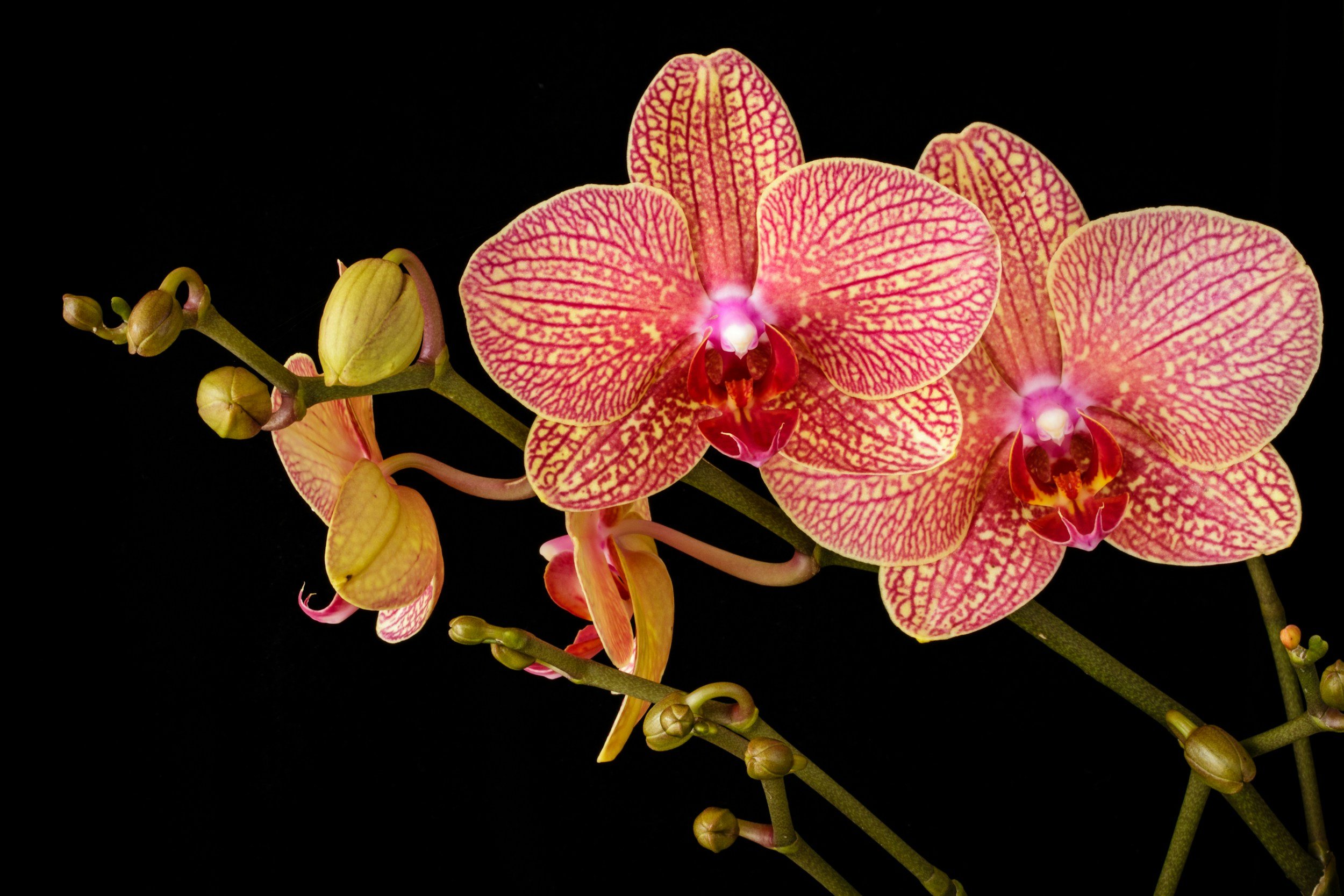
This explains why there are so many variations of orchids because they have had time to diversify. Orchids are unique in the way that they have bi-lateral symmetry, also known as being zygomorphic. Orchids have three sepals (the small petals at the bottom of the flower) as well as three petals. One of the three petals has been changed into a labellum. The size of each of the parts of the flower are determined by the pollinator they are attempting to attract.
Orchids reproduce sexually and asexually. Asexual reproduction can include separating an orchid or propagation. Sexually, they reproduce with a stigma and anther from two orchids. When an orchid is pollinated, it creates capsules full of seeds which have thousands of seeds and are only germinated when dispersed in the perfect environment.
Fun fact: Once the seed capsules from the orchid plant Vanilla Planifolia are processed, they become vanilla beans!
Orchids can be found on every single continent except Antarctica, but prefer to live in warmer climates. These environments include tropical areas like South America and Southeast Asia. Orchids thrive in dense and humid jungles. They are such a diverse group of plants that they can do well in hot low elevations as well as those up to 3,000 feet. They have such a range that 6-11% of all plants with seeds are orchids! There are over 1500 species in Brazil alone.
Overall, while not talked about often, Orchids are much more impactful and common than most think. These creatures can survive and diversify as the years go on, making them special in many ways.
References
Kiddle Encyclopedia. “Orchid Facts for Kids.” Accessed August 4, 2026. https://kids.kiddle.co/Orchid
Horak, David. “Orchids and How They Grow.” Brooklyn Botanic Garden. April 1, 2004. https://www.bbg.org/article/orchids_and_how_they_grow
American Orchid Society. “Introduction to Orchids.” Accessed August 4, 2026. https://www.aos.org/orchids/orchid-basics/introduction-to-orchids