
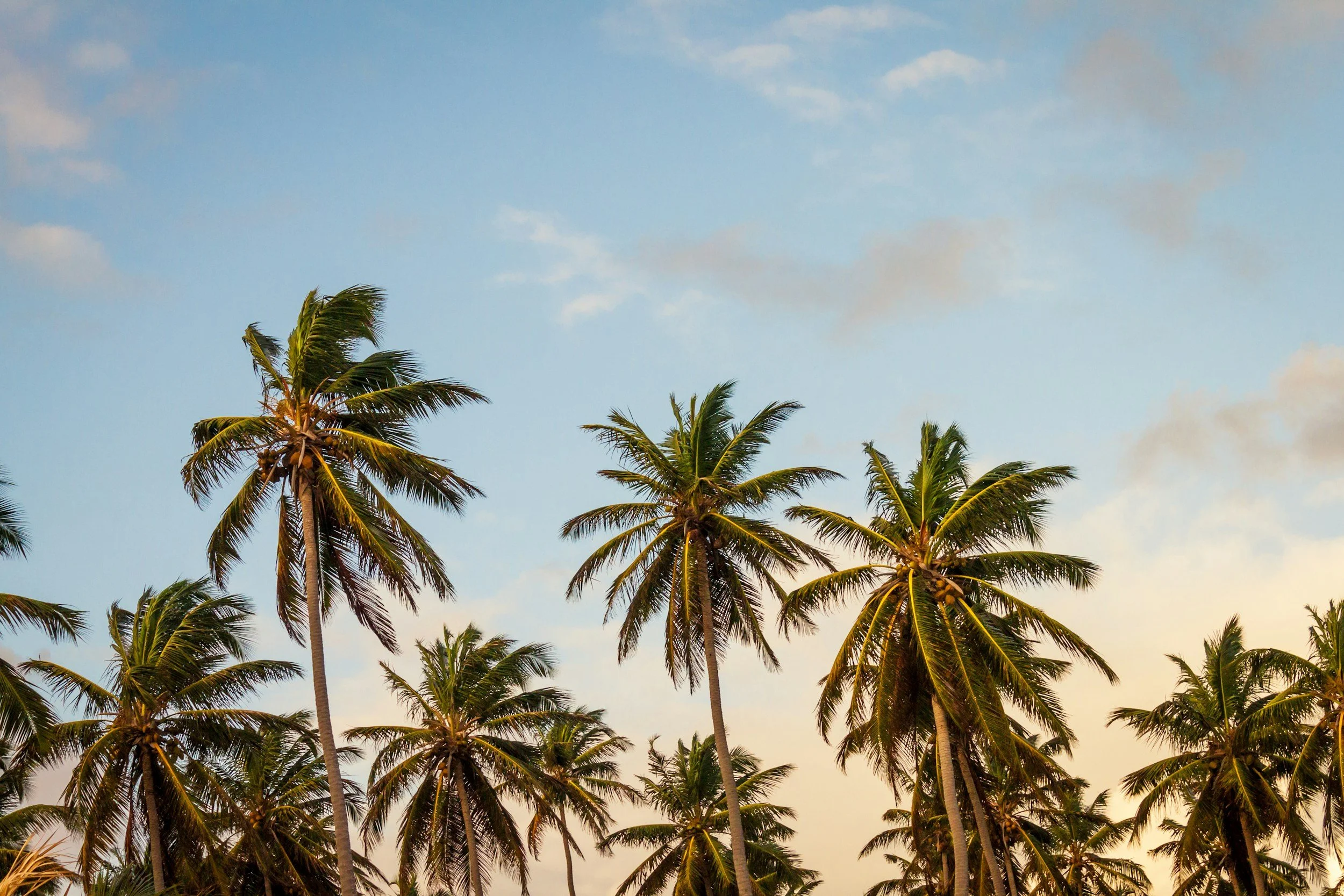
The Powerful Palm Tree
When thinking about paradises, oasis, and tropical climates, many people picture the humble palm tree. What people don’t know is their unique history and biological details that make them special in many different ways. For one, there are more than 2,750 palm tree species in the entire world. Despite many being planted in similar regions such as sunny California and tropical Hawaii, the many species of trees can be differentiated by trunk and leaf size, as well as the trees tolerance to salt and fresh water. Some palm trees can even thrive in snowy and cold temperatures as cold as -25 degrees Fahrenheit.
Palm trees have two different growing styles, solitary or clustered. When solitary, there is one long trunk with a bundle of leaves at the top. If clustered, the trees sometimes have a leaf node at the base of the trunk which can split off and create smaller trees. In turn, these trunks can have more leaf nodes and expand the clusters. Specific species can be found as both solitary and clustered. Palms have evergreen leaves meaning that they do not fall or change colors as the seasons progress. Their leaves are fanned out from the top of the stem.
Humans have found many uses for palms besides their beautiful looks. 5000 years ago ancient Mesopotamians and Middle Eastern civilizations cultivated the date palm for use. They used it for shade, resources, and fruit with much nutritional value. Modern uses include wine, resin, fiber, oil, and wax. The Romans used the palm branch as a symbol of triumph and was used as a unit of measurement. The Palm tree was given its own day called Palm Sunday which celebrated Jesus coming to Jerusalem. It is also mentioned in the Quran and in parts of Judaism. The palm tree has also been on many flags of entire countries as well as the South Carolina state flag.
Overall the palm tree has a deep history of providing shelter, shade, and many unique biological attributes to a variety of ecosystems. When considering a new tree for planting, the palm may be the best for you due to its beautiful structure and function.
The Powerful Palm Tree
Written by: Anna Pafenberg
References
Scott, Amy. “Palm Trees: A Brief History of the Palm.” Commercial Silk. February 1, 2018. https://commercialsilk.com/blog/palm-trees-a-brief-history-of-the-palm
Montgomery Botanical Center. “Introduction to Palms.” Montgomery Botanical Center. Accessed September 29, 2026. https://www.montgomerybotanical.org/about/palms/
“All About Palm Trees.” All About Palm Trees. Accessed September 29, 2026. https://www.allaboutpalmtrees.com/