
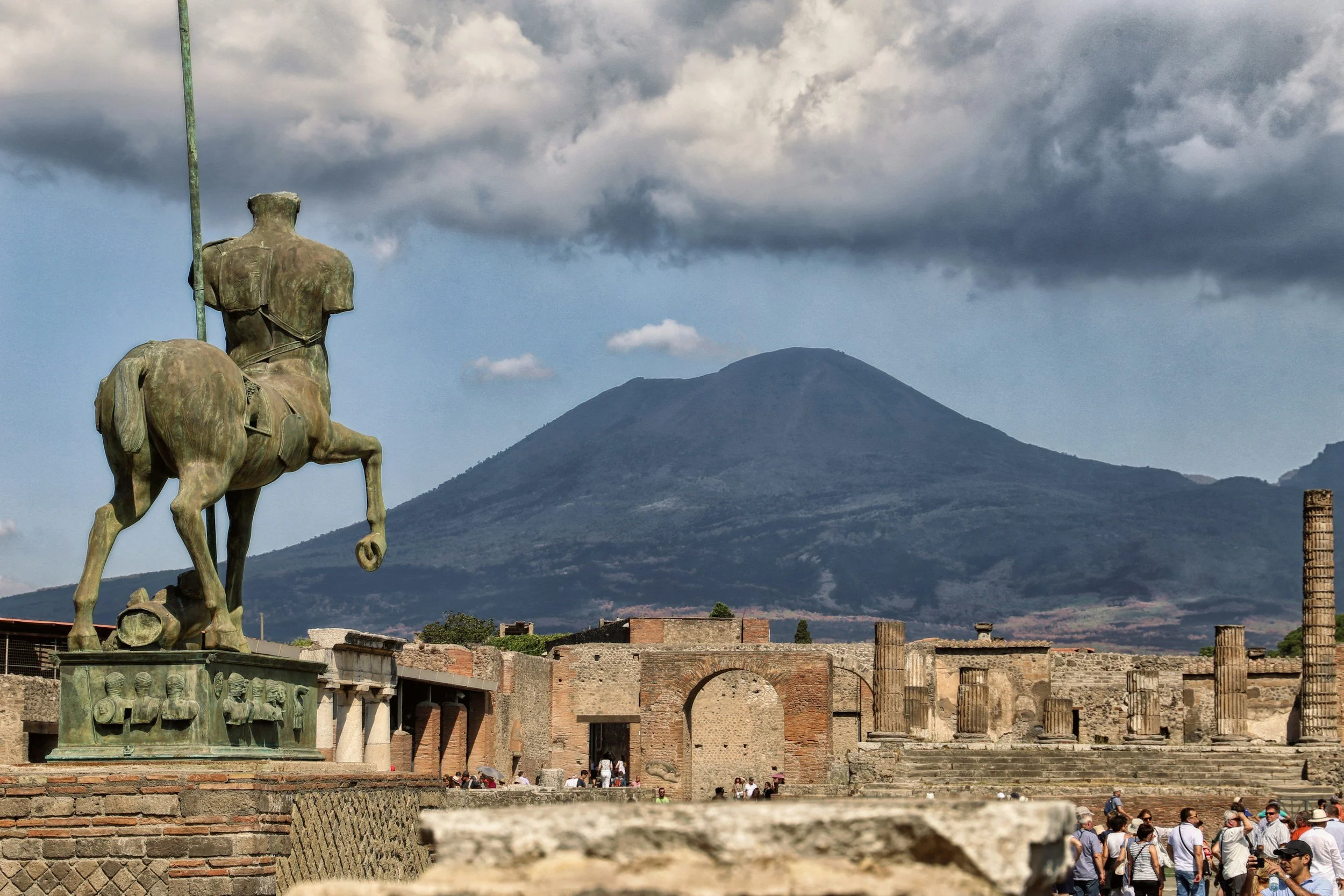
Pompeii: City Frozen in Time
Pompeii: City Frozen in Time
Written by: Paige Leal
Imagine waking up one morning, doing the same routine, only for everything to change in a matter of hours. In the ancient Roman city of Pompeii when Mount Vesuvius erupted in A.D. 79, many lives were lost and no one was prepared. Today, Pompeii is one of the world's most famous archaeological sites because it offers an incredible glimpse into everyday life in ancient Rome. From homes and streets to bakeries and artwork, the city was preserved beneath volcanic ash for centuries making it like a giant time capsule.
Before the eruption, Pompeii was a busy city near the Bay of Naples in Italy. Thousands of people lived there, enjoying markets, theaters, baths, and beautiful homes decorated with colorful frescoes. Because the nearby volcano had been quiet for many years, most people did not realize the danger it held.
When Mount Vesuvius erupted, it first sent enormous clouds of ash, pumice, and rock high into the sky. As volcanic material rained down on the city, many people tried to escape while others stayed inside their homes, hoping the eruption would end. Hours later, fast-moving clouds of extremely hot gas and volcanic ash, called pyroclastic flows, swept through Pompeii. These powerful surges buried the city, preserving buildings and many everyday objects beneath layers of volcanic material.
One of the most remarkable discoveries at Pompeii is the collection of plaster casts of the victims. After the eruption, the buried bodies slowly decomposed, leaving hollow spaces inside the hardened ash. In the 1860s, Italian archaeologist Giuseppe Fiorelli developed a method of carefully pouring liquid plaster into these empty spaces. Once the plaster hardened and the surrounding ash was removed, it revealed detailed casts showing the victims' final positions. Some even preserved folds in clothing and facial expressions, providing a powerful connection to the people who lived nearly two thousand years ago.
Today, these casts are among the most famous archaeological discoveries in the world. Rather than simply showing history through objects or buildings, they remind visitors that Pompeii was once home to real people whose lives changed forever during the eruption, as some of them are frozen in time/
Through this tragic disaster, Pompeii has become one of history's greatest windows into the ancient world. With the volcanic ash and the plaster cast technique, people today can learn about Roman life in a way that very few archaeological sites can offer. Pompeii reminds us that history is not just about places and life changing events, but also places that people once lived and called their home.
References
Encyclopaedia Britannica. n.d. “Pompeii.” Encyclopaedia Britannica. Accessed July 27, 2026. https://www.britannica.com/place/Pompeii.
National Geographic Kids. n.d. “Pompeii.” National Geographic Kids. Accessed July 27, 2026. https://kids.nationalgeographic.com/history/article/pompeii.
Archaeological Park of Pompeii. n.d. “The Casts.” Pompeii Sites. Accessed July 27, 2026. https://pompeiisites.org/en/pompeii-map/analysis/the-casts/.