
Swimming Sea Lions
Swimming Sea Lions
Written by: Natalie Yao
If you ever spot a sea lion, you can recognize it by its whiskers, flippers, and barking noises. These lively marine mammals spend time both in the ocean and on land. They are strong swimmers, skilled hunters, and surprisingly loud neighbors.
Sea lions belong to a group of mammals called pinnipeds, which also includes seals and walruses. Although sea lions and seals look similar, there are easy ways to tell them apart. Sea lions have small, visible ear flaps and long front flippers. They can also turn their back flippers underneath their bodies, helping them walk on land.
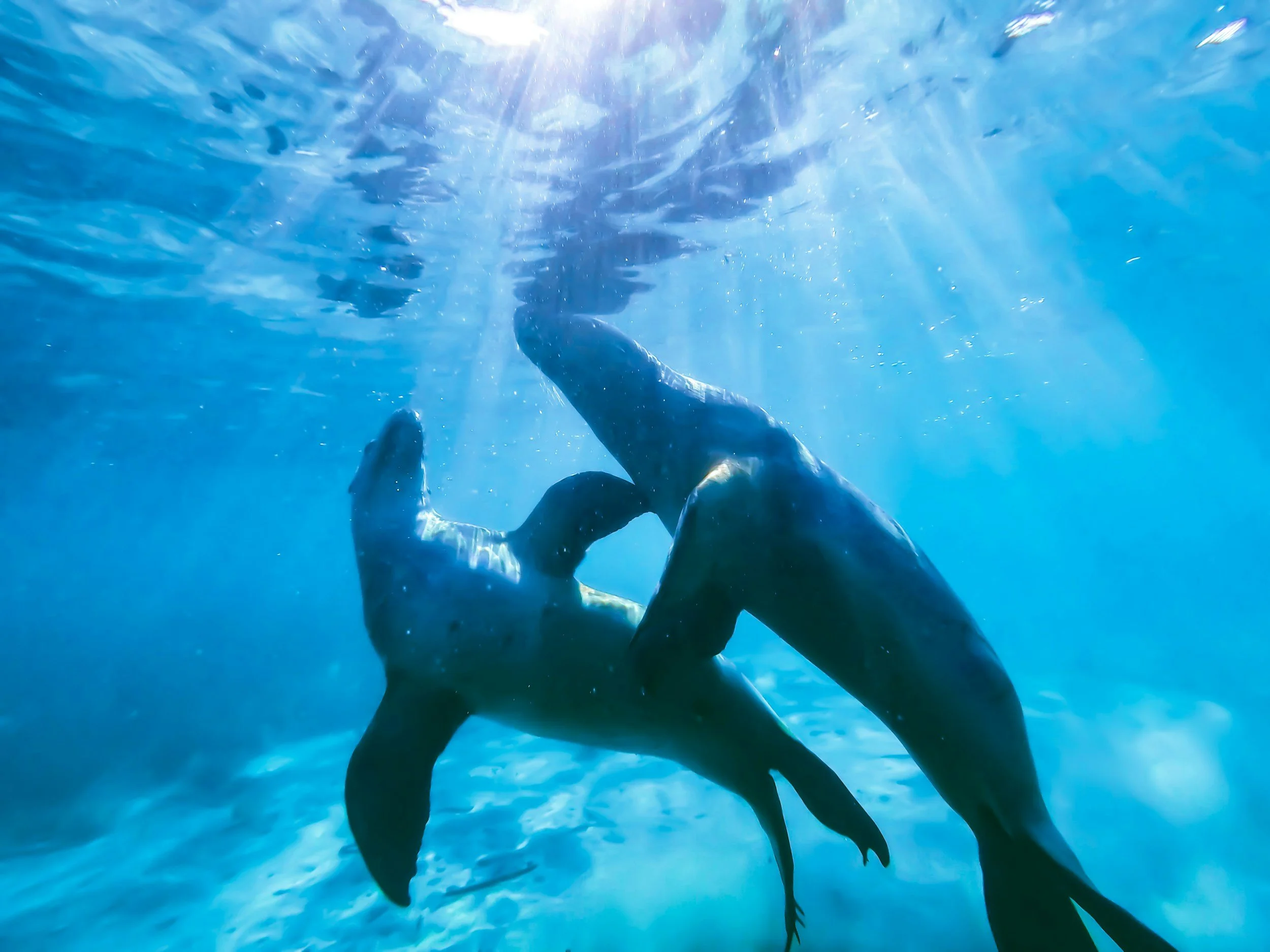
In the water, sea lions move with amazing speed and control. They use their powerful front flippers to push themselves forward, almost like birds flying underwater. Their back flippers help them steer. A smooth body makes it easier to glide through the ocean while chasing a meal or exploring their surroundings. Because sea lions are mammals, they breathe air through lungs. They must return to the surface to breathe, even though they can hold their breath while diving. They also have a layer of fat called blubber. This helps keep them warm when they swim in chilly water.
Most sea lions eat fish and squid, though their diets depend on where they live. Their sensitive whiskers help them detect movements in the water and locate prey. Sea lions do not chew their food the way humans do. They often swallow smaller meals whole, using their teeth mainly to catch and hold slippery prey.
Sea lions are social animals that often gather in large groups. Their resting places on beaches, rocks, or docks are called haul-outs. Breeding groups gather in rookeries. A crowded sea lion colony can be very noisy, with animals barking, growling, and calling to one another. A baby sea lion is called a pup. Its mother feeds it rich milk that helps it grow. Mothers and pups recognize each other through sounds and smells, which is useful in a busy colony. As pups get older, they practice swimming and gradually learn the skills they need to survive.
Life in the ocean comes with challenges, as sharks and killer whales can hunt sea lions. People can also create dangers through pollution, fishing gear, and disturbances near resting areas. Keeping beaches clean and giving wild animals plenty of space helps protect them. If you see sea lions, watch quietly from a safe distance. Never feed them or try to touch them, because even a resting sea lion is a powerful wild animal. By respecting their space, we can enjoy watching these remarkable ocean swimmers while helping keep their coastal homes safe for future generations to enjoy.
References
Encyclopaedia Britannica. n.d. “Sea Lion.” Britannica Kids. https://kids.britannica.com/kids/article/sea-lion/353752
National Geographic. n.d. “California Sea Lion.” National Geographic Kids. https://kids.nationalgeographic.com/animals/mammals/facts/california-sea-lion