
Life of a Slowpoke: Sloths
Life of a Slowpoke: Sloths
Written by: Paige Leal
When you think of sloths, you probably picture them as the slowest creatures around, and that’s pretty accurate. Sloths are among the slowest mammals on the planet. But there’s so much more to these fascinating animals than just their relaxed pace. Sloths are perfectly adapted to life in the trees, with their lives connected to their forest environment.
Habitat
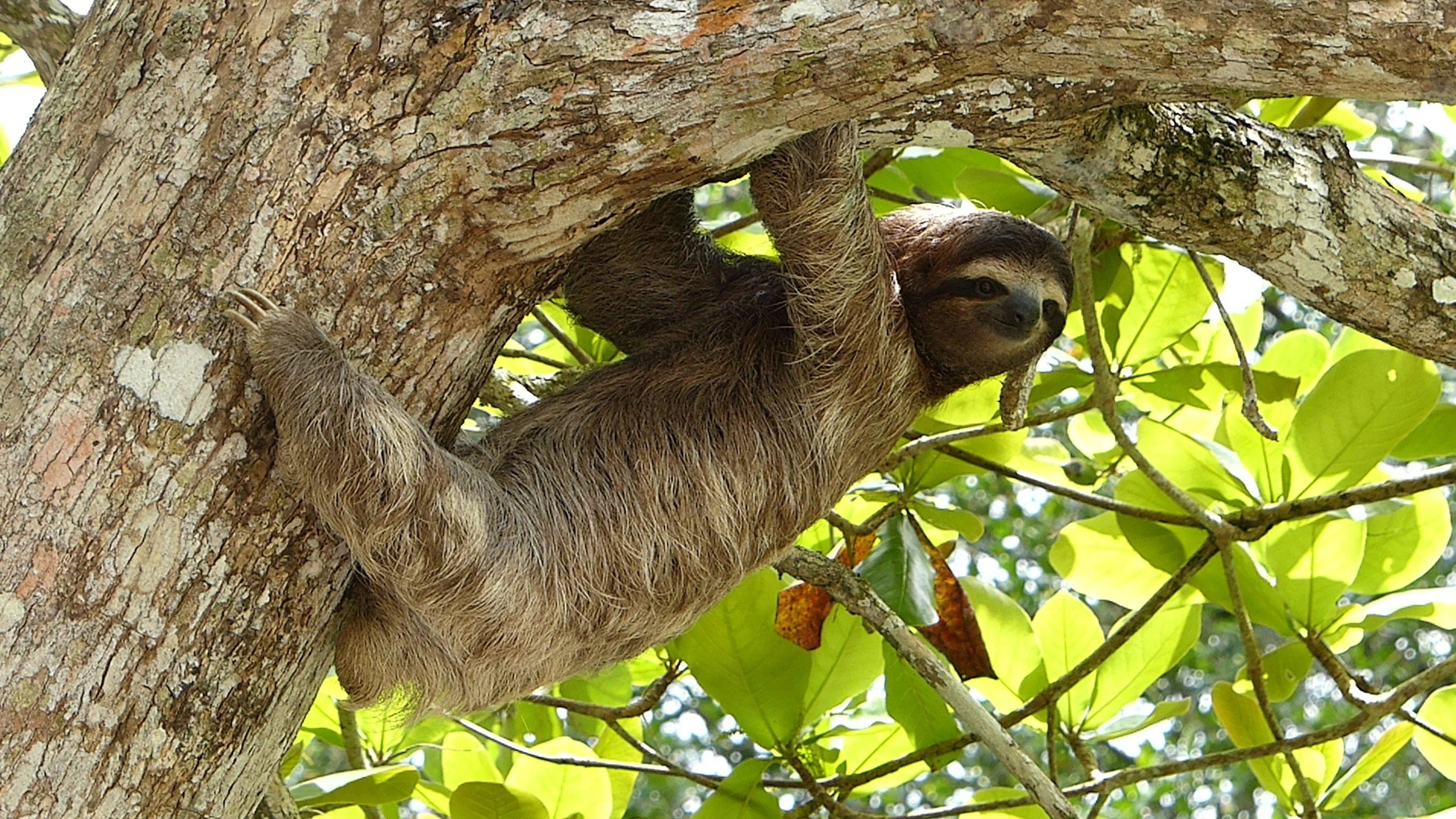
Sloths live in the tropical rainforests of Central and South America, spending almost their entire lives high up in the trees. Their long limbs and curved claws make it easy for them to hang from branches, even while they’re asleep. Sloths are so equipped to a life of hanging upside down that their internal organs are uniquely shaped to accommodate their lungs and stomach while inverted.
Diet & Digestion
One of the main reasons sloths move so slowly is their diet. They primarily eat leaves, which are low in nutrients and difficult to digest. Since they have such a limited food source, sloths have incredibly slow metabolisms, which means they don’t expend energy quickly and move slowly to conserve what little energy they receive from their meals. Their stomachs also have multiple chambers to break down the tough leaves, and sometimes it can take days to digest just one meal.
Interesting Features and Facts
Sloths have interesting, unique hair. There is tiny algae that grows on their hair, giving them a greenish hue that helps them blend into the trees. This algae isn’t just for camouflage because it also provides essential nutrients for insects and other small creatures that inhabit the fur. This mini ecosystem makes sloths vital to their forests in ways that many people don’t realize.
Even though sloths are known for their ultra slow pace, they’re surprisingly good swimmers and can zip through water much faster than they do on land, yet they chose to spend the majority of their time hanging in trees. Scientists believe their speed in water might give them an edge when crossing rivers or navigating flooded areas in the rainforest. And while sloths are famous for their long naps, sometimes up to 15 hours a day, they still need to watch out for predators like jaguars, eagles, and snakes. This slow lifestyle is risky, but it’s balanced by their camouflage and careful movements.
Sloths are more than just slow animals, they’re perfectly adapted to the rainforest and from their unique digestion to the algae growing in their fur, sloths demonstrate that moving slowly doesn’t mean being simple. Next time you are taking a long time to complete a task, remember that going slow is not a bad thing!
References
National Geographic Kids. 2026. “Sloth.” National Geographic Kids. Accessed February 6, 2026. https://kids.nationalgeographic.com/animals/mammals/facts/sloth.
Smithsonian National Zoo and Conservation Biology Institute. 2026. “Why Are Sloths So Slow and Other Sloth Facts.” Accessed February 6, 2026. https://nationalzoo.si.edu/animals/news/why-are-sloths-so-slow-and-other-sloth-facts.
Sloth Conservation Foundation. 2026. “Forests: The Sloths’ Home.” Accessed February 6, 2026. https://www.slothconservation.org/blog/forests-the-sloths-home.
Encyclopaedia Britannica. 2026. “Sloth.” Accessed February 6, 2026. https://www.britannica.com/animal/sloth.