
When Day Turns Into Night: The 2026 Solar Eclipse
When Day Turns Into Night: The 2026 Solar Eclipse
Written by: Keya Gambhir
Imagine you're outside on a sunny afternoon when, little by little, the sky begins to get darker. Birds become quiet. The air feels cooler. Then, for a few incredible minutes, the sun disappears behind the moon, creating one of the most amazing sights in nature: a total solar eclipse!
On August 12, 2026, people in parts of Greenland, Iceland, Spain, and Portugal will get to experience this rare event. NASA is so excited that it will livestream the eclipse for people around the world to watch.
What Is a Total Solar Eclipse?
A total solar eclipse happens when the moon moves directly between Earth and the sun, completely blocking the sun's bright surface. This only happens because the sun, moon, and Earth line up perfectly. Scientists call this special alignment syzygy (pronounced SIH-zih-jee).
During the eclipse, the moon's shadow races across Earth, creating a few minutes called totality. On August 12, totality will last up to 2 minutes and 18 seconds. It may not sound long, but many people say it is an unforgettable experience!
Why Is Everyone So Excited?
NASA recently released a video asking people to watch the eclipse. Instead of talking about science first, the video shares people's emotional reactions.
Some said, "I burst into tears." Others said they got "instant chills." Many described it as one of the most beautiful things they had ever seen.
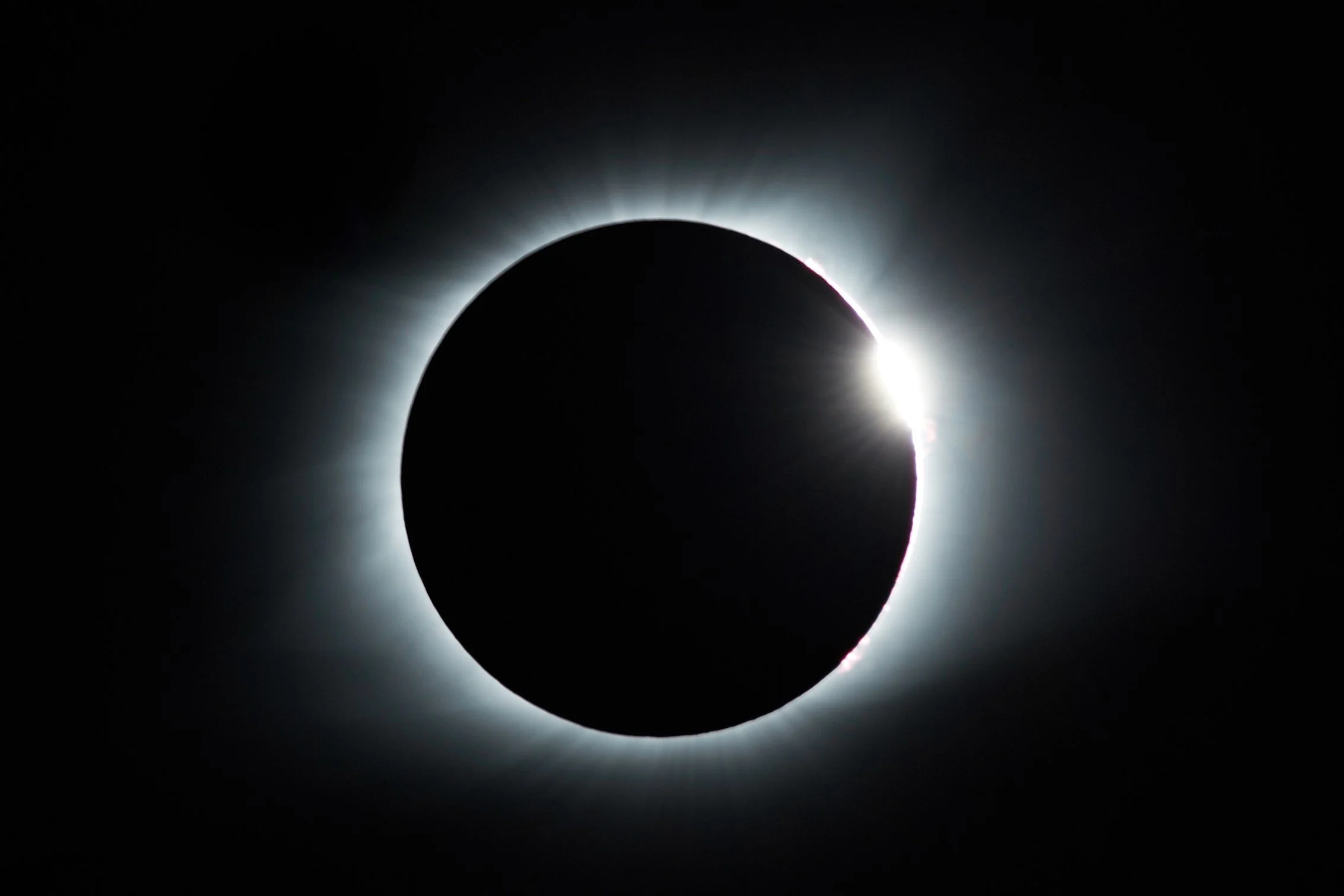
When the sun is completely covered, something incredible appears. The sun's outer atmosphere, called the corona, becomes visible as a glowing white halo around the moon. Normally, the sun is too bright for us to see it, but during totality, it shines beautifully in the darkened sky.
Amazing Things You Might Notice
A total solar eclipse is about much more than darkness during the day.
As the moon slowly covers the sun, you might notice the temperature dropping. The light around you changes, making everything look strange and silvery. Just before totality, tiny points of sunlight called Baily's beads sparkle around the edge of the moon. Then comes the famous diamond ring effect, where one bright spot of sunlight looks like a sparkling jewel.
If you're lucky enough to be in the path of totality, you may even see bright pink loops called solar prominences reaching out from the sun. These are huge streams of hot gas held in place by the sun's magnetic field.
Can You See It in the United States?
People in the United States will not see the total eclipse this time. However, many areas of the U.S. and Canada will still be able to see a partial solar eclipse, where the moon covers only part of the sun.
If you plan to watch the eclipse, remember never look directly at the sun without certified solar eclipse glasses. Regular sunglasses are not safe enough to protect your eyes.
If you can't see the eclipse in person, don't worry! NASA will livestream the event with expert scientists explaining what's happening as viewers watch the moon's shadow travel across Earth.
More Sky Fun Is Coming!
The excitement doesn't end with the eclipse. Just hours later, the Perseid meteor shower will reach its peak. During this annual event, people may see 20 to 40 shooting stars every hour under dark skies. It's like getting two amazing space shows in just one day!
Why It Matters
A total solar eclipse reminds us how amazing our solar system really is. The sun, moon, and Earth must line up almost perfectly for this event to happen, making every eclipse special. Whether you're watching from Europe, seeing a partial eclipse at home, or tuning into NASA's livestream, you'll be joining millions of people around the world as they look up at the same sky.
Sometimes, all it takes is looking up to discover something truly unforgettable.
References
Carter, Jamie. 2026. “NASA Urges U.S. Public To Watch Aug. 12’s Total Solar Eclipse.” Forbes, August 3, 2026. https://www.forbes.com/sites/jamiecartereurope/2026/08/03/nasa-urges-us-public-to-watch-aug-12s-total-solar-eclipse/.
Carter, Jamie. 2026. “13 Amazing Things to See During the Total Solar Eclipse on Aug. 12.” Space, August 3, 2026. https://www.space.com/stargazing/solar-eclipses/13-amazing-things-to-see-during-the-total-solar-eclipse-on-aug-12.