
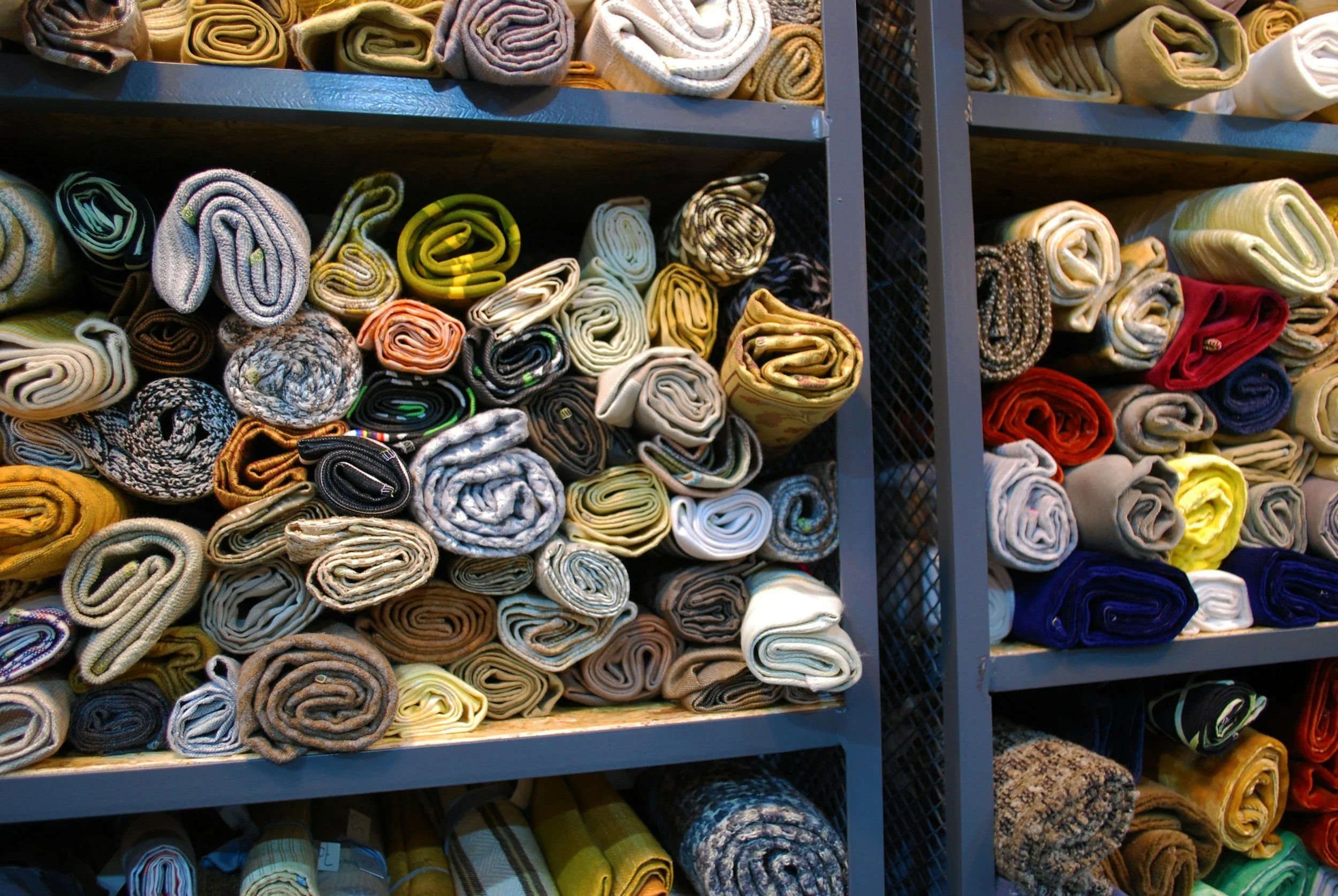
All About Sustainable Fabrics
All About Sustainable Fabrics
Written by: Anna Pafenberg
After Black Friday, it’s important to reflect on what our clothes are made out of and how they get to us. Most products are made of synthetic fibers, essentially plastic. Lots of water is also wasted on the production of textiles, almost 10,000 litres are needed to produce one kilogram of cotton. Cotton, compared to polyester and other synthetic fibers, is actually a lot more eco friendly because it is biodegradable.The water needed to produce natural fibers however, is not helping the planet. For example, it takes 7250 litres to produce a pair of jeans, and 375 for one pair of socks! Because we also need to drink water, we can compare the amount we drink to the amount that we wear. For instance, a collection of jeans is about 52 years worth of drinking water, and that's just sitting in our closets!
Organic cotton, compared to regular cotton, uses only 9% of the water and other resources to be produced. This is only about 15 years of drinking water. Much less than the collection of jeans. When cotton is organic, it doesn’t need the water that has to do with genetic modification. 95% of this water comes from rain and soil, making it better for our planet. In 2019 in the UK, people spent 63% more than they did in 2005. This is likely due to fast fashion and increasing production of clothes and online shopping.
But what can you do when you buy clothes? To start, it’s important that any clothes you buy are made of natural fibers. Simply cotton is not good for the environment because it takes a lot of water to be produced. It also needs pesticides to keep it growing healthy and big. Organic cotton however, has limits on pesticides and strict regulations on its growth and production. Recycled cotton is great as well, in fact, the best way to limit the amount of clothing waste you put into the environment is to wear your clothes as much as possible. Linen is also a great option for consumers. It can grow in poor soil and does not need many pesticides to grow. It is fully biodegradable, except when it is bleached or dyed.
Hemp fabric is a very durable option for clothes. It can block UV rays and can hold ropes. The best thing about Hemp is that it is carbon negative. This means that it stores more carbon than it produces, making it a great option for the atmosphere and global warming.
All in all, clothing and textiles create a lot of waste as well as hurt the environment. It is important to mindfully purchase clothes as well as other things for your home. The best thing to do is use what you have and only buy organic materials. It may be expensive at first, but in the long run it is the best for the planet and your wardrobe.
References
Adams, Helen. “How Much Water Do You Wear, Asks GAP.” Sustainability Magazine, November 12, 2021. https://sustainabilitymag.com/supply-chain-sustainability/how-much-water-do-you-wear-asks-gap
ApparelMagic. “The 4 Most Common Sustainable Practices in Fashion Manufacturing.” ApparelMagic, accessed December 2, 2025. https://apparelmagic.com/the-4-most-common-sustainable-practices-in-fashion-manufacturing/
Viable Earth. “Sustainable Fabrics: Your Guide to the Pros and Cons of the Most Popular.” Viable Earth. https://viable.earth/sustainable-fashion/sustainable-fabrics-your-guide-to-the-pros-and-cons-of-the-most-popular/