
What Are Taxes?
Imagine you have saved up for a toy that costs $10. You bring it to the counter, hand over your ten dollar bill, and the cashier says, "That'll be $10.75." Wait, what? Where did that extra 75 cents come from?
That little bit extra is a tax. And once you start looking, you will find taxes almost everywhere: on the snacks you buy, on the money adults earn at work, and on the houses people live in. So what exactly is a tax, and where does all that money go?
What is a tax?
A tax is money that people and businesses pay to the government. It is not a gift, and it is not optional. Everyone who earns money or buys things chips in a small share, and the government collects it all into one giant pot.
Why? Because some things are simply too big and too expensive for any one person to pay for alone. Think about a highway. You could not build a road across your whole state by yourself, and neither could your neighbor. But if millions of people each put in a little, suddenly there is enough to build roads, and a whole lot more.
What do taxes pay for?
Taxes pay for the things a whole community shares. That includes public schools, firefighters, police, libraries, parks, and the soldiers who make up the military. They help pave streets, run hospitals, keep water clean, and support people who are sick, older, or going through a hard time.
Here is a way to picture it. Every time a fire truck races down your street, a teacher stands in front of a class, or a stoplight keeps traffic moving, taxes helped pay for it. You use things paid for by taxes every single day, usually without even noticing.
The main kinds of taxes
There are a lot of different taxes, but three are the ones you are most likely to bump into.
Sales tax is that surprise 75 cents at the store. It is a small percentage added on top of the price of the things you buy. It is different from place to place, and here is a fun fact: five states, which are Alaska, Delaware, Montana, New Hampshire, and Oregon, have no statewide sales tax at all.
Income tax is a slice of the money grown-ups earn from their jobs. If someone earns $100, a portion of it goes to the government before it ever reaches their wallet. Income tax is the single biggest source of money for the U.S. government. It has not always existed, though. Americans did not start paying a regular federal income tax until 1913, when a change to the Constitution called the 16th Amendment made it official.
Property tax is money paid by people who own homes or land. In many towns, this is what pays for the local public schools, which means your classroom and taxes are more connected than you might think.
Who collects all this money?
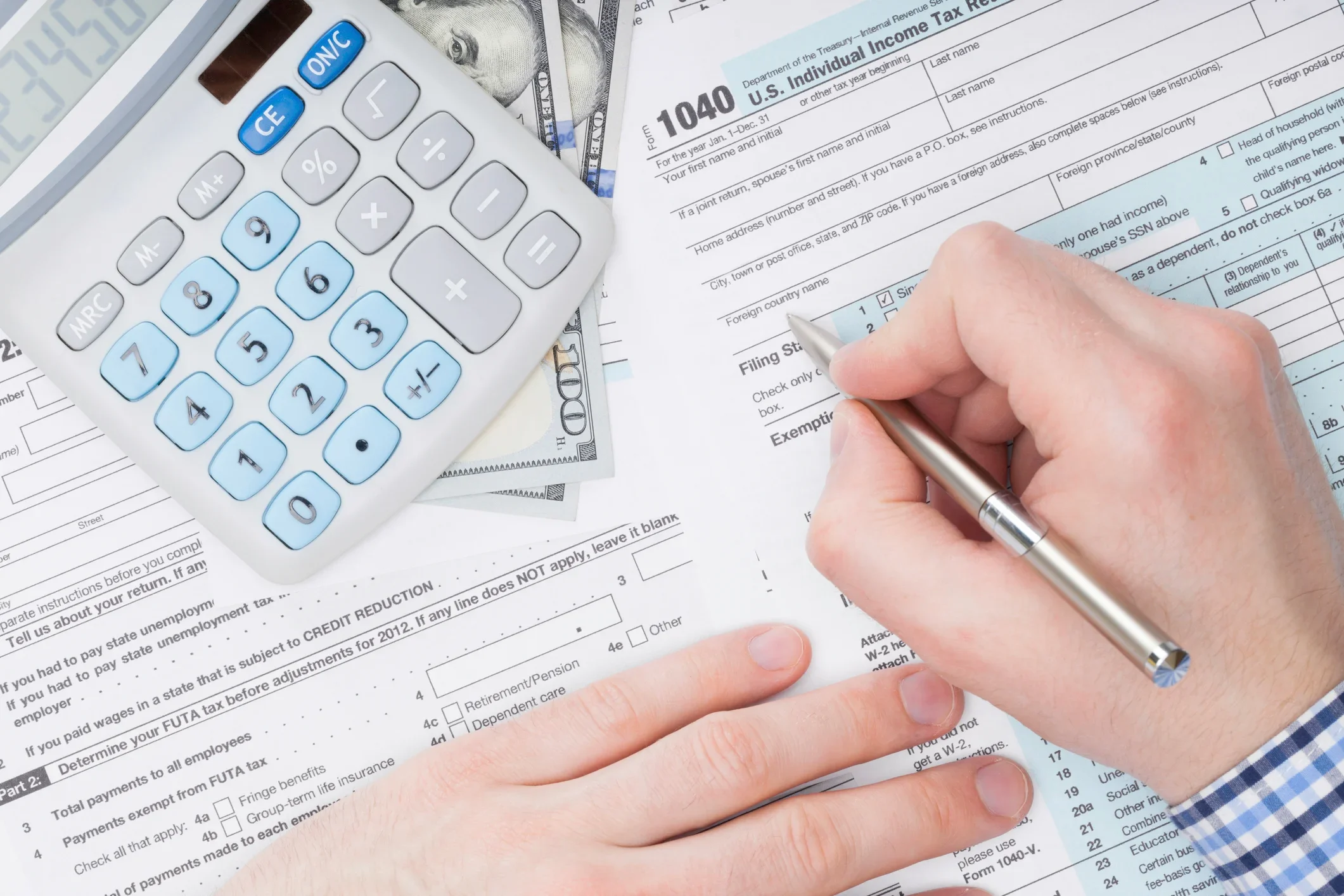
At the national level, a government agency called the IRS, short for the Internal Revenue Service, is in charge of collecting taxes. States and cities collect their own taxes too. Once a year, usually by April 15, grown-ups have to "file" their taxes, which means adding everything up and making sure they paid the right amount. That day even has a nickname: Tax Day.
So why do people argue about taxes?
Here is where it gets interesting. Almost everyone agrees we need some taxes. But people strongly disagree about two big questions: how high taxes should be, and how the government should spend the money. Some people believe taxes should be lower so families keep more of what they earn. Others believe taxes should be higher so the government can do more. This is one of the oldest and biggest debates in the country, and it is a huge part of what politicians argue about at election time.
There is also a catch. When the government spends more money than it collects in taxes, it has to borrow the difference. All that borrowing piled up over the years is what people call the national debt, and it is now larger than ever.
So the next time you spot that little extra charge at the bottom of a receipt, you will know exactly what it is. It is your tiny share of keeping an entire country running, from the road you walked in on to the school you will head back to on Monday.
What Are Taxes?
Written by: Anders Lee
References
"16th Amendment to the U.S. Constitution: Federal Income Tax (1913)." National Archives, www.archives.gov/milestone-documents/16th-amendment. Accessed 4 Sept. 2026.
"2026 Sales Tax Rates." Tax Foundation, taxfoundation.org/data/all/state/sales-tax-rates/. Accessed 4 Sept. 2026.
"Understanding Taxes." Internal Revenue Service, apps.irs.gov/app/understandingTaxes/. Accessed 4 Sept. 2026.
"What Do Your Federal Taxes Pay For?" USAFacts, usafacts.org/articles/tax-receipt/. Accessed 4 Sept. 2026.
"Where Do Our Federal Tax Dollars Go?" Center on Budget and Policy Priorities, www.cbpp.org/research/federal-budget/where-do-our-federal-tax-dollars-go. Accessed 4 Sept. 2026.