
The Icy and the Green
The Icy and the Green
Written by: Paige Leal
Greenland and Iceland are two North Atlantic islands are often confused because of their opposite names.
Geography and Climate
While Greenland is mostly covered in ice, Iceland is known for its green fields and mild temperatures. The world’s largest island is Greenland, located between the Arctic and Atlantic Oceans. Around 80% of it is blanketed by a massive ice sheet, covering the island year round. This creates one of the coldest environments on Earth. Its coastal areas are surrounded by glaciers, fjords, and floating icebergs, and most of its small population lives along the southwestern coast where fishing and hunting are part of daily life.
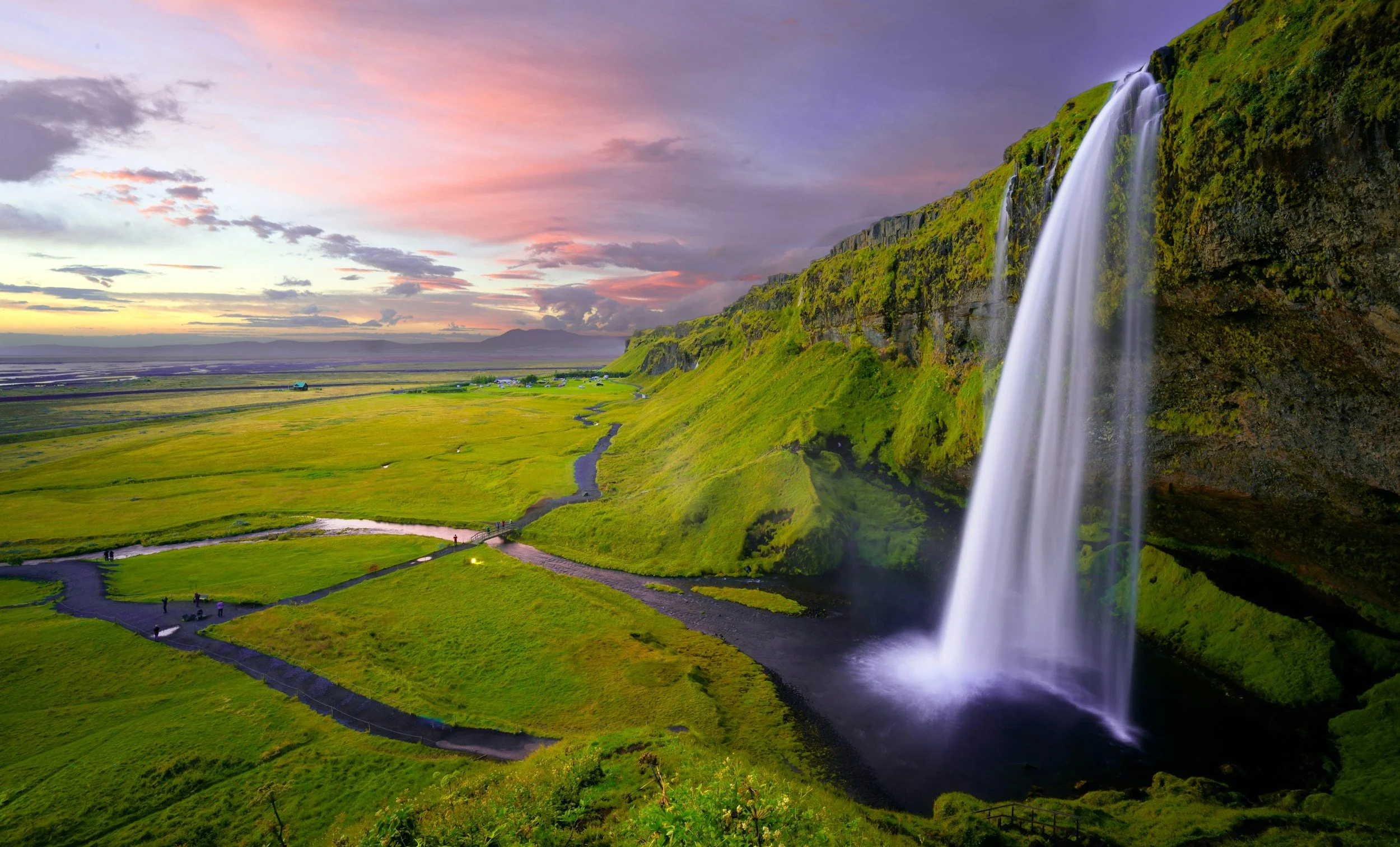
Iceland, on the other hand, lies just below the Arctic Circle. Despite its name, it has a surprisingly moderate climate thanks to the warm Gulf Stream. The island features volcanoes, geysers, waterfalls, and green valleys. Glaciers cover about 10% of its surface, but in the summer months, the land is fertile and full of life.
How They Got Their Names
The names Greenland and Iceland have an interesting and misleading history. Around 982 CE, a Norse explorer named Erik the Red was exiled from Iceland for committing murder. With his exile, he sailed west and discovered a vast icy island. Hoping to attract settlers, he cleverly named it Greenland, believing a pleasant name would make people more interested in moving there.
Iceland’s name came earlier from a Viking explorer named Flóki Vilgerðarson. When he first arrived, he saw icebergs floating near the coast and named the land Ísland, meaning “Ice Land.” He was said to have come around winter, explaining why it was not as green as it is normally. In this period of time, explorers typically made names based on what they saw, explaining why he originally called it “Iceland”. Despite the name, Iceland turned out to be far greener and more habitable than Greenland.
Today
Today, Greenland is an autonomous territory within the Kingdom of Denmark, while Iceland is an independent republic. Greenland’s icy environment continues to play an important role in global climate studies, as scientists monitor how its glaciers affect sea levels. Where Iceland thrives as a hub for tourism, renewable energy, and cultural heritage.
Though their names seem swapped in meaning, both islands are unique in their own ways. Greenland for its frozen beauty and Iceland for its balance of fire and ice. Their stories show how geography, exploration, and a bit of clever naming have shaped how we see them today. So next time you mix up their names, remember Greenland is the icy one and Iceland is the green one!
References
Britannica. 2024. “Greenland.” Encyclopaedia Britannica. https://www.britannica.com/place/Greenland/History
Britannica. 2024. “Iceland.” Encyclopaedia Britannica. https://www.britannica.com/place/Iceland
Discovery Place Science. 2020. “Why Is Iceland Green and Greenland Icy?” Discovery Place Science.https://discoveryplace.org/stay-at-home-science/bonus-why-is-iceland-green-and-greenland-icy/#:~:text=Erik%20the%20Red%20(who%20was,second%20coldest%20place%20on%20earth
Guide to Iceland. 2024. “The History of Iceland.” Guide to Iceland. https://guidetoiceland.is/history-culture/history-of-iceland
Norden. 2023. “Facts about Greenland.” Nordic Co-operation. https://www.norden.org/en/information/facts-about-greenland
Visit Greenland. 2024. “The History of Greenland.” Visit Greenland. https://visitgreenland.com/activities/history-of-greenland/