
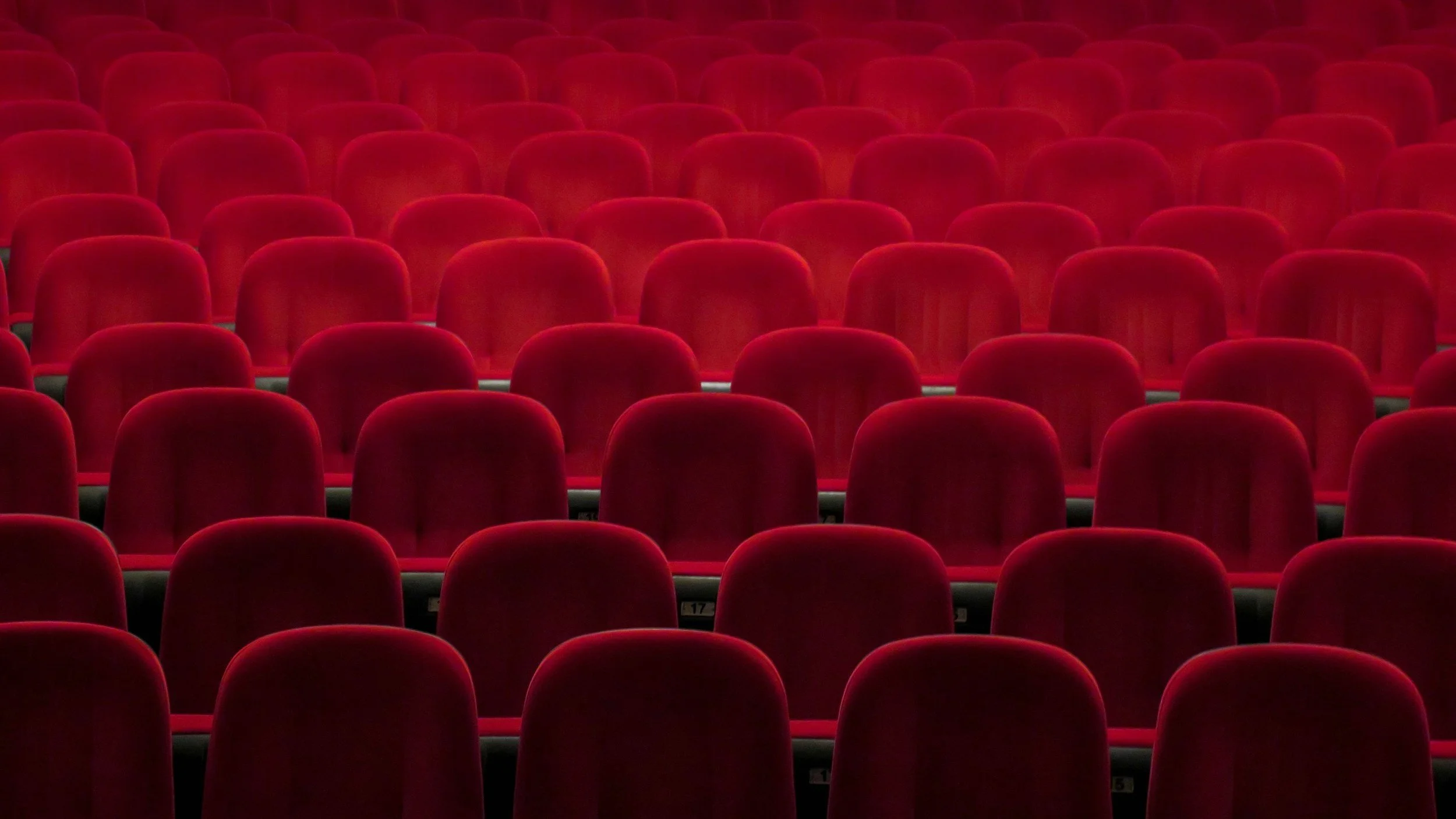
Movie Theaters: A Cinematic Story
Movie Theaters: A Cinematic Story
Written by: Anna Pafenberg
Before theaters, our enjoyment consisted of going to plays and watching short loops of film less than a minute long. In the late 19th century, movies and films did not exist. Through the invention of phonograph parlors and the projector movies rose to the fame we know today!
In the 1890’s Thomas Edison created phonograph parlors for the public to use in New York City. These parlors allowed people to listen to audio recordings in penny arcades. Then, Edison and his assistant invented the Kinetiscope. It was a short recording on a loop, but it allowed people to view them for 25 cents. This payment involved people to see five different loops. Soon in 1895, Edison invented the Kinetephone, which added audio to these film recordings. Edison’s assistant William Dickson his company and decided to create his own film projector. It was called the mutoscope and when the Edison company realized its success, they bought the patent from Dickson.
Edison wanted this to go big, so he rented out Koster and Bial’s music hall and showed his first projection from the Vitascope, the new name Edison gave to the Mutoscope. These theaters were technically the first in America! Nickelodeons were soon developed, these theaters showed short clips from comedians and some songs. Soon, 10,000 nickelodeons were in America and cinematic viewing was a hit! They were called nickelodeons because they cost a nickel and from the word for theater in Greek, deon. The first theater without a stage opened in Pittsburg, Pennsylvania in 1905. In 1914, a theater opened in Manhattan that allowed viewers to have a ‘luxury’ movie experience. Radio City Music Hall also opened, and is still the biggest indoor theater. Soon theaters around the country started to pop up. Theaters in Hollywood and other major cities. Gone With the Wind and The Wizard of Oz came out in the ‘30’s. The year they came out, 1939, is still considered the greatest year in movie history. The Wizard of Oz was the first movie ever in color! All films before them had been in black and white.
In 1948, the Supreme Court ruled that movie studios were not allowed to own their own theaters. Then the Theater Owners of America and the Allied States Association of Motion Picture Exhibitors represented theater owners. In 1965 the two merged into the National Association of Theater Owners. Soon movies like Psycho, Jaws, and other famous hits came out. In the ‘60s and ‘70s, hundreds of classics hit the screen.
All in all, movie theaters would not have been what they are today without Thomas Edison and William Dickson. They pioneered projecting and how we view movies in theaters with a group as opposed to individually in a penny arcade.
References
Roos, Dave. “How Movie Theaters Got Their Start in America.” History. February 27, 2025. Accessed October 23, 2025. https://www.history.com/articles/movie-theaters-origins-america
Cinema United. “The History of Exhibition.” Accessed October 23, 2025. https://cinemaunited.org/our-history/
Jaramillo, Carina. “The Evolution of Cinema throughout History.” TheaterSeatStore.com, December 13, 2022. Accessed October 23, 2025. https://www.theaterseatstore.com/blog/evolution-of-cinema?srsltid=AfmBOopiHGYvg6UHXy4G2XOKCyhxHrJi6FoIMCrtOpQL_BXl2RtGJQXI