
How Giant Tortoises Are Making a Comeback in the Galápagos
How Giant Tortoises Are Making a Comeback in the Galápagos
Written by: Keya Gambhir
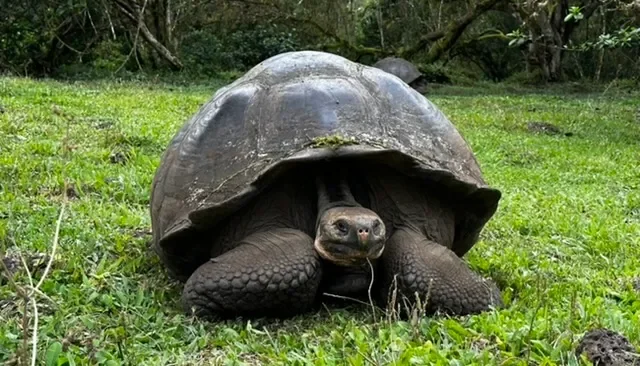
Imagine an animal so big and slow that it can live for over 100 years. Now imagine that animal almost disappearing forever. That is exactly what happened to giant tortoises in the Galápagos Islands. But today, thanks to scientists and conservationists, these amazing creatures are slowly making a comeback.
The Galápagos Islands are a group of islands near Ecuador in South America. Long ago, they were home to around 200,000 to 300,000 giant tortoises. These tortoises were very important because they helped shape the environment. Scientists call them “ecosystem engineers” because they spread seeds, clear paths, and help plants grow.
However, things changed when humans arrived in the 1700s and 1800s. Sailors and whalers hunted tortoises for food because they were easy to catch and could survive a long time without water or food. Later, tortoises were also used for oil. Because of this, many tortoise populations dropped quickly, and some species even went extinct.
Today, there are 15 known species of Galápagos tortoises. Sadly, two are extinct, and many others are endangered or critically endangered. Besides hunting, tortoises now face other threats, too. Animals brought by humans, like rats, pigs, and dogs, eat tortoise eggs and babies. Other animals, like goats, destroy the plants tortoises need to survive.
To help save them, scientists started special conservation programs. One of the most important methods is raising baby tortoises in safe environments. In the wild, baby tortoises often do not survive their first few years. They can be eaten by predators or struggle to find food and water. But when they are raised in protected centers until they are about five years old, they have a much better chance of surviving when released into the wild.
This method has been very successful. Since the 1960s, thousands of young tortoises have been raised and released back into their natural habitats. By 2017, more than 7,000 juvenile tortoises had been returned to different islands.
There are special tortoise centers on islands like Santa Cruz and Isabela. These centers collect eggs or hatchlings from the wild, raise them safely, and later release them. For example, on Española Island, only 14 tortoises were left at one point. Thanks to breeding programs, the population has grown and is now reproducing naturally again.
One of the most exciting parts of this conservation work is bringing tortoises back to islands where they disappeared. On Floreana Island, tortoises went extinct in the 1800s. But scientists found tortoises on another island that had some of the same DNA. They used these tortoises in a breeding program, and in 2026, 158 young tortoises were released back onto Floreana. This was the first time in nearly 200 years that tortoises walked there again.
Another example is Santa Fe Island. Its original tortoise species went extinct long ago, but scientists used a closely related species to help restore the ecosystem. These tortoises are helping plants grow and creating better habitats for other animals.
Tortoises are important not just because they are interesting, but because they help entire ecosystems stay healthy. When tortoises move around, they spread seeds and create open spaces for plants to grow. This helps many other species survive, too.
Even with all this progress, the work is not finished. Today, there are only about 10 to 15 percent as many tortoises as there were in the past. Recovery takes a long time because tortoises grow slowly and live long lives. Scientists are still studying them to understand how to protect them better.
There are also ongoing efforts to remove invasive species, protect nesting areas, and study how tortoises interact with humans. In some places, tortoises are moving into farmland, which can create challenges. Scientists are working to find ways for people and tortoises to live together peacefully.
The story of the giant tortoise is a powerful example of how humans can both harm and help the environment. While people once caused their decline, today, many are working hard to save them.
Thanks to years of research, teamwork, and dedication, giant tortoises are slowly returning to their homes. Their journey is not over, but every new tortoise released into the wild is a step toward a brighter future.
And who knows? If these efforts continue, future generations might once again see thousands of giant tortoises roaming the Galápagos Islands, just like they did hundreds of years ago.
References
Charles Darwin Foundation. 2024. “Giant Tortoise Conservation.” Accessed April 26, 2026. https://www.darwinfoundation.org/en/our-work/land/giant-tortoise-conservation/.
Galápagos Conservancy. n.d. “Giant Tortoise Restoration in the Galápagos Islands.” Accessed April 26, 2026. https://www.galapagos.org/conservation/giant-tortoise-restoration/.
Gallardo, Michelle. 2022. “Galápagos Islands: The Giant Tortoises of Santa Cruz.” She Ventures the World, December 10, 2022. https://sheventurestheworld.com/galapagos-islands-the-giant-tortoises-of-santa-cruz/.
Rawnsley, Jessica. 2026. “Giant Tortoises Return to Galápagos Island After Nearly 200 Years.” BBC News, February 21, 2026. https://www.bbc.com/news/articles/c9wn1jrzk4go.