
Why Do Whales Beach Themselves?
Why Do Whales Beach Themselves?
Written by: Keya Gambhir
A recent whale beaching in Australia has attracted sharks, crowds and questions about why whales sometimes end up on shore.
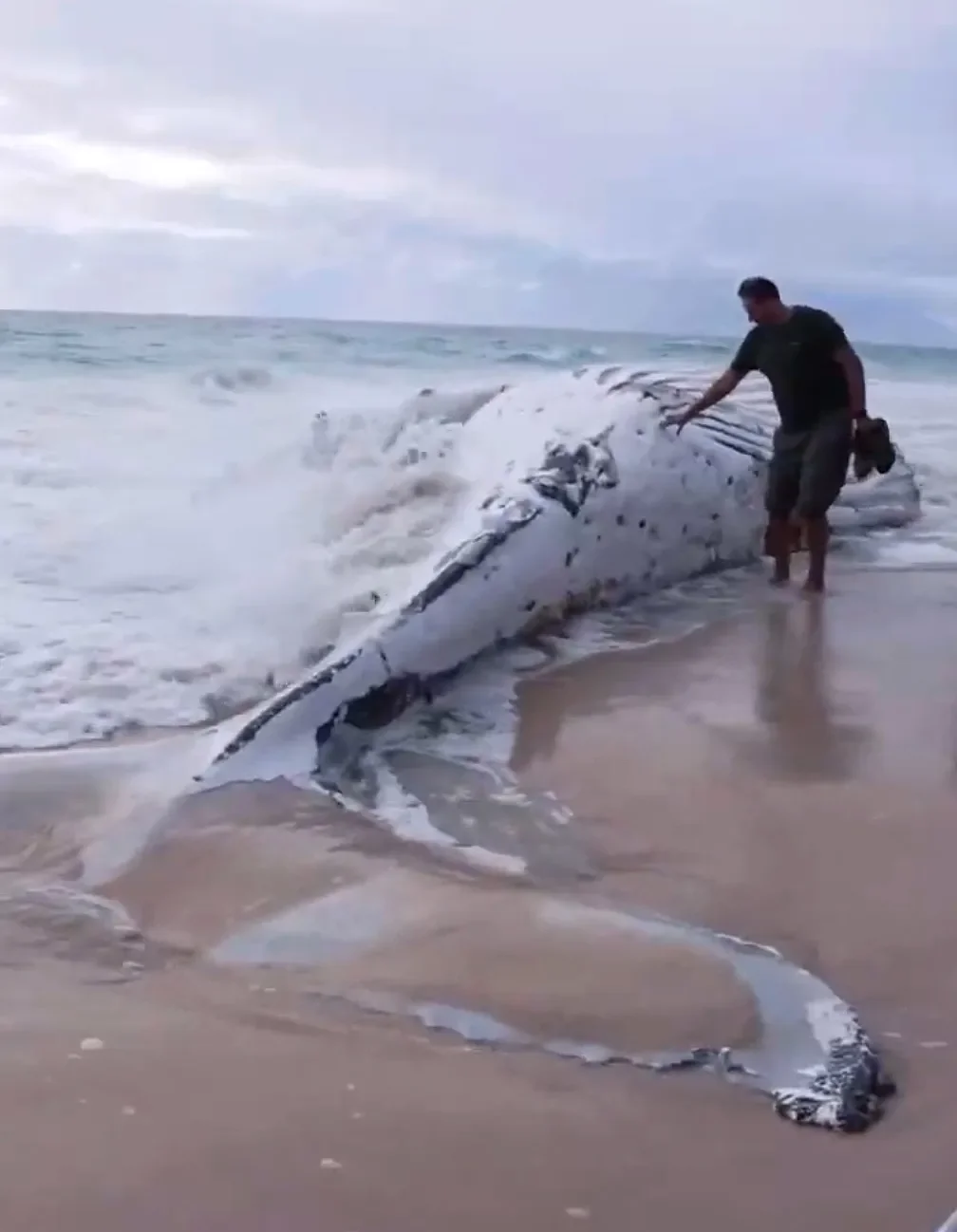
A 42-foot-long humpback whale recently washed up on City Beach in Perth, Australia. The whale weighed about 31 tons, roughly the same as several large elephants. Its body attracted great white and tiger sharks, which came close to the shoreline looking for food. The beach was closed while authorities worked to safely remove the enormous carcass.
It took heavy machinery several hours to move the whale about 1.5 kilometers down the beach. The carcass was then prepared to be transported to a landfill. Officials also created an exclusion zone to keep people away from the area during the operation.
But how did the whale end up on the beach in the first place?
What is a whale stranding?
When a whale or another marine mammal becomes stuck on land, it is called a stranding. Strandings can happen to whales, dolphins, porpoises, seals and sea lions.
Scientists do not always know exactly why a whale strands. According to the National Oceanic and Atmospheric Administration, or NOAA, possible causes include illness, malnutrition, injuries caused by humans, toxins, weather and complicated ocean conditions.
Sometimes, a whale may already be sick or injured when it reaches the shore. Other times, scientists may not know what caused the animal to become stranded until they examine its body.
Why can't whales just swim back?
It might seem like a whale could simply wait for a wave and return to the ocean. Unfortunately, it is not that simple.
Whales are built to live in water. The water helps support their enormous bodies. Once a large whale is on land, its own weight can put dangerous pressure on its body and lungs. It can also become overheated, injured or extremely stressed.
Moving a whale is also extremely difficult. Large whales can weigh many tons, so rescuers need specialized equipment and trained teams. Trying to pull a whale by its tail can seriously injure the animal, which is why trained rescuers carefully consider the safest response.
What can scientists learn?
Although strandings are tragic, they can give scientists important information about whales.
Scientists can examine stranded animals through a process called a necropsy, which is similar to an autopsy for animals. They can collect samples and look for signs of disease, injuries, toxins or other health problems. The results can help researchers better understand what happened to the whale and potentially help other animals in the future.
The recent whale in Perth also showed how a stranded animal can affect the surrounding ecosystem. As the whale decomposed, its remains attracted large sharks close to shore. Experts warned that traces of the whale could continue attracting sharks even after the carcass was removed.
Whale strandings can be difficult and sad events, but they also give scientists opportunities to learn more about some of the ocean's largest animals. Each stranding can help researchers understand the challenges whales face and how we can better protect them in the future.
References
Goerling, Samantha, and Mya Kordic. 2026. “Sharks Could Linger off Perth Coast for Weeks Despite Removal of Whale Carcass from City Beach.” ABC News, October 3, 2026. https://www.abc.net.au/news/2026-10-03/sharks-set-to-linger-off-perth-beaches-after-whale-removed/107223760
Kirk, Emma. 2026. “Heavy Machinery Moves in during Complex Operation to Remove 31-Tonne Whale Carcass from Perth’s City Beach.” News.com.au, October 1, 2026. https://www.news.com.au/technology/science/animals/heavy-machinery-moves-in-during-complex-operation-to-remove-31tonne-whale-carcass-from-perths-city-beach/news-story/089041b330ff6f6a03cb62b68eed5f1c
National Oceanic and Atmospheric Administration Fisheries. n.d. “Frequent Questions: Live Large Whale Strandings on the West Coast.” NOAA Fisheries. https://www.fisheries.noaa.gov/west-coast/marine-life-distress/frequent-questions-live-large-whale-strandings-west-coast
Thomas, Moná. 2026. “42-Foot Whale Carcass Washes Up on a Popular Beach and Draws Great White Sharks to the Shore.” People, October 1, 2026. https://people.com/42-foot-whale-carcass-draws-great-white-sharks-near-perth-beach-12150394
Wildlife Foundation of Florida. n.d. “Why Do Whales Beach Themselves?” Wildlife Foundation of Florida. https://wildlifeflorida.org/whales-beach/