
Artemis II Astronauts Splash Down: A Safe Return from the Moon
Artemis II Astronauts Splash Down: A Safe Return from the Moon
Written by: Keya Gambhir
After traveling all the way around the Moon, four astronauts have finally made it safely back to Earth, and their return was just as exciting as their journey. Learn more about the details and importance of their journey here.
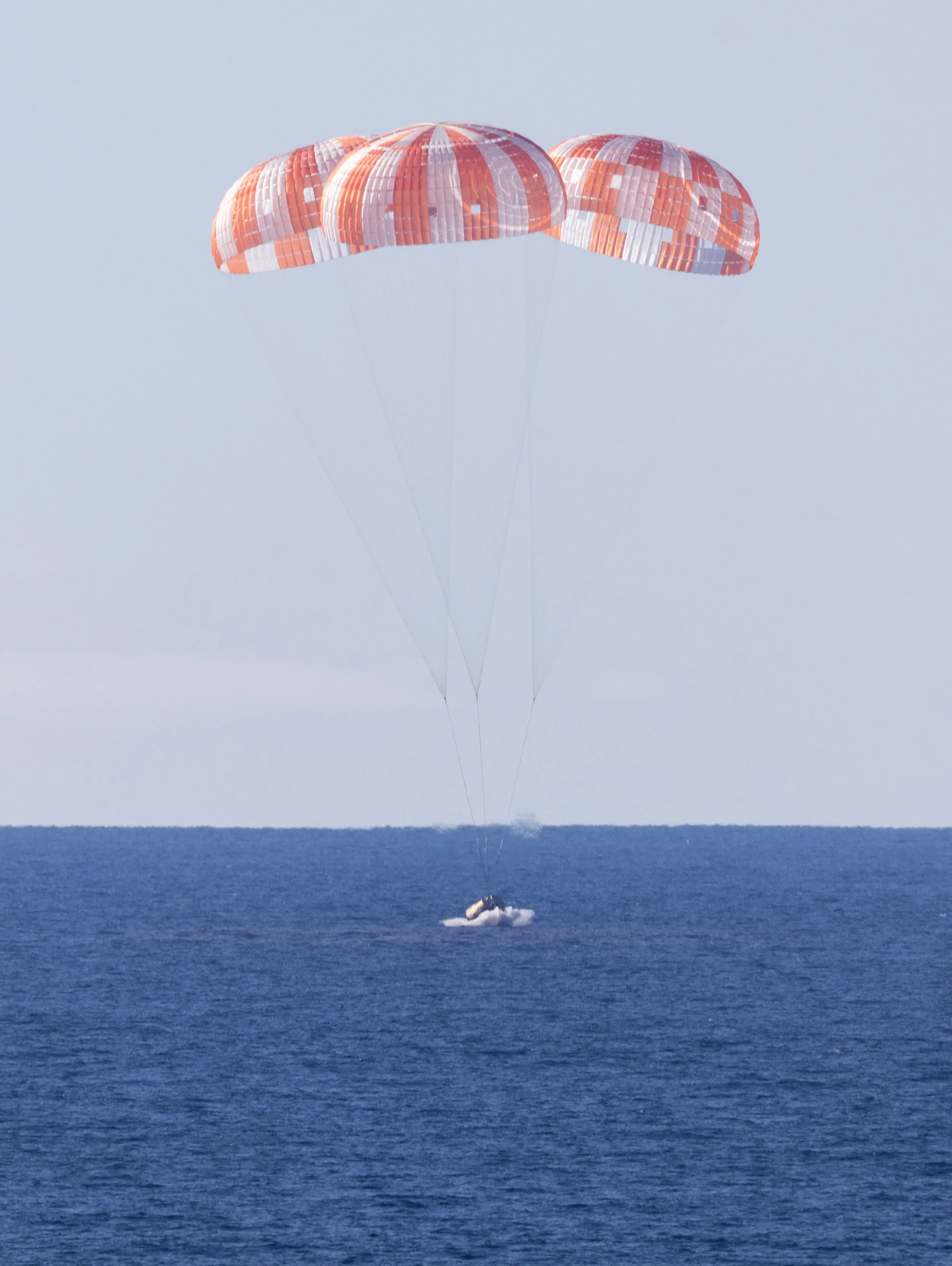
The crew from NASA’s Artemis II mission splashed down in the Pacific Ocean off the coast of California on April 10. Their spacecraft, called the Orion spacecraft, landed gently in the water after traveling at extremely high speeds through Earth’s atmosphere.
When astronauts return from space, one of the most dangerous parts is reentry. As the spacecraft falls back toward Earth, it can reach speeds of about 25,000 miles per hour. The outside of the capsule gets incredibly hot, but a special heat shield protects the astronauts inside. Engineers had spent years testing and improving this system, and this mission proved that it works.
Once Orion landed in the ocean, recovery teams were already waiting. A group made up of NASA experts and the U.S. military rushed to the capsule. They carefully helped the astronauts out while the spacecraft floated in the water. From there, the crew was lifted by helicopter and taken to a nearby Navy ship for safety checks.
The astronauts, Reid Wiseman, Victor Glover, Christina Koch, and Jeremy Hansen, had been away from Earth for about 10 days. Even though that might not sound like a long time, their bodies had to readjust to gravity after floating in space. Doctors checked their health right away to make sure they were doing well.
The next day, the astronauts traveled to Johnson Space Center in Texas, where they were reunited with their families. After such an intense journey, this was one of the most emotional moments. Many astronauts shared how meaningful it felt to be back home with loved ones.
Their return was also celebrated by people around the world. At a welcome event, the crew spoke about their experience and what it felt like to look back at Earth from deep space. They described Earth as beautiful but fragile, reminding everyone how important it is to take care of our planet.
One special moment during the mission made their return even more personal. The crew suggested naming a newly seen crater on the Moon after a loved one, showing how space exploration is not just about science but also about human stories and emotions.
The mission also showed how much space travel has changed over time. The Artemis II crew included people from different backgrounds and countries, showing that space exploration today is a global effort. When they returned, they didn’t just celebrate success; they also celebrated teamwork.
Now that the astronauts are safely back, NASA is already preparing for what comes next. Future missions will build on what was learned from this one, especially about how to keep astronauts safe during long trips and challenging returns to Earth.
Even though the journey around the Moon was historic, the safe return is what truly made the mission a success. After all, exploring space is only meaningful if astronauts can come home safely.
The Artemis II crew proved that humans can travel far into space and return safely, opening the door for even bigger adventures in the future.
References
Dunn, Marcia. 2026. “NASA Already Has Next Artemis Flight in Its Sights Following Astronauts’ Triumphant Moon Flyby.” Associated Press, April 12, 2026. https://apnews.com/article/nasa-artemis-moon-astronauts-apollo-74008cb58e79ed525ae5e1fe08a04ad9
NASA. 2026. “NASA Welcomes Record-Setting Artemis II Moonfarers Back to Earth.” April 10, 2026. https://www.nasa.gov/news-release/nasa-welcomes-record-setting-artemis-ii-moonfarers-back-to-earth/
PBS NewsHour. 2026. “NASA Sets Its Sights on Artemis III Following Astronauts’ Historic Moon Flyby.” April 12, 2026. https://www.pbs.org/newshour/science/nasa-sets-its-sights-on-artemis-iii-following-astronauts-historic-moon-flyby