
The French Revolution: How Ordinary People Changed France Forever
The French Revolution: How Ordinary People Changed France Forever
Written by: Keya Gambhir
Protests have long been a part of French history, with citizens taking to the streets to demand political and economic change. In October 2026, hundreds of thousands of people across France participated in demonstrations over issues including living costs, inequality, and public services, which you can find out more about here. These protests continue a tradition of public demonstrations that stretches back centuries. One of the most famous examples is the French Revolution, which began in 1789 and changed France forever.
More than 200 years ago, ordinary French citizens challenged their king, demanded equal rights, and helped transform their country's government. But what made people so frustrated that they were willing to risk everything for change?
Why Did the Revolution Begin?
In the late 1700s, France faced serious financial problems. The country had spent large amounts of money fighting wars, including helping the American colonies win independence from Great Britain. Meanwhile, King Louis XVI and his royal court continued spending money, leaving the government close to bankruptcy.
Ordinary people faced their own struggles. Poor harvests caused food shortages, and bread prices skyrocketed. Since bread was a major part of the French diet, many families struggled to afford enough food. People also paid heavy taxes, while wealthy nobles and church officials enjoyed special privileges.
French society was divided into three groups called estates. The First Estate included clergy, or church officials. The Second Estate consisted of nobles. The Third Estate included everyone else, from business owners to workers and peasants. Although the Third Estate represented about 98 percent of the population, it had less political power than the other two estates.
Many people believed this system was unfair. Inspired by Enlightenment thinkers who supported freedom and representative government, they wanted a greater voice in how France was governed.
A Revolution Begins
In May 1789, King Louis XVI called a meeting of the Estates General to address France’s financial crisis. However, disagreements quickly developed over voting rights. The Third Estate wanted equal representation instead of being outvoted by the privileged groups.
On June 20, representatives of the Third Estate took the Tennis Court Oath, promising not to separate until France had a new constitution.
Tensions continued to rise. On July 14, 1789, crowds in Paris stormed the Bastille, a fortress where weapons and gunpowder were stored. The event became a symbol of resistance against royal authority. Today, France celebrates July 14 as Bastille Day, its national holiday.
The revolution brought major changes. In August 1789, the National Assembly adopted the Declaration of the Rights of Man and of the Citizen, which supported equality under the law, freedom of speech, and representative government. The Assembly also began abolishing feudal privileges that had benefited nobles.
From Hope to Violence
At first, some revolutionaries wanted to keep the king but limit his power. However, political disagreements and fears of foreign attacks made the situation increasingly unstable.
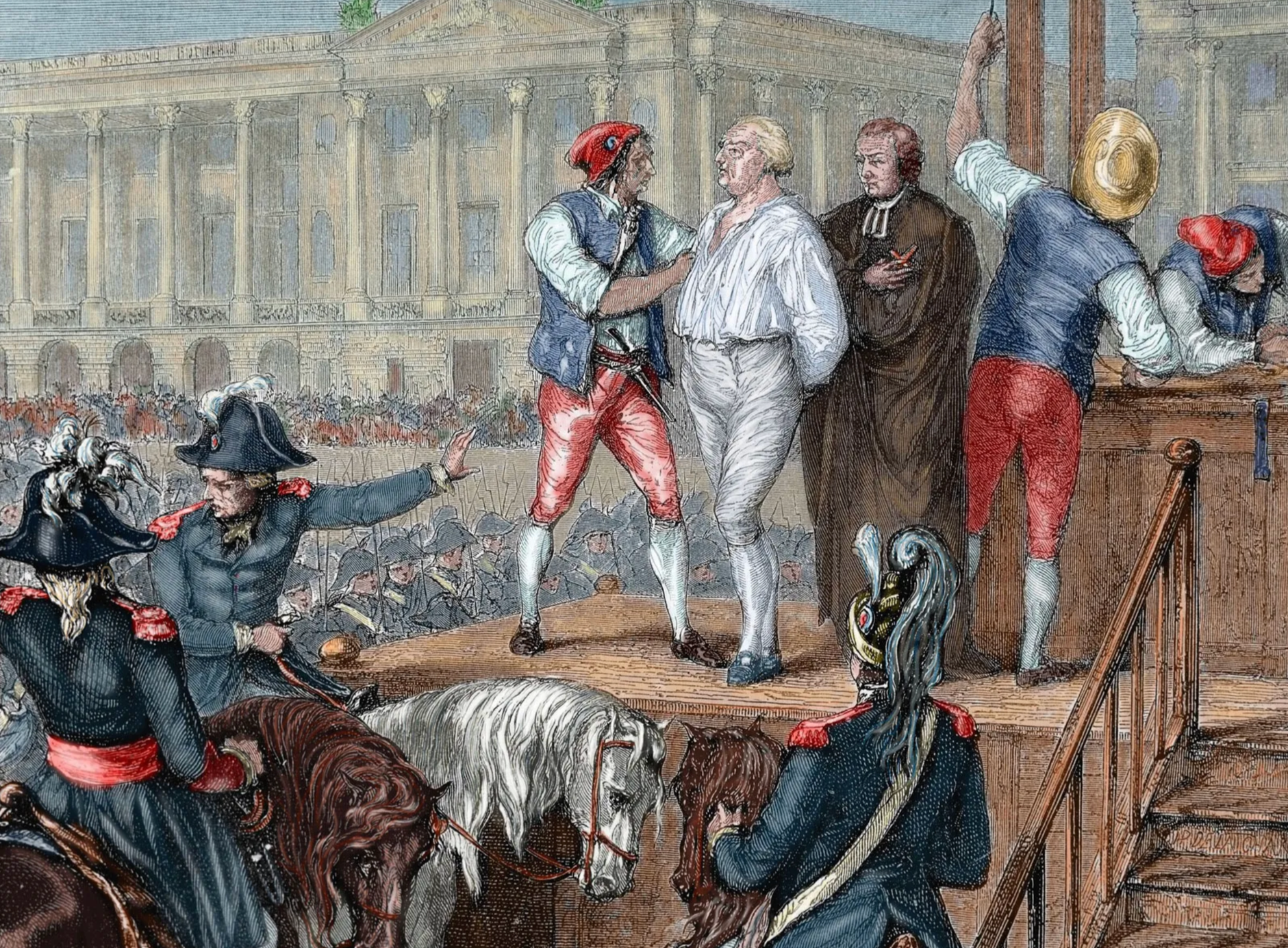
In 1792, France became a republic, meaning it no longer had a king as its head of state. Louis XVI was executed by guillotine on January 21, 1793. His wife, Marie Antoinette, was executed later that year.
France then entered the Reign of Terror, a violent period lasting from 1793 to 1794. Revolutionary leaders suspected many people of opposing the revolution. Thousands were executed, including powerful political figures. Maximilien Robespierre, one of the period’s leading figures, was executed in July 1794.
In 1799, military general Napoleon Bonaparte seized power, bringing the French Revolution to an end.
What Was the Revolution’s Legacy?
The French Revolution did not create a perfect society. It brought violence and years of political conflict. However, it challenged the belief that kings should have unlimited power because of their birth.
Its ideas about equality, individual rights, and government authority coming from the people influenced political movements worldwide. The revolution showed how economic hardship and unequal treatment could inspire ordinary people to demand change.
France’s history reminds us that citizens can play an important role in shaping their government. While today’s protests have different causes, they continue a long tradition of people gathering to make their concerns heard.
References
HISTORY.com Editors. 2026. “French Revolution.” HISTORY. April 20, 2026. https://www.history.com/articles/french-revolution.
The Editors of Encyclopaedia Britannica. n.d. “Aristocratic Revolt, 1787–89.” Encyclopaedia Britannica. https://www.britannica.com/event/French-Revolution/Aristocratic-revolt-1787-89.
Office of the Historian. n.d. “The United States and the French Revolution, 1789–1799.” U.S. Department of State. https://history.state.gov/milestones/1784-1800/french-rev.